Every wine-producing country has a grape it can call its own. France has its Malbec (well, Argentina borrowed it successfully). Spain has Tempranillo. Germany has Riesling. And South Africa has Pinotage — a cross between Pinot Noir and Cinsault that was born in a laboratory in 1925 and has since become the most divisive grape in the southern hemisphere.
I love that about it. Pinotage doesn’t try to be anything other than itself. It’s polarizing, occasionally difficult, and at its best, completely compelling. If you’ve only encountered it at the cheap end, I’d encourage you to try a serious Stellenbosch Pinotage before writing it off.
What Is Pinotage?
Pinotage was created in 1925 by Professor Abraham Izak Perold at Stellenbosch University, who crossed Pinot Noir with Cinsault (then called Hermitage in South Africa — hence the name Pinotage). His goal was a grape that would combine Pinot Noir’s delicacy and complexity with Cinsault’s heat tolerance and productivity.
The first commercially released Pinotage appeared in 1961. It took decades to find its footing stylistically, and it’s still evolving. The bad old days of thin, volatile, nail-polish-scented Pinotage are largely behind us — though they haven’t entirely disappeared. What’s emerged in their place is a grape that can produce rich, robust, and genuinely interesting red wines.
Pinotage is almost exclusively South African. A handful of producers in New Zealand, Zimbabwe, and the United States grow small amounts, but South Africa owns this grape in the same way Argentina owns Malbec.
What Does Pinotage Taste Like?
This depends enormously on the producer and style, which is both the challenge and the fascination of Pinotage.
At the entry level, you’ll find wines dominated by a distinctive smoky, rubbery, or acetone-like quality that puts off many drinkers. This is largely a winemaking artifact — a byproduct of certain fermentation conditions — and serious producers have worked hard to minimize it.
At the serious level, Pinotage shows:
- Dark fruit: blackberry, plum, black cherry
- Earthy, savory notes: leather, smoke, dried herbs
- Chocolate and mocha (especially when oak-aged)
- A distinctive tannic grip and full body
- Good warmth and length on the finish
The grape naturally produces high alcohol and full body. It isn’t a subtle wine. In that way, it’s closer to Syrah or Zinfandel in personality than to its Pinot Noir parent.
Some producers now make lighter, more fruit-forward styles using carbonic maceration — similar to Beaujolais technique. These are delicious early-drinking wines that show a juicier, more approachable side of Pinotage.
Pinotage Styles Compared
| Style | Profile | Oak Use | Drinking Window | Example Producers |
|---|---|---|---|---|
| Traditional/robust | Dark fruit, smoke, leather, full tannins | Heavy American oak | 5–15 years | KWV, Simonsig |
| Modern/elegant | Blackberry, mocha, structured but balanced | Restrained French oak | 3–10 years | Kanonkop, Beyerskloof |
| Pinotage Rosé | Strawberry, watermelon, dry, fresh | No oak | Drink young | Beyerskloof, Spier |
| Carbonic/nouveau | Juicy red fruit, low tannin, fresh | No oak | 1–3 years | Swartland producers |
| Cape Blend | Pinotage-dominant blend, rounded | Varies | 5–12 years | Warwick, Neil Ellis |
Where Pinotage Grows Best
Stellenbosch
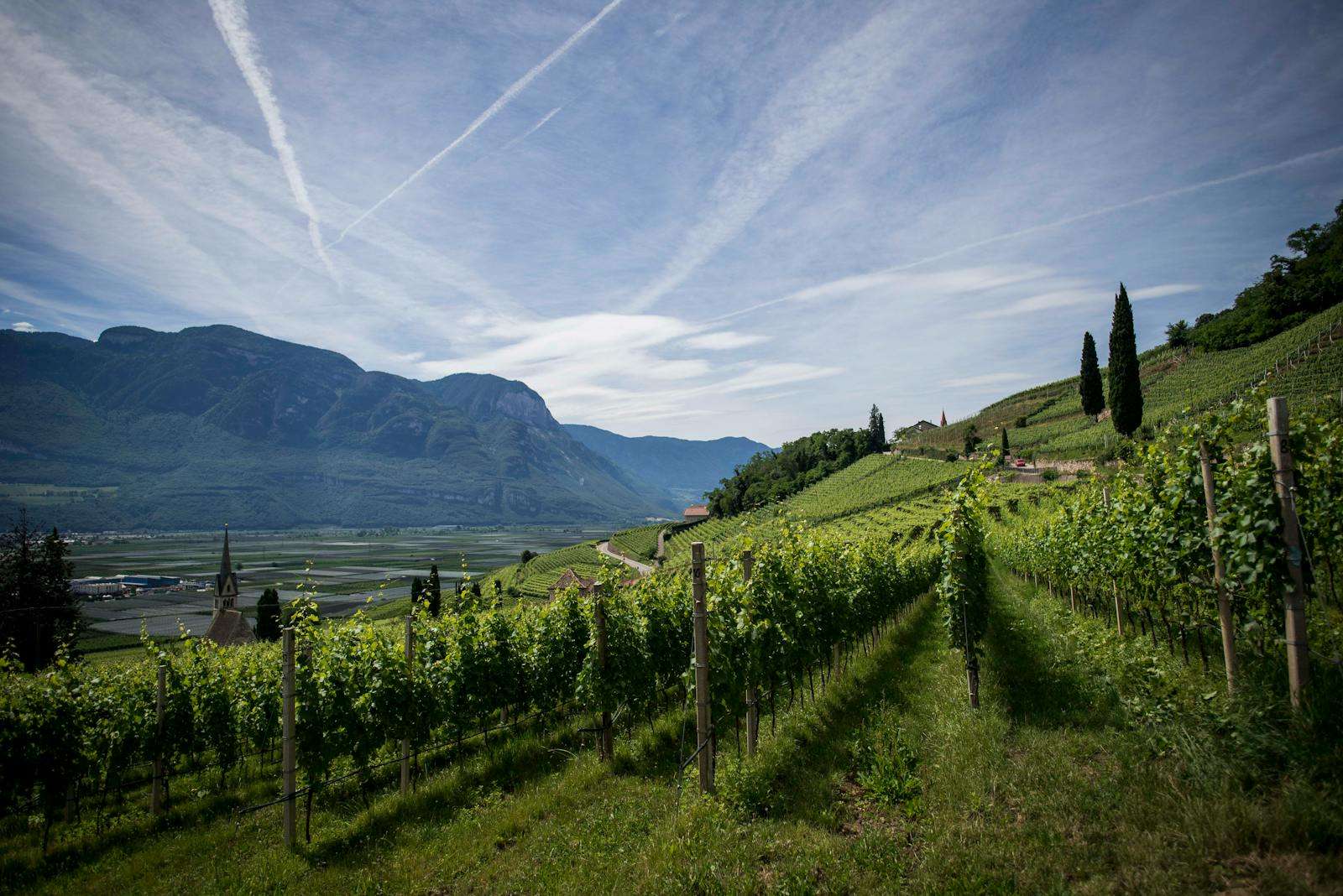
This is the epicenter of quality Pinotage. The Stellenbosch region’s granite and sandstone soils, combined with the cooling influence of False Bay and the Helderberg Mountains, give Pinotage the structure to age and the freshness to stay balanced. Kanonkop Estate in Stellenbosch is often cited as the benchmark producer — their Pinotage is considered by many the finest expression of the variety.
Swartland
The rugged, warm Swartland region north of Cape Town has become a hotbed of natural wine and unconventional approaches. Swartland Pinotage tends toward earthier, more rustic expressions, often made without heavy extraction or new oak. This is where you’ll find carbonic Pinotage and minimal-intervention styles.
Paarl and Franschhoek
These neighboring valleys produce Pinotage that often sits between Stellenbosch’s power and Swartland’s rusticity — warmer and more generous in fruit, with good depth when yields are kept in check.
How to Pair Pinotage with Food
Pinotage’s full body, firm tannins, and savory undertones make it a natural partner for bold, richly flavored food.
Braai (South African barbecue): The pairing that defined Pinotage. Grilled lamb, boerewors sausage, spiced pork ribs — the smoke of the grill mirrors the wine’s own smoky undertones perfectly.
Slow-cooked beef: Brisket, short ribs, osso buco. Pinotage’s tannins love the collagen-rich broth of a long braise.
Game meat: Venison, duck, ostrich (another South African specialty). The wine’s earthiness harmonizes with gamey flavors without being overwhelmed.
Mature hard cheese: Aged cheddar, aged Gouda, manchego. The richness of the cheese tempers Pinotage’s tannins.
Spiced dishes: Pinotage handles spice better than many red wines. A gently spiced Moroccan lamb tagine or a South African bobotie works beautifully.
I’d avoid delicate fish, cream-based dishes, or anything too delicate — Pinotage will bulldoze them.
The Cape Blend: Pinotage’s Best Team-Up
South Africa’s “Cape Blend” is an official wine category requiring that Pinotage make up 30–70% of a red blend. The idea is that blending softens Pinotage’s rough edges while maintaining its distinctive character.
The Cape Blend is, in my experience, often where Pinotage shows its best side. Partners like Cabernet Sauvignon, Merlot, and Shiraz add structure, depth, and aromatic complexity that round out the grape’s occasionally one-note tendencies. Warwick Estate’s “The First Lady” Cape Blend is a perennially reliable example.
How to Buy Pinotage
The price range tells you something useful about what to expect:
Under $15: Proceed with caution. Some are fine (Beyerskloof Pinotage is reliably decent at this price), but the quality floor is lower here than with most international grapes. Look for wines labeled “Pinotage Rosé” if you want a safe bet at this price.
$15–35: The sweet spot. You’ll find genuine Stellenbosch quality from producers like Simonsig, Spier, and Diemersfontein (their “Coffee Pinotage” — with intentional mocha notes — has a devoted following).
$35–80: Kanonkop’s Paul Sauer Cape Blend and their straight Pinotage sit here. These are serious wines that reward cellaring.
$80+: The Kanonkop “Black Label” Pinotage, made in exceptional years from old-vine fruit, is the reference point for the variety. Worth seeking out at least once.
Common Pinotage Questions
Is Pinotage like Pinot Noir? In name only. The wines couldn’t be more different — Pinotage is full-bodied, tannic, and dark-fruited where Pinot Noir is light, silky, and elegant.
Why does some Pinotage smell odd? Ethyl acetate and acetaldehyde are the culprits — winemaking flaws that were more common in poorly made Pinotage. Modern producers manage fermentation temperatures carefully to minimize these.
Does Pinotage age well? The best Stellenbosch examples age for 10–20 years. Budget bottles are best consumed young.
Is it good value? Compared to Burgundy or Napa Cabernet at equivalent quality levels, yes — South African wine in general is underpriced relative to quality.
Corporate Wine Tasting: South African Wine Discovery
A South African wine tasting is one of the more distinctive corporate event themes Myrna and The Wine Voyage team can offer. Pinotage is always a conversation starter — its history, its controversy, its distinctive personality. Pairing it alongside Chenin Blanc, Sauvignon Blanc, and a Bordeaux-style blend from the Cape makes for an evening that genuinely surprises teams who’ve never explored South African wine. It’s a region that rewards curiosity, and curiosity is the best energy to bring into a team event.
Pinotage’s Pinot Noir heritage makes our Pinot Noir guide relevant background reading. For the Syrah comparison in weight and style, see our Syrah/Shiraz guide. To explore other bold red wine options, our guide to bold red wines covers the spectrum from medium to full-bodied reds.
Further Reading
For authoritative perspectives on Pinotage, two essential resources: Decanter’s Pinotage grape and wine guide covers the variety’s history and key producers with characteristic depth, and Wine Folly’s Pinotage flavor profile gives a clear visual breakdown of what to expect in the glass.