Why Scotch Whisky Deserves Its Own Deep Dive
I came to scotch whisky through wine. That probably sounds backwards, but it makes sense: both are made from raw agricultural ingredients, both are shaped by where they come from, and both reward the same kind of attention — slow, curious, without judgment. Once I started working more spirit-forward events, scotch whisky became one of my favorite categories to present to groups because it has so much to say for itself.
A glass of well-made scotch whisky is a complete story. You taste the barley, the water, the peat if it’s there, the wood the spirit aged in, the climate of the warehouse. It’s a genuinely complex drink, and yet the basics are learnable in an afternoon.
This guide covers what you need to know: the regions, the styles, how to taste, and where to start.
What Makes Scotch Whisky Scotch
Scotch whisky is whisky produced in Scotland, made from water and malted barley (plus other grains in blended whiskies), distilled at a maximum of 94.8% ABV, aged in oak casks in Scotland for at least three years, and bottled at a minimum of 40% ABV.
The spelling matters: Scotland (and most of the world outside the US and Ireland) uses “whisky,” not “whiskey.” When you’re talking scotch, drop the e.
There are five legally recognized categories of scotch whisky:
- Single Malt: Made at a single distillery from malted barley, distilled in pot stills
- Single Grain: Made at a single distillery, can include other grains, typically distilled in column stills
- Blended Malt: A blend of single malts from multiple distilleries
- Blended Grain: A blend of single grains from multiple distilleries
- Blended Scotch: A blend of single malt and grain whiskies — the most common category worldwide
Most people’s introduction to scotch whisky is through blended scotch (Johnnie Walker, Chivas Regal, Famous Grouse). The enthusiast path usually leads toward single malts, but blends done well are genuinely excellent.
The Five Scotch Whisky Regions
Scotch whisky’s flavors vary significantly by region, shaped by local water sources, climate, and distilling traditions. Understanding the regions helps you predict what a bottle will taste like before you open it.
| Region | Character | Examples |
|---|---|---|
| Speyside | Fruity, floral, honeyed, approachable | Glenfiddich, Macallan, Glenlivet |
| Highlands | Varied: from light to rich, often heathery or spicy | Glenmorangie, Dalmore, Oban |
| Islay | Peaty, smoky, briny, bold | Laphroaig, Ardbeg, Bowmore |
| Lowlands | Light, gentle, grassy, easy-drinking | Auchentoshan, Glenkinchie |
| Campbeltown | Briny, oily, complex, distinctive | Springbank, Glen Scotia |
Speyside is the most densely concentrated whisky region in the world — more than half of all Scottish distilleries are here, along the River Spey. The house style runs toward fruit and honey: ripe apple, pear, vanilla, a little floral lift. These are often the easiest entry points for new scotch drinkers.
Highlands is the largest region geographically and the most diverse stylistically. You can find Highlands whiskies that taste like Speyside malts, whiskies with coastal salinity, and whiskies with real earthy depth. The variation is part of the appeal.
Islay (pronounced EYE-luh) is scotch whisky’s most dramatic region. The island sits off the west coast of Scotland, exposed to Atlantic storms, and the whisky reflects that: these are often intensely peaty and smoky, with iodine, brine, and bonfire notes alongside fruit and sweetness underneath. People either love Islay scotch immediately or take time to come around to it. I’ve seen it go both ways at tastings.
Lowlands produces lighter, more delicate whiskies — often triple-distilled for extra refinement. They’re excellent entry points for people coming from lighter spirits or wine.
Campbeltown is tiny — fewer than five distilleries — but historically significant. Springbank is considered one of the world’s great distilleries, producing whiskies with unusual complexity: oily texture, dried fruit, light peat, and a maritime edge.
Single Malt vs. Blended: The Real Difference
The “single malt is superior” narrative is largely a marketing story that took hold in the 1990s. In reality, blended scotch whisky requires extraordinary skill — a master blender has to consistently combine whiskies from dozens of distilleries to hit the same flavor profile year after year.
Blended scotch is also more consistent, more accessible at lower price points, and designed to mix well (which is why it dominates cocktail culture globally).
Single malt scotch whisky is distillery-expressive: you’re tasting one place, one set of decisions, one production style. That specificity is what enthusiasts value. When you buy a bottle of Lagavulin 16, you know exactly what you’re getting: Islay peat, sherry cask richness, decades of tradition from a single small distillery.
For corporate events and group tastings, I often use both in the same session — a well-made blended scotch as an introduction, then move into single malts by region. The contrast is instructive.
How Age Statements Work
A 12-year scotch whisky contains no whisky aged less than 12 years — the age statement is the youngest whisky in the bottle. Older isn’t automatically better, but age brings more time in contact with the wood, which deepens color, adds complexity, and softens some of the spirit’s sharpness.
The trend in the industry has shifted toward non-age-statement (NAS) releases, where the blender prioritizes flavor profile over a specific age guarantee. Some NAS releases are outstanding; others use the flexibility to include younger spirit. Context matters.
How to Taste Scotch Whisky
You don’t need a course or a certification to taste scotch well. You need a decent glass, patience, and attention. Here’s the approach I use in group tastings:
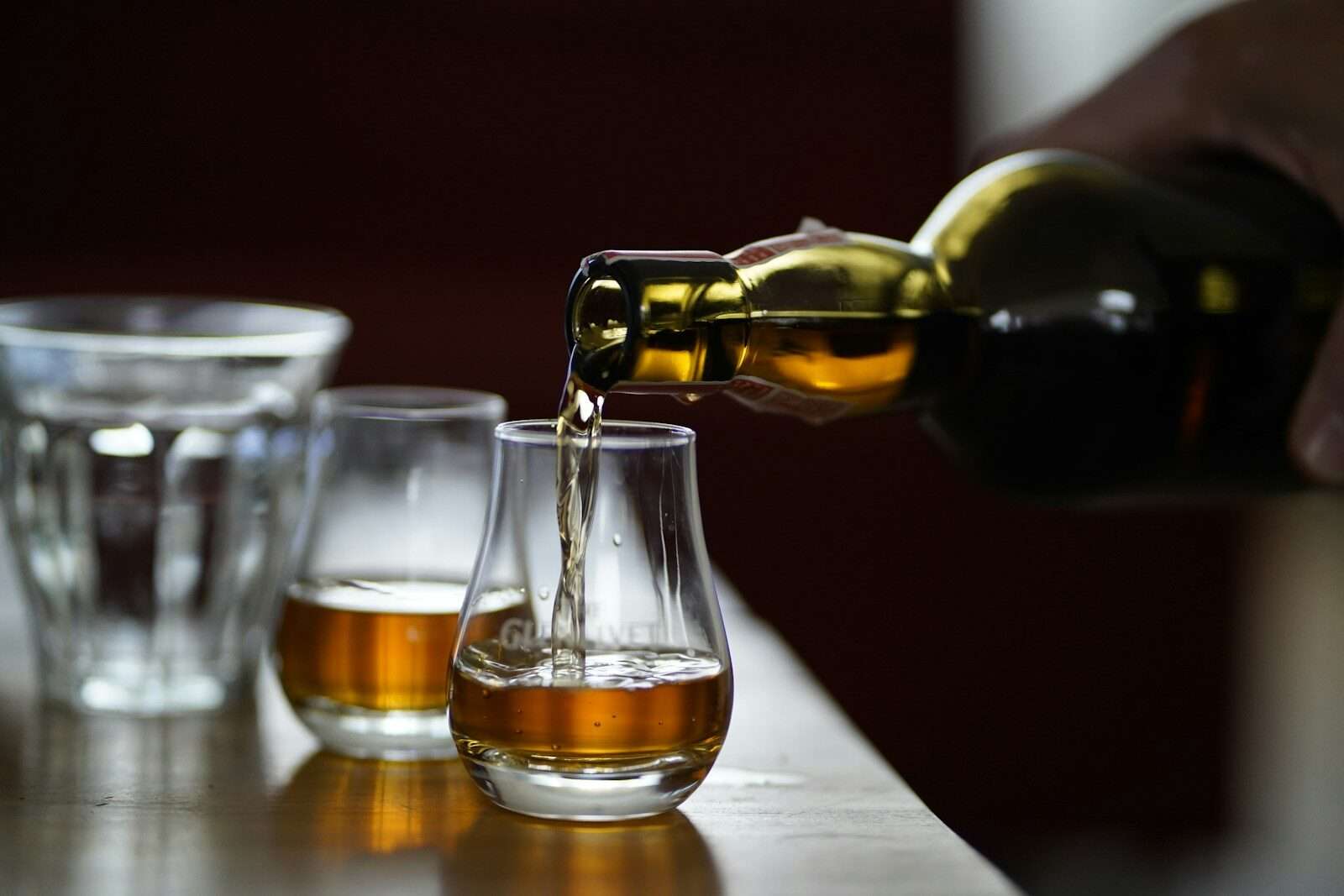
The glass: A tulip-shaped glass — similar to a wine glass — concentrates the aromas better than a rocks glass. The traditional copita or a Glencairn glass is designed specifically for whisky nosing.
Neat first: Pour a small measure (30ml / 1 oz is plenty) and nose the whisky before you taste it. Tilt the glass, don’t shove your nose in — the alcohol vapors are intense and they’ll overwhelm everything else.
Add a few drops of water: A tiny amount of water opens up whisky dramatically. The dilution drops the ABV slightly and releases aromatic compounds. This is not cheating — it’s technique. Many whisky professionals taste everything with a pipette of water.
Take your time: Hold the whisky in your mouth for five to ten seconds before swallowing. Notice the texture (oily? thin? creamy?), the flavors (fruit? smoke? vanilla? spice?), and the finish — how long does the flavor linger, and what’s the last thing you taste?
Ignore the “rules” about ice: Ice shuts down aroma and numbs the palate. If you love scotch on the rocks, that’s fine. But for tasting and evaluation, keep it neat or with a small drop of room-temperature water.
A Tasting Vocabulary for Scotch Whisky
| Category | Common Scotch Descriptors |
|---|---|
| Fruit | Green apple, ripe pear, citrus peel, dried apricot, dark cherry |
| Sweetness | Honey, vanilla, caramel, butterscotch, toffee |
| Smoke / Peat | Bonfire, sea smoke, medicinal, earthy peat, ash |
| Spice | White pepper, ginger, cinnamon, clove |
| Wood | Cedar, oak, sandalwood, coffee, dark chocolate |
| Maritime | Brine, seaweed, oyster shell, ocean air |
Peat deserves its own note. Peat is decomposed organic matter — primarily vegetation — that forms in Scottish bogs over thousands of years. Historically, distillers burned peat to dry malted barley, infusing the grain with phenolic compounds that carry through distillation into the finished whisky. The amount of peat used is measured in parts per million (PPM) of phenols. Laphroaig runs around 40-45 PPM; Octomore has released whiskies over 300 PPM. Speyside malts are typically 0-5 PPM.
Where to Start: Bottles for Different Tastes
If you want something approachable and crowd-pleasing: Glenlivet 12, Glenfiddich 12, or Monkey Shoulder (a blended malt). Fruity, honeyed, easy to enjoy without much context.
If you want something richer and sherried: Macallan 12 Double Cask, GlenDronach 12, or Aberlour 12. Dried fruit, chocolate, warming spice.
If you want to try peated scotch without going full Islay: Bowmore 12 or Highland Park 12 (the latter is from Orkney, technically its own category). A little smoke with a lot of sweetness.
If you’re ready for Islay: Start with Bowmore 12 or Bunnahabhain 12 (relatively gentle for Islay), then progress to Lagavulin 16 or Ardbeg 10 when you’re ready for the full experience.
If you want something classic at a good value: Johnnie Walker Black Label (blended, 12-year minimum) is a master class in consistency — and a reminder of why blended scotch built the global category.
Scotch Whisky for Group Tastings and Corporate Events
Scotch whisky makes an excellent vehicle for corporate tasting events. The regional story is immediately engaging — the idea that a small island off Scotland’s coast produces whisky that tastes like the ocean and smells like a campfire is genuinely surprising and memorable for people who haven’t experienced it.
A structured scotch tasting typically moves through a Lowlands or Speyside opener (light, approachable), a Highland or Speyside mid-weight expression, and then something peated — either a lighter Islay or a full-strength expression depending on the group. Pairing each pour with a small food element (dark chocolate, smoked nuts, cured salmon) extends the tasting and gives people more to talk about.
At The Wine Voyage, we offer tasting experiences that bridge whisky and spirits education with the team-building structure that makes corporate events actually fun — not just educational. These events work because they give everyone something to discover, regardless of prior knowledge. The person who’s never touched scotch whisky and the person who collects it are both having a genuine experience.
Interested in related topics? See our guides on whiskey tasting, bourbon whiskey, mezcal vs tequila, spirits tasting for beginners, and tequila tasting.
Further Reading
For authoritative scotch whisky education, I recommend Whisky Advocate’s Scotch Whisky Guide and the Scotch Whisky Association’s official resources on production and regional heritage.