Bourbon whiskey is one of the most misunderstood spirits on the shelf. People either think it’s too serious — a connoisseur’s game with intimidating vocabulary — or too simple, just something you mix with cola. The truth is more interesting than either of those stories.
I came to bourbon sideways, through wine. When I started building spirits experiences for corporate groups, I assumed whiskey would be harder to teach than wine. I was wrong. Bourbon’s story is more American, more accessible, and honestly more fun to tell in a room full of people who’ve never considered themselves whiskey drinkers.
Here’s everything you need to know about bourbon whiskey.
What Makes Bourbon Whiskey Legally Bourbon?
Bourbon is tightly regulated — it’s not just a style, it’s a legal designation. To call a spirit bourbon, it must meet these requirements by U.S. law:
- Made in the United States
- At least 51% corn in the grain bill (mash bill)
- Distilled to no more than 160 proof (80% ABV)
- Entered into the barrel at no more than 125 proof (62.5% ABV)
- Aged in new, charred oak containers
- Bottled at a minimum of 80 proof (40% ABV)
- No added coloring, flavoring, or caramel
There’s a common myth that bourbon must be made in Kentucky. Not true — bourbon can legally be made anywhere in the U.S. But about 95% of the world’s bourbon does come from Kentucky, for good reason: the climate, the limestone-filtered water, and a century-old distilling tradition.
Straight Bourbon has additional rules: aged at least two years with no blending of other spirits. Most premium bourbons are straight bourbon.
Bottled in Bond is an older, stricter designation: at least four years old, bottled at exactly 100 proof, from a single distillery and single distilling season. It’s a mark of quality from the 1897 Bottled-in-Bond Act — one of America’s first consumer protection laws.
How Bourbon Whiskey Is Made
Understanding the production process is the fastest way to understand why bourbons taste so different from each other.
The Mash Bill
The grain mixture — called the mash bill — shapes the bourbon’s flavor foundation. Corn delivers sweetness; rye adds spice and dryness; wheat softens and mellows; malted barley provides the enzymes needed for fermentation.
| Mash Bill Style | Typical Grain Ratio | Flavor Profile |
|---|---|---|
| High-Rye | 18–35% rye | Spicy, bold, dry finish |
| Wheated | Wheat replaces rye | Soft, sweet, smooth |
| High-Corn | 75%+ corn | Sweet, approachable, less complex |
| Four-Grain | Corn, rye, wheat, barley | Layered, complex |
Maker’s Mark and Pappy Van Winkle are wheated bourbons — soft and sweet. Bulleit and Four Roses have high-rye mash bills — spicier and drier. That single variable explains a massive amount of the flavor differences between popular brands.
Distillation
Most bourbon is distilled using column stills (continuous distillation) followed by a doubler or thumper for a second distillation pass. Some craft distillers use pot stills for a heavier, oilier character.
The Char and the Barrel
This is the most unique part of bourbon production. New, charred white oak barrels are mandatory by law — and that char is doing a lot of work.
The char creates a carbon layer that filters out sulfur compounds and unwanted congeners. Then, as bourbon ages through Kentucky’s dramatic seasonal temperature swings, it expands into and contracts out of the wood repeatedly. That wood gives bourbon its caramel, vanilla, and toasted nut flavors — none of those come from the grain. The grain gives you corn sweetness, rye spice, or wheat softness. The wood gives you everything else.
Char levels range from #1 (light) to #4 (heavy, called “alligator char” for its texture). Most major distilleries use #3 or #4.
Age and Maturation
Bourbon has no minimum age requirement unless it’s labeled straight (two years) or bottled in bond (four years). But age matters enormously to flavor.
- Under 4 years: Corn and grain flavors dominate; less wood integration
- 4–8 years: The sweet spot for most widely enjoyed bourbons; corn sweetness + wood balance
- 8–12 years: More complex, with dried fruit, leather, and baking spice notes
- 12+ years: Can be extraordinary or over-oaked — highly dependent on warehouse placement and climate
Kentucky’s hot summers and cold winters do more “work” on the barrel than milder climates. A 6-year Kentucky bourbon can have the integration of a much older Scotch.
How to Taste Bourbon Whiskey
The Glassware
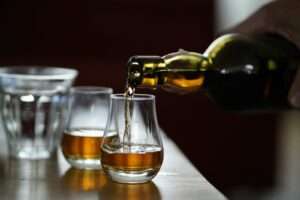
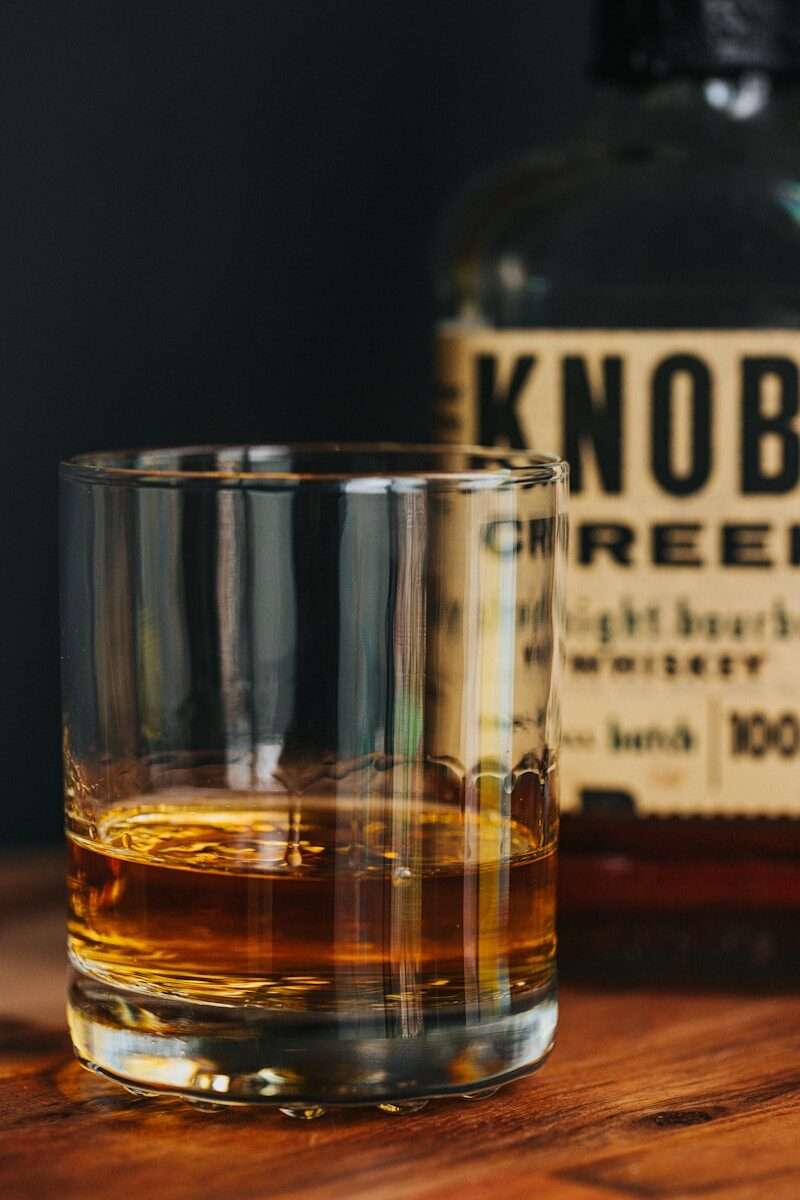
A Glencairn glass or similar tulip shape concentrates the aromas. A wide rocks glass disperses them. For tasting, use the Glencairn. For sipping with ice, use whatever you love.
The Process
Nose first, before you sip. Hold the glass at chin level (not under your nose at first — the ethanol will dull your perception). Take a gentle inhale. What do you smell? Common aromas: caramel, vanilla, corn, baking spice, oak, dried fruit, tobacco, leather, floral notes.
Add a few drops of water. This opens up the aromatics significantly, especially for high-proof bourbon. Don’t be shy — a few drops can transform the nose.
Taste neat, then with water. Let it sit on your palate for a few seconds before swallowing. Notice the entry (first impression), mid-palate (the main flavor event), and finish (what lingers after you swallow). Bourbon’s finish can last 30 seconds to several minutes in premium expressions.
Chew it. Literally move the liquid around your mouth like you’re chewing. Saliva integrates the alcohol and reveals flavors that disappear in a quick sip.
Common Bourbon Tasting Notes
| Flavor Category | Examples |
|---|---|
| Sweet | Caramel, vanilla, brown sugar, honey, butterscotch |
| Grain | Cornbread, oatmeal, dried corn |
| Spice | Black pepper, cinnamon, clove, nutmeg |
| Fruit | Dried cherry, apricot, orange peel, raisin |
| Wood | Oak, cedar, toasted nut, char, smoke |
| Other | Leather, tobacco, dark chocolate, coffee |
Key Styles of Bourbon Whiskey
Standard Kentucky Straight Bourbon
The workhorse category. Think Wild Turkey 101, Buffalo Trace, Four Roses Small Batch. Aged 4–8 years, reasonably priced, broadly available. These are the reference points.
Small Batch and Single Barrel
Marketing terms, not legal designations — but meaningful in practice. Small batch typically means a blend of fewer than 100 barrels, chosen for consistency. Single barrel means exactly that: one barrel, one bottling. Expect more variation and usually more character.
High-Proof and Cask Strength
Bottled at barrel strength without dilution — often 110–130+ proof. More intense, more complex, more of everything. Usually the best expression of a distillery’s house style. Great for tasting; challenging for casual sipping.
Wheated Bourbon
Weller, Maker’s Mark, Pappy Van Winkle (when you can find it). Softer, sweeter, longer finish. Often the gateway bourbon for wine drinkers — it’s approachable without being simple.
Tennessee Whiskey
Technically not bourbon, even though it meets all the legal requirements. Tennessee whiskey (like Jack Daniel’s) undergoes the Lincoln County Process: filtering the distillate through maple charcoal before barreling. This mellows the spirit and creates a distinctive character.
Bourbon Whiskey Food Pairings
Bourbon’s sweetness, spice, and oak make it a surprisingly versatile pairing partner.
| Food | Why It Works |
|---|---|
| Dark chocolate (70%+) | Bitterness contrasts sweetness; amplifies caramel notes |
| BBQ pork ribs | Smoke echoes char; sweetness balances the sauce |
| Aged cheddar | Sharpness cuts the sweetness; both have nutty, caramel notes |
| Pecan pie | Classic American flavors amplify each other |
| Grilled salmon | High-proof bourbon cuts the fattiness beautifully |
| Blue cheese | Bold flavors match; honey notes in the bourbon echo the creaminess |
How to Build a Bourbon Whiskey Tasting for Groups
A structured bourbon tasting is one of the best corporate group activities I know. Here’s a format that works:
For 8–30 people, 2 hours:
- Intro tasting — one accessible bourbon everyone tries neat to calibrate (Buffalo Trace, Elijah Craig Small Batch)
- Style comparison — a wheated bourbon vs. a high-rye bourbon, tasted side by side (Maker’s Mark vs. Bulleit, or Weller 107 vs. Four Roses Small Batch)
- Age/proof comparison — two expressions from the same distillery at different ages or proof levels (Wild Turkey 81 vs. Wild Turkey 101)
- Dark horse — something unexpected: a cask strength expression, a Tennessee whiskey, or a single barrel that breaks the pattern
Add a cheese board between pours. Keep the pours small (approximately ½ oz per tasting). Add a voting component (favorite nose, favorite finish, best value) and suddenly you have a tournament.
The Wine Voyage runs spirits tasting experiences exactly like this — see our whiskey tasting guide for more on the format.
Bourbon Bottles Worth Knowing
Under $35:
- Buffalo Trace — the definitive entry-level reference bourbon
- Elijah Craig Small Batch — caramel and vanilla, excellent value
- Four Roses Small Batch — light and floral, great for beginners
$35–$75:
- Maker’s Mark 46 — wheated, elegant, excellent intro to aged bourbon
- Wild Turkey 101 — high-rye, full-flavored, underrated
- Woodford Reserve Double Oaked — rich, almost dessert-like
$75+:
- Angel’s Envy Cask Strength (annual release) — port-finished, exceptional
- Blanton’s Single Barrel — the original single barrel expression
- Michter’s 10 Year — benchmark for Kentucky aged bourbon
Bourbon whiskey experiences translate beautifully into team settings. If you’re planning a group tasting event, explore our spirits tasting for beginners guide or learn about building a full wine and spirits tasting experience for your team.
Further Reading
For deeper dives into American whiskey production and culture: The Distilled Spirits Council’s bourbon overview and Wine Folly’s approachable bourbon basics.