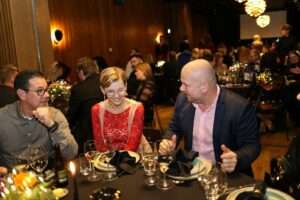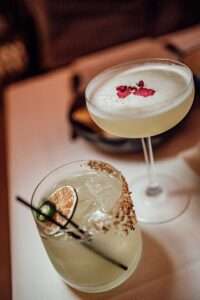

Wine tasting team building is one of the most effective corporate formats because it combines a structured activity with a genuinely enjoyable experience. Unlike trust falls or generic icebreakers, wine tasting team building creates real conversation — people have opinions about what they taste, and those opinions spark connection. The formats below are what a well-run wine tasting team building event actually looks like.
Most team building activities have a problem: everyone knows it’s team building. You can feel it — the forced enthusiasm, the facilitator energy, the sense that you’re completing a mandatory exercise together rather than actually connecting.
Wine tasting is different. And it’s different for a specific, underappreciated reason.
When you hand someone a glass of wine and ask them what they taste, you’ve put them in a genuinely novel situation. They don’t have a corporate answer prepared. They have to reach for something real — a memory, a description, an instinct. And that moment of reaching is where actual conversation starts.
That’s why wine tasting team building works when it’s done right. Not because of the wine. Because of what the wine unlocks.
Why Wine Tasting Works as Team Building
It Equalizes the Room
In most work settings, hierarchy is visible. People speak in a certain order, defer in a certain direction, and perform a version of themselves calibrated to their position.
Wine disrupts that dynamic. No one in the room is an expert (or at least, most people aren’t), which means no one is automatically more competent or authoritative than anyone else. The CFO doesn’t know more about this Burgundy than the junior analyst. That leveling effect is rare in a professional context, and it creates space for different kinds of interaction.
It Gives People Something to Disagree About Safely
Productive teams need to be able to disagree. But teaching people to disagree in the abstract is nearly impossible — you need low-stakes practice.
Wine tasting provides exactly that. “I’m getting something herbal, almost savory” / “I don’t get that at all, it tastes more like blackberry to me” is a disagreement where both parties are right, where being wrong costs nothing, and where the exchange actually matters for figuring out what’s in the glass. People who practice this kind of back-and-forth become slightly better at it in every context.
It Creates Shared Reference Points
Teams that have been through an experience together have shorthand. The wine tasting that one wine turned out to be everyone’s favorite despite all the skepticism becomes a story. The person who confidently declared the “wrong” wine the best one becomes a character in a shared memory.
These small stories accumulate into team culture. They’re not replaceable by a slide deck about values.
The Formats That Actually Work
Format 1: Blind Tasting Competition
Best for: Teams that are competitive, analytical, or skeptical of “soft” activities Group size: 8–60 Time: 90–120 minutes
Set up 4–6 wines poured blind (paper bags or black glasses work). Give each table a scoring sheet. Teams taste, discuss, and fill out their guesses: grape variety, country of origin, price point, vintage (optional). At the end, reveal the answers and scores.
This format works for skeptics because it has a competitive structure — there are right and wrong answers, winners and losers, and something concrete to focus on beyond “let’s connect as humans.” The bonding happens as a byproduct of the competition, which is often the most effective way.
What you need: 4–6 wines, opaque bags or black glasses, tasting sheets, scoring system
Format 2: Build-a-Pairing Challenge
Best for: Teams with creative or culinary inclinations, marketing/product teams Group size: 12–40 Time: 2–2.5 hours
Teams are given 2–3 wines plus a selection of foods: cheeses, charcuterie, chocolates, nuts, crackers, fruit. Their task is to discover which combinations work and which don’t, and then present their findings to the other teams.
The pairing challenge generates genuine discovery — you learn things during it that you didn’t know before you started, which gives the presentation element real content. Teams are often surprised at how much they have to say.
It’s one of the better formats for teams where collaboration matters more than competition.
What you need: 2–3 wines, varied food pairings, tasting notes template for presentations
Format 3: Guided Vertical Tasting
Best for: Smaller groups, senior leadership teams, relationship-building over a meal Group size: 6–20 Time: 60–90 minutes
A vertical tasting means tasting the same wine from multiple vintages — usually 3–5 years in a row. The point is to observe how a wine changes with age and how the same “thing” can be radically different depending on conditions outside its control.
This format works as a leadership metaphor without being heavy-handed about it. The conversation about how a difficult vintage produced something unexpected, or how the best year technically wasn’t the most interesting one, tends to go places that are useful to teams thinking about their own work.
What you need: 3–5 bottles of the same wine from different years, a knowledgeable facilitator
Format 4: Remote Wine Tasting Team Building
Best for: Distributed teams, hybrid teams, companies that don’t share a physical space Group size: 10–100+ Time: 60–90 minutes
Ship wine kits ahead of time — ideally 3–4 mini bottles or splits per person. Run the tasting via video call with a structured format: everyone tastes simultaneously, shares observations aloud, discusses. Structure matters more here than in-person because the organic side-conversation energy doesn’t exist — you have to engineer it.
Tips for making remote work:
- Send kits at least 4 days before the event to account for shipping delays
- Build in more structure than you think you need — blank airtime on video is harder to fill than blank airtime in a room
- Use breakout rooms for the tasting itself, then bring everyone back together for reveals and scoring
- A dedicated host is essential; this can’t be run by committee
What you need: Mini bottles or splits (shipped individually), video platform with breakout room capability, a strong host
The Wines to Use
The wine selection matters more than most organizers think. Here’s the principle: use wines that generate conversation, not wines that demonstrate sophistication.
An $80 Barolo is a less effective team building wine than a $22 Grüner Veltliner, because nobody in the room knows what to do with Barolo. The Grüner Veltliner is strange enough to prompt genuine reaction (“what is that pepper thing?”) without being inaccessible.
For blind tastings: Variety creates contrast. A sparkling wine, a light white, a fuller red, and a sweeter wine will produce the most divergent opinions — which is what you want.
For pairing challenges: Pick wines with distinct personalities. One crisp and acidic (Sauvignon Blanc or Albariño), one richer (Chardonnay or Viognier), one lighter red (Pinot Noir or Gamay), one bolder (Malbec or Syrah). The contrast makes the pairing results more interesting.
For remote kits: Stick to wines that travel well and won’t disappoint as 187ml splits — rosé, lighter reds, and crisp whites tend to be more forgiving than big tannic reds that need decanting.
What Makes It Fall Flat
Wine tasting team building fails in predictable ways:
No structure. Handing people a glass and saying “explore” works with wine experts. It doesn’t work with teams. You need a format, a facilitator, and a clear sequence. Without structure, the introverts go quiet, the extroverts dominate, and half the table is checking their phones within 20 minutes.
The wrong wines. Wines that are too obscure lose people. Wines that are too familiar bore them. Wines that are obviously too expensive create anxiety rather than conversation. Find the middle: interesting, accessible, approachable.
Making it about wine. The point isn’t for your team to learn about wine. If they do, great — but that’s a side effect. The point is to give people a shared experience that generates real conversation. The moment it starts to feel like a lecture, you’ve lost the room.
Alcohol without food. This is practical: people drink faster when there’s nothing to eat, conversations get looser than intended, and the afternoon goes sideways. Always pair wine with food, even minimally.
How to Facilitate It Well
The best wine tasting team building events have a host who’s warm, knowledgeable without being intimidating, and comfortable with silence. The host’s job is to:
- Set the frame at the start — what we’re doing, why it’s fun, what the format is
- Keep the structure moving — pour on schedule, trigger discussions at the right moments
- Handle the “I don’t drink” situation gracefully (sparkling water in a wine glass, participation in the discussion without the sip, non-alcoholic alternatives pre-arranged)
- Make the revealing moments land — the reveal of what the blind wine actually was is the emotional peak of most formats, and a good host knows how to build to it
If you’re running it in-house rather than with an external host, assign one confident, wine-interested person to lead rather than running it by committee.
Booking a Wine Tasting Team Building Experience
If you want a professional host, a curated wine selection, and a format that’s been tested with actual teams, that’s worth considering — especially for groups over 30 where DIY complexity increases fast.
The Wine Voyage runs wine tasting team building experiences both in-person and remotely, designed specifically for corporate groups. Get in touch to talk through what would work best for your team.
The Short Version
Wine tasting team building works when:
- It has a clear format (blind tasting, pairing challenge, vertical, or remote)
- The wines generate conversation rather than intimidation
- There’s food on the table
- Someone is running it with confidence and warmth
It doesn’t work when it’s unstructured, too wine-snobby, or treated as a checkbox exercise.
Done well, it’s one of the few team building activities where people leave genuinely talking about something other than work — and that’s exactly the point.
For more on what makes wine tasting work in a group setting, read about wine tasting games for corporate events or explore how to host a wine tasting party from scratch.
Further Reading
For the research behind why shared experiences build team cohesion, Harvard Business Review’s work on team cohesion provides the organisational context. For wine knowledge to brief your group before a wine tasting team building event, Wine Folly’s wine tasting primer is the clearest beginner guide available.