Italy produces more wine than any other country on earth — and it might also produce the most variety. With over 500 officially recognized grape varieties and 20 distinct wine-producing regions, Italian wine can feel overwhelming at first. But that abundance is also what makes it endlessly rewarding. Once you have a few landmarks, the whole map opens up.
This guide cuts through the complexity. I’ll walk you through the key regions, the grapes worth knowing, how to read Italian wine labels, and how to find wines you’ll actually love.
Why Italian Wine Is Different
Most wine-producing countries built their modern industries around a handful of international varieties — Cabernet Sauvignon, Chardonnay, Merlot. Italy largely didn’t. Italians mostly drink Italian wine and grow Italian grapes. The result is a wine culture rooted in local identity, local food, and local palate.
That means Italian wine is almost always designed to be drunk with food. The high acidity, firm tannins, and savory character that can seem sharp in isolation come alive alongside a plate of pasta, a braise, or a slice of aged Parmigiano. It’s not a bug — it’s the whole point.
Italian Wine Classifications
Before diving into regions, a quick word on how Italian wine is classified, because the labels can be confusing.
| Classification | What It Means |
|---|---|
| DOC (Denominazione di Origine Controllata) | Regulated wine from a specific region with rules on grapes, yields, and methods |
| DOCG (DOC + Garantita) | Higher tier — stricter rules, tasting panel approval required |
| IGT (Indicazione Geografica Tipica) | Broader regional designation — more flexibility in grapes and style |
| Vino d’Italia | Basic table wine category |
A few notes: some of Italy’s most celebrated and expensive wines are classified as IGT — not because they’re lesser, but because their producers chose to work outside the traditional rules. The “Super Tuscans” (Sassicaia, Ornellaia, Tignanello) were classified as humble Vino da Tavola for years before IGT gave them a proper home.
Key Italian Wine Regions
Tuscany (Toscana)
Tuscany is where most wine drinkers start with Italian wine, and for good reason. It’s home to some of Italy’s most iconic appellations.
Chianti & Chianti Classico: The heartland of Italian wine. Sangiovese-based wines from the hills between Florence and Siena. Chianti Classico — the original zone — produces more structured, complex wines than generic Chianti. Look for the black rooster (Gallo Nero) symbol on the label. The Riserva and Gran Selezione tiers add even more depth.
Brunello di Montalcino: Italy’s most age-worthy red wine. 100% Sangiovese (the local Brunello clone), aged for years before release. At full maturity, it’s profound — dried roses, tar, leather, dark cherry, and iron. Prices reflect the reputation; entry-level Rosso di Montalcino uses the same grapes and soils at a fraction of the cost.
Vino Nobile di Montepulciano: Another Sangiovese stronghold, producing wines with a bit more earthiness and spice than Chianti.
Super Tuscans: The rebel category. Wines like Sassicaia (Cabernet Sauvignon-based), Ornellaia, and Tignanello introduced international varieties or unconventional blends to Tuscany starting in the 1970s. Now classified as IGT Toscana, they command some of Italy’s highest prices.
Piedmont (Piemonte)
Piedmont is to red wine what Burgundy is to Pinot Noir — a region where a single grape variety (Nebbiolo) expresses itself at extraordinary depth, and where village and vineyard origin matter deeply.
Barolo: Called “the king of wines, the wine of kings.” 100% Nebbiolo from the Langhe hills around the town of Barolo. High tannins, high acidity, and aromas of tar, roses, dried cherries, and truffle. Barolo needs years — often a decade or more — to fully unfold. Modern-style Barolo from producers like Gaja and Ceretto can be more approachable young, while traditional styles from Giacomo Conterno demand patience.
Barbaresco: Nebbiolo’s slightly more elegant sibling. From a smaller zone near the village of Barbaresco. Often described as more feminine than Barolo — a bit earlier-drinking, slightly lower in tannin, though still serious wine.
Barbera d’Asti and d’Alba: Barbera is Piedmont’s everyday red — high acidity, bright cherry fruit, lower tannins. Excellent with food and significantly more affordable than Nebbiolo wines.
Moscato d’Asti: The famous sweet, gently sparkling wine from Piedmont. Low alcohol (5–5.5%), honeyed peach and apricot aromas, perfect with fruit desserts or on its own.
Veneto
The Veneto in northeastern Italy produces more wine than any other Italian region.
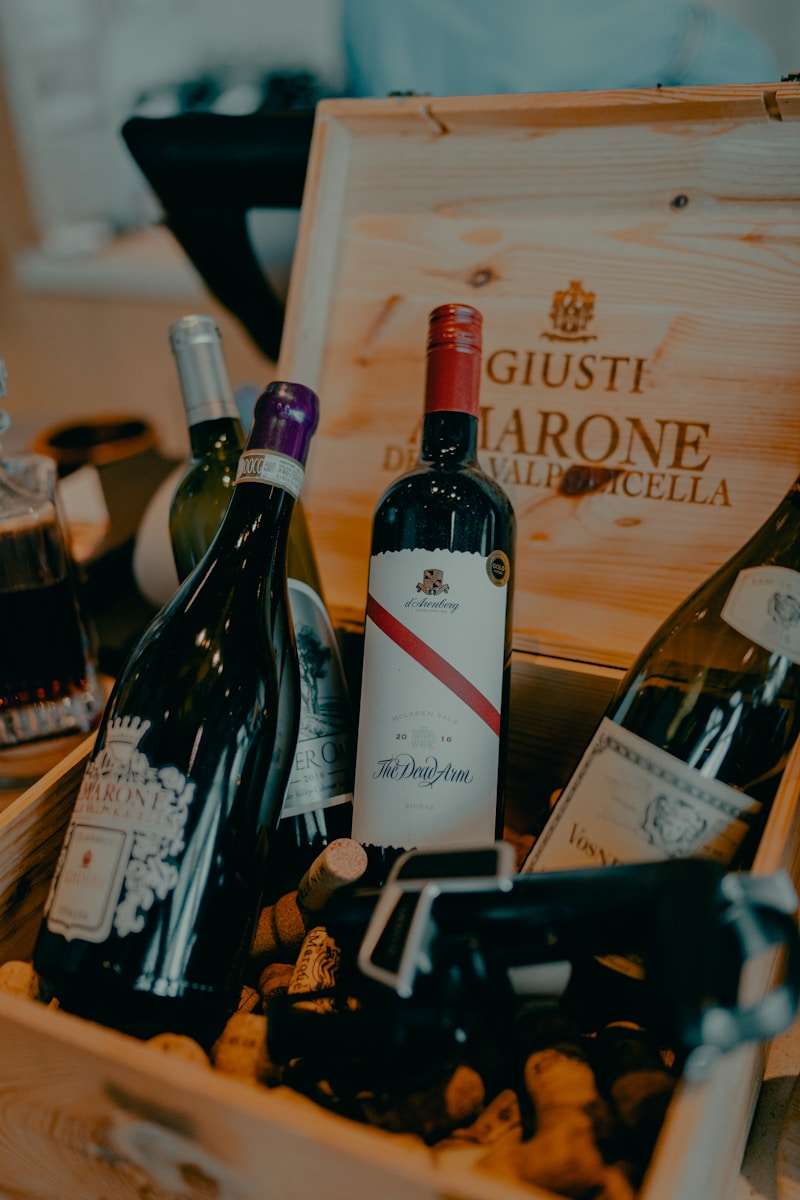
Amarone della Valpolicella: One of Italy’s great wines. Made from air-dried Corvina grapes (a process called appassimento), which concentrates sugars and flavors dramatically. The result is a big, rich, almost port-like red wine with dried fruit, chocolate, leather, and tremendous structure. Not for the faint of heart — or wallet.
Valpolicella: The lighter sibling, made from the same grapes but without drying. Fresh, lighter, good for everyday drinking.
Ripasso: A clever middle ground — Valpolicella that’s been “re-passed” over Amarone grape skins for extra richness. Sometimes called “Baby Amarone.”
Soave: A white wine appellation based on Garganega grapes. At its best (Soave Classico from old vines), it’s mineral and complex with almond and white floral notes. Much Soave on the market is neutral, so producer selection matters.
Prosecco: From the Veneto and Friuli hills, this sparkling Italian wine made from Glera grapes has gone global. Lighter and fruitier than Champagne, with lower pressure and typically less yeast influence.
Sicily (Sicilia)
Sicily has transformed over the past 20 years from a bulk wine producer into one of Italy’s most exciting regions.
Nero d’Avola: Sicily’s flagship red grape. Rich, full-bodied, with dark cherry, licorice, and chocolate notes. Think of it as the Sicilian Syrah — warm, powerful, and food-friendly.
Etna Rosso: Perhaps Italy’s most fashionable wine right now. Grown on the slopes of Mount Etna at high altitude, these wines from the Nerello Mascalese grape have a Burgundy-like delicacy — lighter in color, high in acidity, with volcanic minerality. The dramatic terroir makes them genuinely unique.
Marsala: Sicily’s fortified wine, often overlooked as a cooking ingredient but legitimately complex in its dry or semi-dry forms.
Other Regions Worth Knowing
| Region | Key Wines | Character |
|---|---|---|
| Friuli-Venezia Giulia | Friulano, Pinot Grigio, Ribolla Gialla | Crisp, aromatic whites; natural wine hotbed |
| Trentino-Alto Adige | Pinot Grigio, Gewürztraminer, Lagrein | Alpine elegance, cool-climate freshness |
| Emilia-Romagna | Lambrusco, Sangiovese di Romagna | Fizzy reds, savory everyday wines |
| Campania | Fiano, Greco di Tufo, Taurasi (Aglianico) | Southern whites of real complexity; structured reds |
| Puglia | Primitivo, Negroamaro | Bold, warm, value-driven reds |
Italian Wine Food Pairings
Italian wine was made for the table. The food-wine pairing instinct is almost always to match regional wines with regional food — and that approach almost never fails.
- Chianti Classico → Florentine steak, lamb ragù, pecorino
- Barolo → Braised beef short ribs, truffle dishes, aged Parmigiano
- Prosecco → Antipasto, fried foods, prosciutto e melone
- Amarone → Wild boar, game meats, aged hard cheeses
- Soave → Light seafood, risotto, grilled vegetables
- Nero d’Avola → Grilled lamb, tomato-based pasta, spiced sausages
- Moscato d’Asti → Fruit tarts, fresh berries, light pastries
The guiding principle: high-acid Italian wines cut through fat and salt beautifully. The more complex the dish, the more structured wine it can handle.
How to Read an Italian Wine Label
Italian labels can be intimidating. Here are the key things to look for:
- Appellation (DOC/DOCG): This tells you where it’s from and what rules it follows. “Chianti Classico DOCG” is more specific and controlled than “Vino Rosso d’Italia.”
- Producer name: Often the most important factor. Good producers make good wine even in average vintages.
- Vintage: Italian wines vary significantly by year. 2016 was exceptional in Tuscany and Piedmont. 2017 was very warm — riper, less acid.
- Riserva / Gran Selezione: These designations indicate longer aging requirements, usually indicating higher quality and structure.
- Grape variety (sometimes): Barolo must be 100% Nebbiolo, but the label won’t always say so. Knowing the appellation tells you the grape.
Italian Wine for Teams and Corporate Tastings
Few themes generate more excitement in a corporate tasting than an Italian wine flight. The range from Prosecco through Barolo is dramatic — sparkling to still, white to red, light to structured — and every stop along the way has a great story.
At The Wine Voyage, Myrna Elguezabal has built several team events around the Italian wine journey. A “from north to south” format — starting with Prosecco, moving through a Friulian white, a Chianti, and finishing with an Amarone or aged Barolo — gives participants a vivid map of the country’s diversity. It sparks genuine curiosity, and the food-pairing angle (“Italian wine needs Italian food”) makes for an engaging, practical conversation that people remember.
For more on wines featured in this guide, explore our Sangiovese guide, Nebbiolo guide, Prosecco guide, Pinot Grigio guide, and port wine guide for more on fortified wines. Our wine regions guide provides a broader global perspective, and the Bordeaux guide is a great comparison for understanding how France and Italy approach structured reds differently.
Further Reading
For deeper Italian wine exploration, two essential resources: Wine Folly’s Italy overview includes beautiful region maps and grape breakdowns that help visualize the country’s complexity. For serious study and producer-level depth, Decanter’s Italian wine section is among the most comprehensive English-language resources available.