Ask any HR professional what their biggest challenge is, and you’ll hear some version of the same answer: getting people genuinely engaged. Not politely present, not going through the motions — actually invested in showing up and connecting with colleagues.
I’ve spent years producing corporate events, and I’ve seen both ends of the spectrum. I’ve seen team building that makes people groan and quietly check their phones, and I’ve seen experiences that people talk about weeks later. The difference almost always comes down to one thing: whether the activity gives people something real to engage with, or whether it’s just an exercise in filling time.
This guide is about the former. These are HR team building ideas that create genuine moments — events your team will actually look forward to.
Why So Many HR Team Building Programs Fall Flat
Before getting into what works, it’s worth being honest about what doesn’t — and why. Most team building failures share a few common traits.
They feel mandatory. As soon as people sense they’re being herded into participation, they disengage. The best team building feels like an invitation, not a requirement.
The activity has no real stakes. Trust falls and icebreaker questions don’t create investment because nothing is actually on the line. People need something worth trying for.
There’s no natural conversation. Activities that put people in parallel (watching a presentation together, for example) don’t create connection. Side-by-side isn’t the same as face-to-face.
It’s the same thing every year. Repetition kills anticipation. If your team can predict exactly what’s coming, they’ve already mentally checked out.
The best HR team building ideas solve all four of these problems. They create willing participation, real engagement, natural conversation, and genuine novelty.
What Makes HR Team Building Actually Work
After years of producing events for companies ranging from startups to Fortune 500s, here’s what I’ve found distinguishes the programs that land:
Shared discovery. When everyone in the room is learning something new together — nobody has an unfair advantage — it levels the hierarchy. Your CEO and your newest hire are both novices, and that shared vulnerability is powerful.
Friendly competition. A little structured competition — especially team-based competition — creates energy and investment. It doesn’t have to be high-stakes; it just has to feel real.
Something to talk about afterward. The best experiences generate stories. “Remember when Marcus thought the Cabernet was a Pinot?” becomes a reference point that people return to for months.
Sensory engagement. Activities that engage multiple senses — taste, smell, sight — are more memorable than anything you’ll do on a screen or in a conference room.
HR Team Building Ideas That Consistently Deliver
1. Blind Wine or Spirits Tasting Competition
This is one of the most reliably successful formats I’ve ever run. You divide the group into teams, present them with a series of unlabeled wines (or spirits), and challenge them to identify varieties, regions, or styles.
Nobody needs wine expertise to participate — in fact, the lack of expertise is part of what makes it so fun. Teams confer, debate, argue, and commit to answers together. The competitive element drives engagement, and the tasting itself gives everyone something to bond over.
I’ve run this for tech teams, law firms, healthcare companies, and nonprofit organizations. The format works across industries and demographics because it’s genuinely interesting, slightly irreverent, and doesn’t require any preparation from participants.
2. Wine Blending Competition
Give teams their own small barrel of base wines — typically three to five varietals — and ask them to blend a final product they’re proud of. Teams taste, discuss, adjust ratios, and ultimately present their blend to the group.
What makes this format exceptional for HR purposes is the collaborative dimension. Blending requires genuine conversation. Someone has to argue for more Cab Franc, someone else pushes for a softer blend, and the team has to reach consensus. That’s exactly the kind of dynamics-building that’s hard to manufacture in other formats.
This is one of The Wine Voyage’s most popular programs for corporate groups, and the reason is always the same: people leave feeling like they made something together.
3. Food and Wine Pairing Dinner
A structured pairing experience — where a facilitator walks teams through matching wines to dishes and explains the principles behind each pairing — creates a natural flow of conversation and discovery. The meal structure gives the event a clear arc, and the educational element gives people something to take home.
This works particularly well for client entertainment, department celebrations, or annual team events where you want something elevated but still participatory.
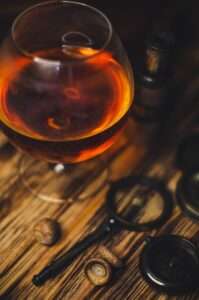
4. Spirits Tasting Experience (Tequila, Mezcal, or Whiskey)
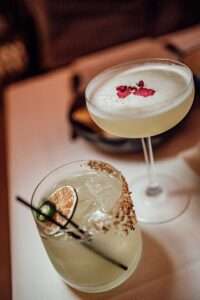
Wine isn’t the only vehicle for a great tasting experience. A guided tequila and mezcal experience — covering the history of agave spirits, production methods, and the real flavor differences between expressions — is eye-opening for most participants and produces tremendous engagement.
It’s also a differentiator. Most companies default to wine. A tequila or mezcal experience signals that your HR team is paying attention to what’s interesting right now, not just what’s expected.
5. Escape Room Challenges
Escape rooms remain consistently effective for team building because they solve several of the core problems simultaneously. They’re time-pressured (creates stakes), require genuine collaboration (no one person can solve everything), and are novel enough to generate real engagement.
The key is choosing a room that scales well to your group size. Smaller rooms work best for close-knit teams of 6–10. For larger groups, look for venues that run multiple rooms simultaneously with a competitive element between teams.
6. Cooking Classes and Culinary Competitions
Group cooking experiences — whether a structured class or a head-to-head cook-off — create exactly the kind of side-by-side collaboration that builds rapport. Everyone has a role, the stakes are low but real (you’re making something you’ll eat), and the natural chaos of a kitchen generates the kind of laughter that office settings never do.
Look for venues that offer private group experiences with a chef leading instruction, or culinary competition formats where teams are judged by a panel.
7. Creative Workshops: Pottery, Painting, or Craft
Not every team building event needs to be competitive. For teams that are burned out or recently through a stressful period, a creative workshop can be exactly the right reset. Pottery, painting, glassblowing, and similar crafts are absorbing — they pull people out of work-brain and into something genuinely relaxing and personal.
The conversation that happens naturally while people work with their hands is often more authentic than anything a structured icebreaker produces.
8. Volunteer Days with a Cause Component
Meaningful service projects — packing meals for food banks, habitat restoration, working with local nonprofits — create a different kind of bonding. The shared purpose gives the day genuine weight, and people leave with a sense of accomplishment that extends beyond the team.
The most effective versions connect the volunteer work to something the company or team genuinely cares about, rather than picking a cause randomly. Authenticity matters here.
9. Trivia Competitions
A well-designed trivia event — organized around topics the group cares about, with team-based competition and a host who can read the room — is low-cost, highly scalable, and reliably fun. The key is customization: trivia built around company history, inside jokes, and relevant pop culture lands much better than generic quiz formats.
Consider hiring a professional trivia host rather than running it internally. The production quality makes a significant difference in how the event is received.
10. Industry Learning Days
Bring in an expert — a sommelier, a chef, a designer, a historian — and structure a half-day or full-day around genuine learning in that domain. The format works because it’s interesting on its own terms, not because it’s been engineered to be “team building.”
People bond naturally when they’re curious together. An afternoon learning about the history of cocktail culture or the science of coffee roasting creates real shared experience without feeling manufactured.
Matching the Activity to Your Team
Not every format works for every group. Here’s a quick framework for matching HR team building ideas to your specific situation.
| Situation | Best Format |
|---|---|
| Cross-functional team, limited rapport | Blind tasting competition — levels the playing field |
| High-performing team, wants challenge | Wine blending or culinary competition |
| Post-difficult-period, needs reset | Creative workshop or volunteer day |
| Mixed demographics, wide age range | Food and wine pairing dinner |
| Large group (50+) | Trivia competition or multi-team tasting |
| Leadership team, elevated budget | Private chef experience or spirits education |
| New hires, onboarding cohort | Escape room or collaborative tasting |
Planning Checklist for HR Team Building Events
Good execution matters as much as good ideas. Here’s what I always tell HR coordinators before they confirm a program:
- Define success upfront. Is this about breaking down silos? Celebrating a win? Onboarding new staff? Knowing the goal shapes every decision downstream.
- Account for dietary and accessibility needs early. Nothing derails an experience faster than realizing someone can’t participate in the core activity.
- Book 6–8 weeks out for curated experiences. Quality vendors fill up. Last-minute bookings mean lower-quality options.
- Keep the team size in mind. Some formats degrade at scale. Make sure your vendor has run the format for your group size before.
- Follow up with a moment of reflection. A brief debrief — even 10 minutes — helps people articulate what they learned and anchors the experience.
The Wine Voyage for HR Team Building
At The Wine Voyage, we work directly with HR professionals and event coordinators to design wine and spirits experiences that fit the needs and personality of the team. Our Blind Tasting Competition, Perfect Blend Competition, and Tequila & Mezcal Experience are all built specifically for corporate groups — structured to create connection, not just pour drinks.
We’ve worked with teams from the Carter Center, Sazerac, GoFundMe, and dozens of companies across industries. Our founder Myrna Elguezabal brings 15 years of corporate event production experience to every engagement, along with genuine wine certification and a deep understanding of what makes groups click.
If you’re building your HR team building calendar and want something that will genuinely land, we’d love to help you design it.
For more inspiration, see our full guide to corporate event ideas and our breakdown of unique team building activities. If a wine-focused experience is on your radar, our wine tasting team building guide is the right starting point.
Further Reading
For HR professionals building a case for experiential team building, Harvard Business Review’s research on employee engagement and connection is essential context, and SHRM’s employee relations resource hub offers practical frameworks for program design and measurement.