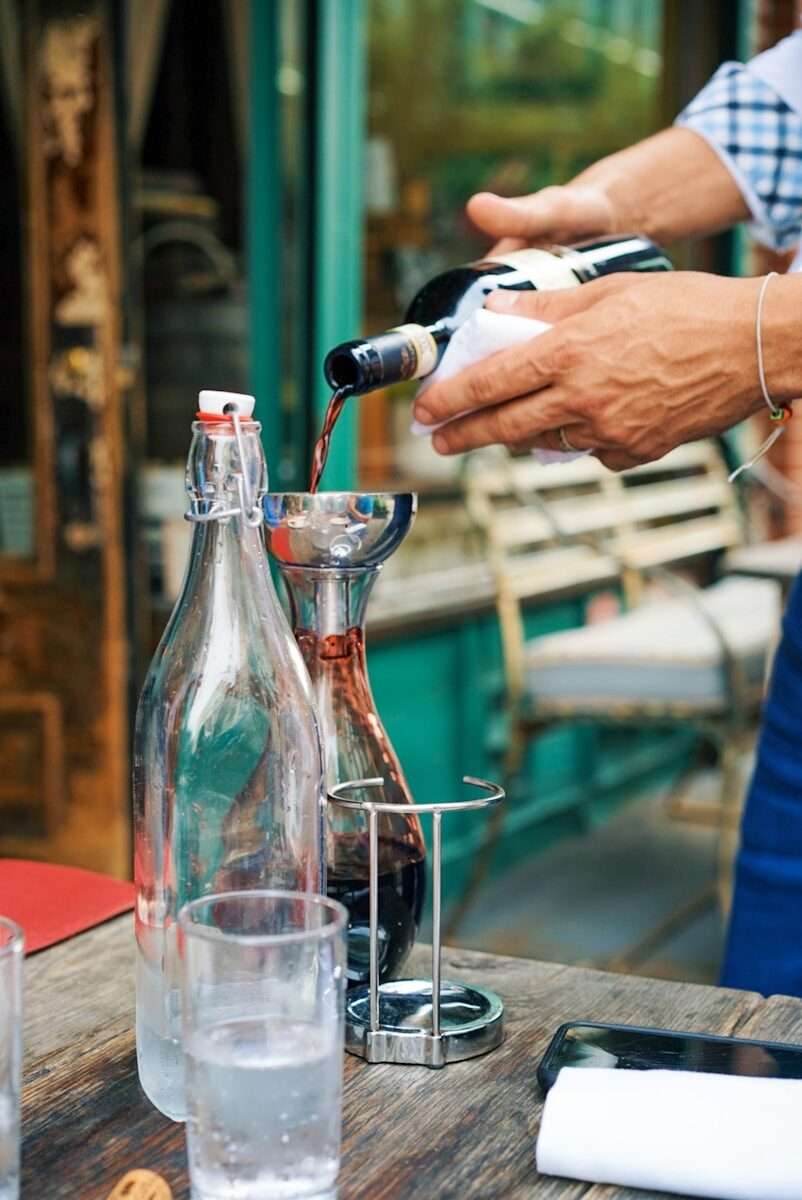
Decanting is one of those wine rituals that looks complicated and often gets treated as optional or purely ceremonial. It isn’t. For the right wine, decanting makes a real, noticeable difference in how it tastes. For the wrong wine, it’s unnecessary. Knowing which is which is the whole skill.
What Decanting Does
A decanter is just a vessel — typically glass, often wide-bottomed, designed to hold wine that has been poured out of the original bottle.
Pouring wine into a decanter does two things:
1. Separates sediment. As wine ages, the pigments and tannins in red wine polymerize and fall out of solution as sediment — a dark, gritty deposit at the bottom of the bottle. In old wines, this sediment is significant. Drinking wine with sediment in the glass is gritty and unpleasant. Decanting separates the clear wine from the sediment.
2. Exposes wine to oxygen. When wine pours into a decanter, it makes contact with air. The surface area of the wine in the decanter is much larger than when it’s in a bottle — more contact with oxygen happens over time. This can:
- Open up closed, tight aromatics
- Soften harsh tannins
- Blow off reductive aromas (struck match, sulfur-like) that sometimes appear when wine is first opened
- Make a young, tannic wine more approachable
Which Wines Benefit From Decanting
Old Red Wine (to Remove Sediment)
Any red wine over 8–10 years old may have sediment. Wines built for aging — Barolo, Barbaresco, Bordeaux, Burgundy, vintage Châteauneuf-du-Pape, vintage Port — will almost certainly have it by 15+ years.
Decanting purpose: sediment separation. Don’t rush this — take it slow.
How to decant an old wine:
- Stand the bottle upright for 24 hours before decanting (letting sediment settle to the bottom)
- Pour slowly and steadily into the decanter, holding a light source (candle or flashlight) under the neck of the bottle
- Watch the neck — when you see the dark sediment beginning to move toward the mouth of the bottle, stop pouring
- The small amount of wine remaining (with sediment) stays in the bottle
Old wines shouldn’t sit in the decanter long — they can be fragile and overexpose quickly. Decant and serve within 30–60 minutes.
Young, Tannic Red Wine (to Open Up)
Young full-bodied reds — Cabernet Sauvignon, Barolo, Syrah, young Bordeaux, high-end Malbec — are often tight when first opened. The tannins feel grippy, the aromatics are closed. An hour or two in a decanter softens the tannin and opens the wine up significantly.
This is “breathing” in practice. (Just leaving the bottle open on the counter does almost nothing — the tiny exposed surface area barely contacts air. Decanting actually works.)
Guideline for young tannic reds:
- Under $20, everyday drinking: 20–30 minutes
- Premium wine, 1–5 years old: 1–2 hours
- Top wine, very young: 2–3 hours
Start tasting as it decants — the wine changes as it sits.
Reductive Wine (Any Age)
Some wines go into a reductive state — they smell of struck match, sulfur, or rubber when first opened. This happens because the wine was made with little oxygen exposure and is “closed.” It’s not a flaw; it opens with air.
These wines benefit dramatically from decanting. A wine that smells of sulfur on opening can smell floral and complex 30 minutes later in a decanter.
Which Wines Don’t Need Decanting
Light, Delicate Wine (Old or Young)
Old Burgundy (Pinot Noir) from delicate vineyards, old Barolo from a fragile vintage, very old white wine — these can fall apart with too much air. The wine has had decades to develop; aggressive oxygenation can destroy the aromas you waited for.
For very old delicate wines: decant only for sediment removal, if needed. Do it quickly and don’t let the wine sit in the decanter for long.
Everyday Drinking Wine
A $15 Merlot or Sauvignon Blanc doesn’t need decanting. There’s no sediment, no particular structure to soften. Just pour and drink.
Sparkling Wine
Never decant sparkling wine. You’ll lose the bubbles immediately.
Most Rosé and Light White Wine
Fresh, aromatic whites — Sauvignon Blanc, Pinot Grigio, Albariño — don’t benefit from decanting. The aromatics can actually fade with excess air exposure. These should stay in the bottle and be drunk fresh.
How Long to Decant
There’s no single right answer. The variables are:
- How tannic and structured is the wine?
- How young is it?
- Is it reductive when first opened?
- Is it delicate and potentially fragile?
Quick reference:
| Wine type | Decant time |
|---|---|
| Very old wine (20+ years), for sediment | 15–30 minutes max |
| Old wine (10–20 years), slightly tannic | 30–60 minutes |
| Young premium tannic red (1–5 years) | 1–3 hours |
| Young everyday tannic red | 20–30 minutes |
| Reductive wine | Until it opens (taste regularly) |
| Light white or rosé | Don’t decant |
| Sparkling | Never |
Start tasting after 20 minutes and again at 45 minutes. The wine will tell you when it’s ready.
Do You Need a Decanter?
A dedicated decanter helps with sediment separation (you need something with a wide base to pour slowly into and a shape that lets you stop cleanly). For breathing purposes, any wide-mouthed vessel works: a glass pitcher, a large Pyrex measuring cup, even a clean vase.
Types of decanters:
Standard decanter — a straight or slightly curved neck opening into a wide base. Works for almost every purpose. Easy to pour, easy to clean.
Ship’s decanter (Magnum decanter) — wider base, more surface area, faster aeration. Good for young wines that need aggressive decanting.
Swan neck decanter — the classic shape, curved neck, wide base. Aesthetic choice as much as functional.
What matters: Wide base (more surface area = more air contact), easy to pour from (stable), easy to clean (thin decanters are notoriously hard to clean — look for wider necks or buy a decanter cleaning brush).
The Double Decant
A useful technique for young tannic wines in a hurry:
- Open the bottle and pour the wine into the decanter
- Rinse the original bottle
- Pour the wine back from the decanter into the bottle
- Pour again from the bottle into the decanter
Each pour introduces more oxygen. A double decant does in 5 minutes what 1 hour of passive sitting might achieve.
Temperature After Decanting
Wine warms up when it sits in a decanter at room temperature. If you’re decanting a red wine for 2 hours in a warm room, it may be warmer than you want to serve it by the time you pour.
Fix: Decant in a cooler room, or check the temperature before serving and put the decanter in the refrigerator for 10 minutes if needed.
The Short Version
Decant if: the wine is old (sediment), young and tannic (needs air), or closed and reductive (needs to open up).
Skip decanting if: the wine is fresh and aromatic, sparkling, very delicate, or you’re just having a casual glass of everyday wine.
A simple pour and 20-minute rest works for most situations. For special bottles, think about what the wine needs and give it time.
For what you’re decanting into: see wine glass types and how to choose them. For understanding the wine’s structure before you decide: light, medium, and bold wines explained. And for storing the wine before you open it: wine fridge guide.