Sweet wine is more varied than the category name suggests. There’s the barely-sweet Moscato d’Asti at 5% alcohol with effervescent bubbles. There’s the deeply concentrated Sauternes, made from grapes shriveled by noble rot, poured in 2-ounce servings with foie gras. There’s Port, rich and fortified, built for winter evenings. And there are hundreds of off-dry wines — Riesling, Vouvray, Gewürztraminer — where residual sweetness is a subtle structural element, not a defining feature.
This guide covers all of it: what makes wine sweet, the best sweet wines by style, and how to serve and pair them.
What Makes Wine Sweet
Wine sweetness comes from residual sugar (RS) — the natural grape sugars that remain after fermentation, because the yeast stopped (or was stopped) before converting all the sugar to alcohol.
Dry wine: Less than 4 g/L of residual sugar. Most table wines — Cabernet, Chardonnay, Pinot Grigio — are dry. A dry wine can still taste fruity; “fruity” refers to aroma, “sweet” refers to sugar on the palate.
Off-dry wine: 4–18 g/L. Perceptibly sweet but not obviously so. Many consumers who say they “don’t like sweet wine” enjoy off-dry Riesling without realizing it. The acidity in high-acid varieties (Riesling, Gewürztraminer) balances the sweetness so it reads as “fresh” rather than “sweet.”
Medium-sweet wine: 18–45 g/L. Noticeably sweet. Demi-sec Champagne, some Vouvray, Lambrusco amabile.
Sweet wine: 45–120 g/L. Clearly sweet — Sauternes, Spätlese Riesling, late-harvest wines.
Intensely sweet / dessert wine: 120 g/L+. Rich, concentrated, poured in small servings. Trockenbeerenauslese, Ice Wine, PX Sherry.
Sweet White Wines
Riesling (Off-Dry to Sweet)
German Riesling is the benchmark for sweet white wine because it achieves something rare: high sweetness balanced by high acidity. The result doesn’t taste cloying — it tastes refreshing, complex, and specific to where it was grown.
German Riesling classification by sweetness:
- Kabinett — lightest, often off-dry or barely sweet, under 10% alcohol
- Spätlese (“late harvest”) — noticeably sweet, richer, more intense
- Auslese — distinctly sweet, concentrated, made from specially selected clusters
- Beerenauslese (BA) — intensely sweet, made from individually selected overripe berries
- Trockenbeerenauslese (TBA) — the pinnacle, made from nearly raisined shriveled berries; extraordinarily concentrated, rare, expensive
- Eiswein (Ice Wine) — made from frozen grapes, extremely high acid and sweetness
What to try: A Mosel Spätlese from a producer like Dr. Loosen, Schloss Saarstein, or Egon Müller gives you the full picture of why sweet Riesling is considered one of the world’s great wine styles.
Sauternes
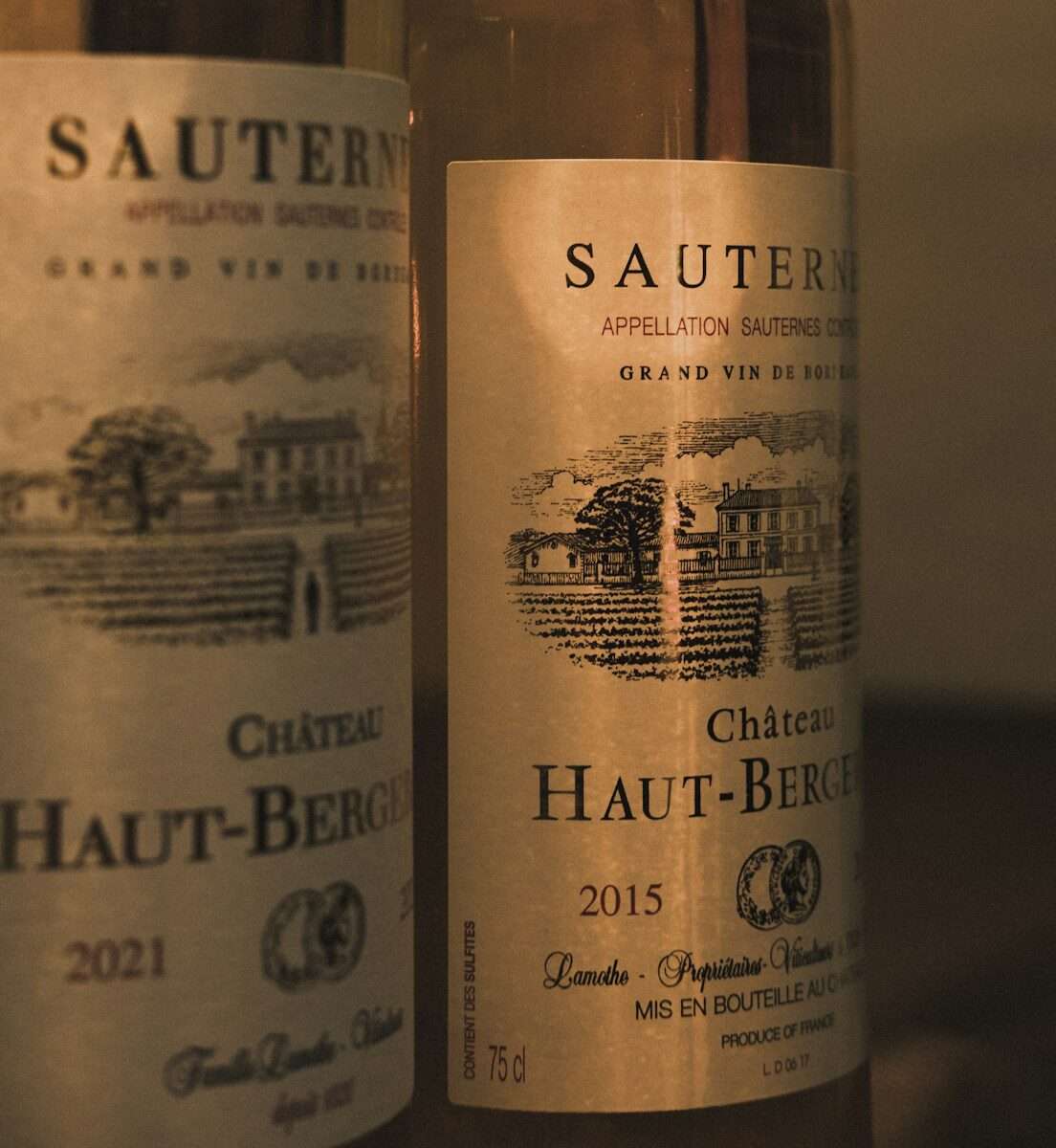
Sauternes is made in Bordeaux from Sémillon, Sauvignon Blanc, and sometimes Muscadelle — grapes affected by Botrytis cinerea, the “noble rot” that shrivels and concentrates the berries while adding honeyed complexity. The result is golden, viscous, and complex, with flavors of apricot, honey, ginger, and marmalade.
Château d’Yquem is the most famous producer — priced accordingly. But Château Rieussec, Château Guiraud, and Château Suduiraut offer similar richness at more accessible prices.
Pair with: Foie gras (the classic), Roquefort blue cheese, crème brûlée, fruit tarts.
Moscato d’Asti
Italy’s Piedmont produces this low-alcohol (5–5.5%), lightly sweet, gently sparkling wine from the Muscat Blanc grape. It’s aromatic, floral, peach-scented, and effervescent — the approachable sweet wine that converts people who say they don’t like sweet wines.
Unlike many sweet wines, Moscato d’Asti is meant to be drunk very young (within a year or two of vintage) and very cold.
Pair with: Fresh fruit, light pastries, biscotti, cheese course, summer afternoons.
Vouvray (Demi-Sec and Moelleux)
Vouvray, in France’s Loire Valley, makes dry, off-dry, and sweet wines from Chenin Blanc — one of the most age-worthy white grapes in the world. The demi-sec (medium-sweet) and moelleux (sweet) styles develop extraordinary complexity over decades.
Pair with: Foie gras, rillettes, blue cheese, fruit-based desserts.
Gewürztraminer (Late Harvest)
Gewürztraminer’s natural aromatics — lychee, rose, ginger — make it a natural candidate for sweet styles. Alsatian Gewürztraminer Vendanges Tardives (late harvest) and Sélection de Grains Nobles are France’s answers to German Auslese and Beerenauslese. The sweetness is lush but the aromatics are unmistakably spiced.
Ice Wine (Eiswein)
Made in Canada (where it’s called Icewine), Germany, and Austria from naturally frozen grapes harvested in winter. The ice concentrates the sugars and acids dramatically. The resulting wine is intensely sweet, bracingly acidic, and very expensive — harvesting frozen grapes is labor-intensive and yields are tiny.
Vidal Blanc is the common Canadian variety; German Eiswein is typically Riesling.
Sweet Red Wines
Port
Portugal’s Douro Valley produces the most famous fortified sweet red wine in the world. During fermentation, neutral grape spirit (aguardente) is added, which stops fermentation while grape sugars are still present. The result is sweet, fortified to 19–22% alcohol, and designed for aging.
Main Port styles:
Ruby Port — young, red-fruited, most accessible and affordable. Drink within a few years of release.
Tawny Port — aged in small barrels where oxidation turns the wine amber-brown. Flavors of dried fruit, caramel, nuts. Sold by age: 10-year, 20-year, 30-year, 40-year. The 20-year Tawny is the sweet spot of quality and value.
Vintage Port — declared in exceptional years, made from the finest grapes, aged in bottle. The great long-distance runner: peak drinking often 20–40 years after vintage.
Late Bottled Vintage (LBV) — vintage-dated Port aged 4–6 years before bottling. The practical everyday Port for drinking now.
Pair with: Dark chocolate, walnuts, Stilton blue cheese, dried fruit, after-dinner conversation.
Banyuls and Maury
From the far south of France, near the Spanish border, these fortified reds from Grenache are France’s answer to Port — and the classic pairing for chocolate desserts. Banyuls has rich red and dried fruit character with an earthy, Mediterranean edge. Rimage (vintage) styles are more Port-like; Tuilé styles show oxidative complexity similar to Tawny Port.
Lambrusco (Amabile)
Not all Lambrusco is sweet, but the amabile (“lovable”) style is off-dry to medium-sweet, sparkling, and deeply underrated. Italian, fun, relatively low in alcohol (11%), with red fruit, a slight earthy note, and lively bubbles. Pairs remarkably well with cured meats, pizza, and anything from the Emilia-Romagna table.
Recioto della Valpolicella
The sweet counterpart to Amarone. Made in Valpolicella (Veneto, Italy) from partially dried Corvina, Rondinella, and Molinara grapes — the same process as Amarone, but fermentation is stopped while sugar remains. The result is rich, velvety, and intensely red-fruited with dark chocolate notes.
Sparkling Sweet Wines
Demi-Sec Champagne
Most Champagne is Brut (dry) or Extra Brut (very dry), but Demi-Sec — literally “half-dry” but actually medium-sweet — exists for a reason: it pairs far better with most desserts than dry Champagne. The sugar dosage is 32–50 g/L. Moët & Chandon, Taittinger, and Veuve Clicquot all produce reliable Demi-Sec styles.
Prosecco (Extra Dry)
Confusingly, Prosecco labeled “Extra Dry” is slightly sweeter than “Brut” — 12–17 g/L RS. This is the most commonly sold Prosecco style, and most people who drink Prosecco are drinking a wine with perceptible sweetness. “Brut” Prosecco is drier.
Asti Spumante
The fully sparkling (as opposed to gently fizzy Moscato d’Asti) version from Piedmont. Sweeter and more effervescent than Moscato d’Asti, still light in alcohol (~7%).
Pairing Sweet Wines With Food
The most important rule: the wine should be at least as sweet as the food. A dessert sweeter than the wine makes the wine taste thin, sharp, and acidic.
| Dish | Wine |
|---|---|
| Dark chocolate / chocolate cake | Port, Banyuls, Recioto |
| Fruit tarts / panna cotta | Moscato d’Asti, late-harvest Riesling |
| Crème brûlée | Sauternes, Vouvray moelleux |
| Foie gras | Sauternes, Gewürztraminer Vendanges Tardives |
| Blue cheese (Roquefort, Stilton) | Sauternes, Port, late-harvest Riesling |
| Cured meats / charcuterie | Lambrusco amabile, off-dry Riesling |
| Fresh fruit | Moscato d’Asti, Asti Spumante |
| Spicy food (Thai, Indian) | Off-dry Riesling, Gewürztraminer |
Sweet wines and cheese are underrated — salt and sweetness amplify each other. The classic Roquefort and Sauternes pairing works because the intense saltiness of the cheese meets the intensity of the wine.
Serving Sweet Wines
Serve cold. Sweet wines are almost always best served cold — 43–50°F (6–10°C) for most white and sparkling sweet wines. The cold temperature keeps them from feeling heavy and cloying.
Small pours. Dessert wines are typically poured in 2–3 oz servings, not 5–6 oz. The richness and sweetness make smaller servings more pleasurable.
After the food, not with. Sweet wine at the end of a meal signals dessert. Starting dinner with a glass of Sauternes is unusual (though valid with foie gras as a first course). In most settings, sweet wine closes the meal.
Tawny Port exception. Tawny Port is sometimes served chilled as an aperitif in Portugal — it has an oxidative, nutty character that makes it interesting before a meal. It also works beautifully after.
For wine body and structure more broadly, see light, medium, and full-bodied wines explained. For pairing sweet wines with food, the guide to how to pair wine with food covers the sweetness principle in depth. And for storing sweet wine properly, see our wine fridge guide.