Rosé is the most misunderstood wine category. For decades it was dismissed as unsophisticated — something you drank at a garden party when you couldn’t decide between red and white. That reputation has almost completely reversed. Dry Provence rosé is now one of the most sought-after summer wines globally, and serious winemakers across the world have made rosé a genuine priority.
But rosé still confuses people. Is it sweet or dry? Is pink wine just for summer? What makes one bottle worth $8 and another worth $45?
This guide covers all of it.
How Rosé Is Made
There are three main methods for making rosé:
1. Saignée (“Bleeding”) Method
Red grapes are crushed and the juice begins skin contact (as it would for red wine). After a short period — 2 to 24 hours — some of the juice is “bled off” (saignée) into a separate tank before it develops full red wine color. This juice is then fermented separately as rosé.
The advantage: the remaining red wine juice is more concentrated. The rosé produced is typically more richly colored and fuller-bodied, a byproduct of the red wine process rather than an intentional primary product.
Result: Deeper color, more body, often more tannin.
2. Direct Press (Provence Method)
Red grapes are harvested and pressed immediately, with very brief or no skin contact. The juice runs off pale pink (because red grape skins do carry color in the skin even without extended contact), is fermented, and bottled.
This is how most high-quality dry rosé is made. It’s an intentional production method — the rosé is the goal, not a byproduct.
Result: Pale color (from salmon to copper), delicate flavors, minimal tannin, fresh and crisp.
3. Blending
In most appellations, blending finished red and white wine to create rosé is prohibited. Champagne is the notable exception — rosé Champagne is often made by blending a small percentage of still Pinot Noir into the white Champagne base.
Dry Rosé vs. Sweet Rosé: The Key Distinction
This is the divide that trips people up most often.
Dry rosé has little to no residual sugar. It tastes like a dry white wine that happens to be pink — fresh, acidic, perhaps with red fruit notes, but not sweet. Provence rosé, most Spanish rosado, Italian rosato, and dry American rosé are in this category. This is where most quality rosé sits.
Sweet rosé has significant residual sugar and tastes noticeably sweet. White Zinfandel (invented in California in the 1970s) is the most common example — made from Zinfandel grapes with enough residual sugar to taste candy-like. Some Portuguese rosés (Mateus, Lancers) also fall into this category.
Neither is superior — they’re different products for different occasions. But if you’ve had only sweet pink wine and dismissed rosé as a result, you haven’t actually tried dry rosé. They taste completely different.
How to identify: Look for “Dry” on the label, or look for origin. Wines labeled “Provence rosé,” “Côtes de Provence,” “Tavel,” or any Spanish, Italian, or serious American dry rosé producer will be dry. “White Zinfandel,” “White Merlot,” or any wine described as “refreshingly sweet” will not be.
The Major Rosé Regions
Provence, France
The global benchmark for dry rosé. The Côtes de Provence appellation produces the vast majority of Provence rosé — the pale salmon wine in the distinctive bottle that’s become the image of summer wine globally.
The dominant grape blend in Provence is Grenache, Cinsault, Syrah, and Mourvèdre, in various combinations. The result is pale in color, fresh in acidity, with delicate notes of strawberry, watermelon, herbs, and a mineral quality from the region’s limestone and schist soils.
Sub-appellations:
- Coteaux d’Aix-en-Provence — rounder, more generous style
- Tavel — the only Grenache-dominant appellation where only rosé is made (no whites or reds). Deeper color, more body, drier style
- Bandol rosé — Mourvèdre-dominant, more structured and age-worthy than typical Provence rosé
- Les Baux-de-Provence — biodynamic-forward, distinctive terroir
Producers to know: Château Miraval, Domaine Ott (Château Romassan), Château d’Esclans (Whispering Angel), Domaines Bunan, Clos Cibonne.
Spain (Rosado)
Spanish rosado, particularly from Navarra and Rioja, tends to be slightly deeper in color than Provence rosé and made primarily from Garnacha (Grenache) or Tempranillo. It’s dry, food-friendly, and often excellent value.
Navarra rosado is among the best in the world at its price point — often under $15, with real complexity. Rioja produces rosado alongside its famous reds.
Italy (Rosato)
Italian rosato ranges widely depending on region. Some highlights:
- Cerasuolo d’Abruzzo — made from Montepulciano d’Abruzzo, this is one of Italy’s most serious rosé styles. Deeper color, real body and structure, excellent with food.
- Chiaretto (Lake Garda) — pale, delicate rosé from Bardolino grapes. Delicate and fresh.
- Cirò Rosato (Calabria) — made from Gaglioppo, with distinctive southern Italian character.
Rosé Champagne
A category of its own. Rosé Champagne uses the same varieties as white Champagne (primarily Chardonnay, Pinot Noir, and Pinot Meunier) but produces a pink wine — either by blending a small amount of Pinot Noir or by brief skin contact during pressing.
The result is more complex than most still rosé: the Champagne’s autolytic character (bread, yeast, pastry) combines with red fruit notes from the Pinot Noir content. Most rosé Champagne is more expensive than the equivalent white Champagne from the same producer.
Worth knowing: Rosé Champagne is among the most food-versatile sparkling wines — it bridges the gap between white wine pairings (seafood, poultry) and red wine territory (charcuterie, duck, light red meat).
Oregon and California (USA)
Serious dry rosé production in the US has expanded dramatically. Oregon’s Willamette Valley produces excellent dry Pinot Noir rosé — the grape variety naturally lends itself to rosé, with bright acidity and red fruit character. California’s Sonoma and Paso Robles produce structured rosé from Grenache, Syrah, and Mourvèdre.
What Rosé Tastes Like
Dry rosé occupies a middle space between white wine and red wine:
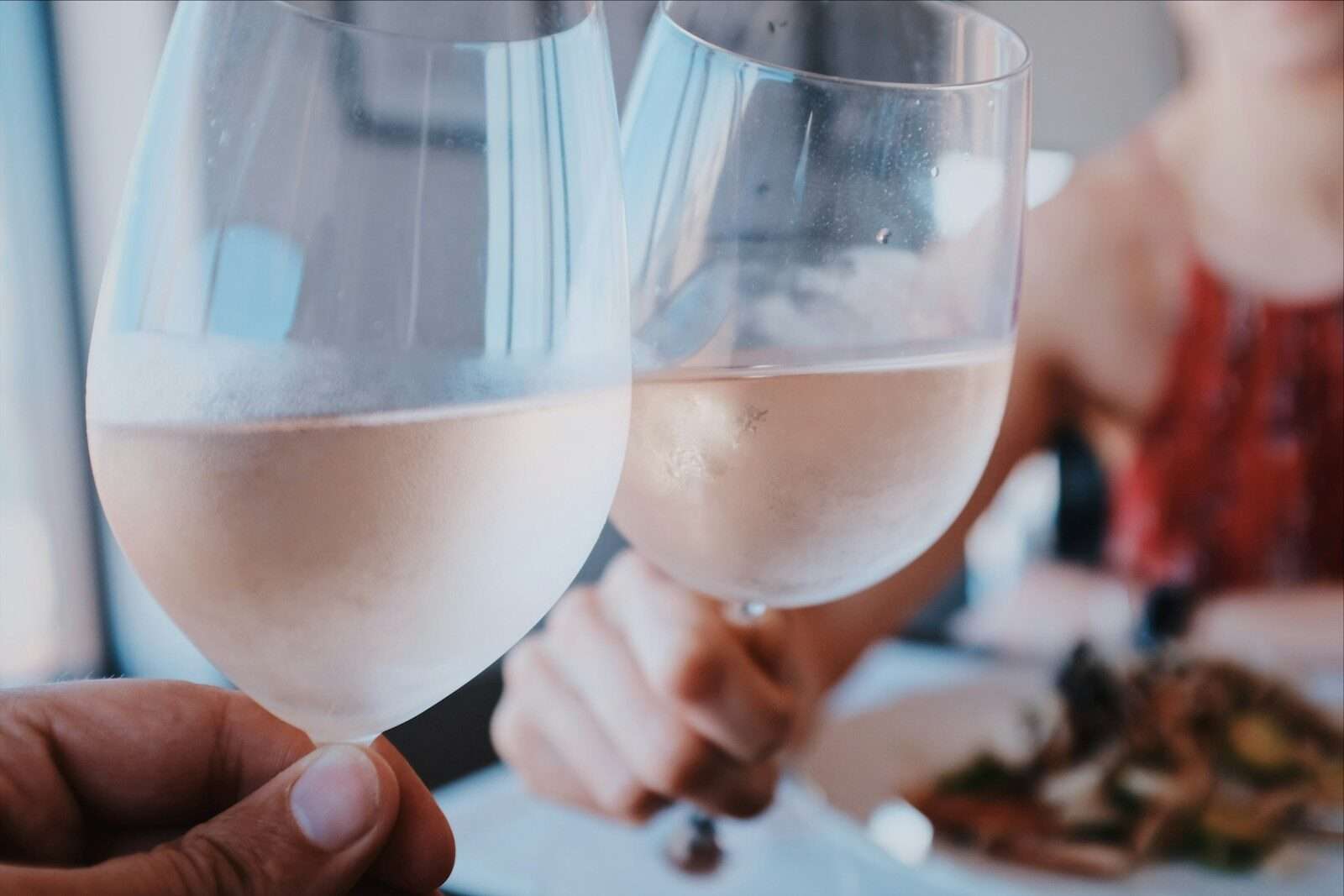
Color: Pale salmon to copper to deep pink, depending on grapes and skin contact duration. Pale Provence rosé isn’t better than deeper-colored Spanish rosado — they’re just different styles.
Aromas: Strawberry, watermelon, fresh peach, dried herbs, rose petal, sometimes slight citrus. More mineral and savory in structured styles.
Palate: In Provence style — fresh, crisp, light body, clean finish. In Tavel or Cerasuolo style — more textured, slightly broader, real weight on the palate.
What it’s not: Rosé doesn’t taste like a mixture of red and white wine, though that’s what people assume. It has its own flavor profile.
Food Pairing With Rosé
Rosé’s combination of acidity, light body (usually), and slight red fruit character makes it one of the most versatile wines at the table:
The classics:
- Grilled fish and seafood — salmon, sea bass, shrimp
- Charcuterie and cured meats
- Soft cheeses (chèvre, fresh mozzarella, burrata)
- Roasted chicken and white meats
- Light pasta dishes, especially with herbs or light tomato sauce
- Pizza (seriously — one of the best wine pairings for pizza)
- Salad Niçoise (the quintessential Provence pairing)
Where rosé excels: Mixed tables where people are eating different dishes. A bottle of dry rosé handles fish AND chicken AND a salad without awkwardness. It’s the diplomat wine.
Deeper, more structured rosé (Tavel, Cerasuolo) can handle:
- Grilled lamb
- Duck breast
- Richer pasta dishes
- Stronger cheeses
Sweet rosé (White Zinfandel): Best with lighter fare — fruit, mild cheese, appetizers. The sweetness clashes with many savory mains.
Serving Rosé
Temperature: 48–55°F (9–13°C). Cold, like white wine. Not as cold as sparkling wine, not as warm as red wine.
Glass: A standard white wine glass. Narrower glasses preserve the aromas better and keep the wine cold longer.
Vintage matters: Dry Provence rosé is almost always best drunk within 1–2 years of vintage. Unlike fine red wine, it’s not made for aging — the freshness is the point. Exception: Tavel and Bandol rosé can develop interesting complexity over 3–5 years.
Occasion: Rosé is the quintessential apéritif and summer wine, but it’s genuinely versatile year-round. The idea that rosé is only for warm weather is marketing, not logic.
Why Rosé Gets More Respect Now
The transformation in how wine professionals view rosé is recent and real. Two things drove it:
First, serious producers in Provence — including estates like Domaines Ott and Château d’Esclans — invested heavily in making rosé a premium product, demonstrating that the method could yield complex, site-specific wine.
Second, sommeliers began recognizing dry rosé’s extraordinary food versatility. For a wine-by-the-glass program, dry rosé solves more pairing problems than almost anything else — it works with fish and meat, with delicate and strong flavors.
The category still has cheap, forgettable pink wine — as does every wine category. But at the quality end, dry rosé has fully earned its place.
For more on the wines that flank rosé: see our guide to light white wines and light red wines to understand the spectrum. For serving and pairing: wine serving temperatures and wine pairing principles.
Further Reading
For the definitive deep-dive on Provence rosé production and producers, Wine Folly’s Provence rosé guide is the visual reference of choice. For current vintage assessments and producer ratings, Decanter’s rosé section publishes regular vintage and producer reviews.