
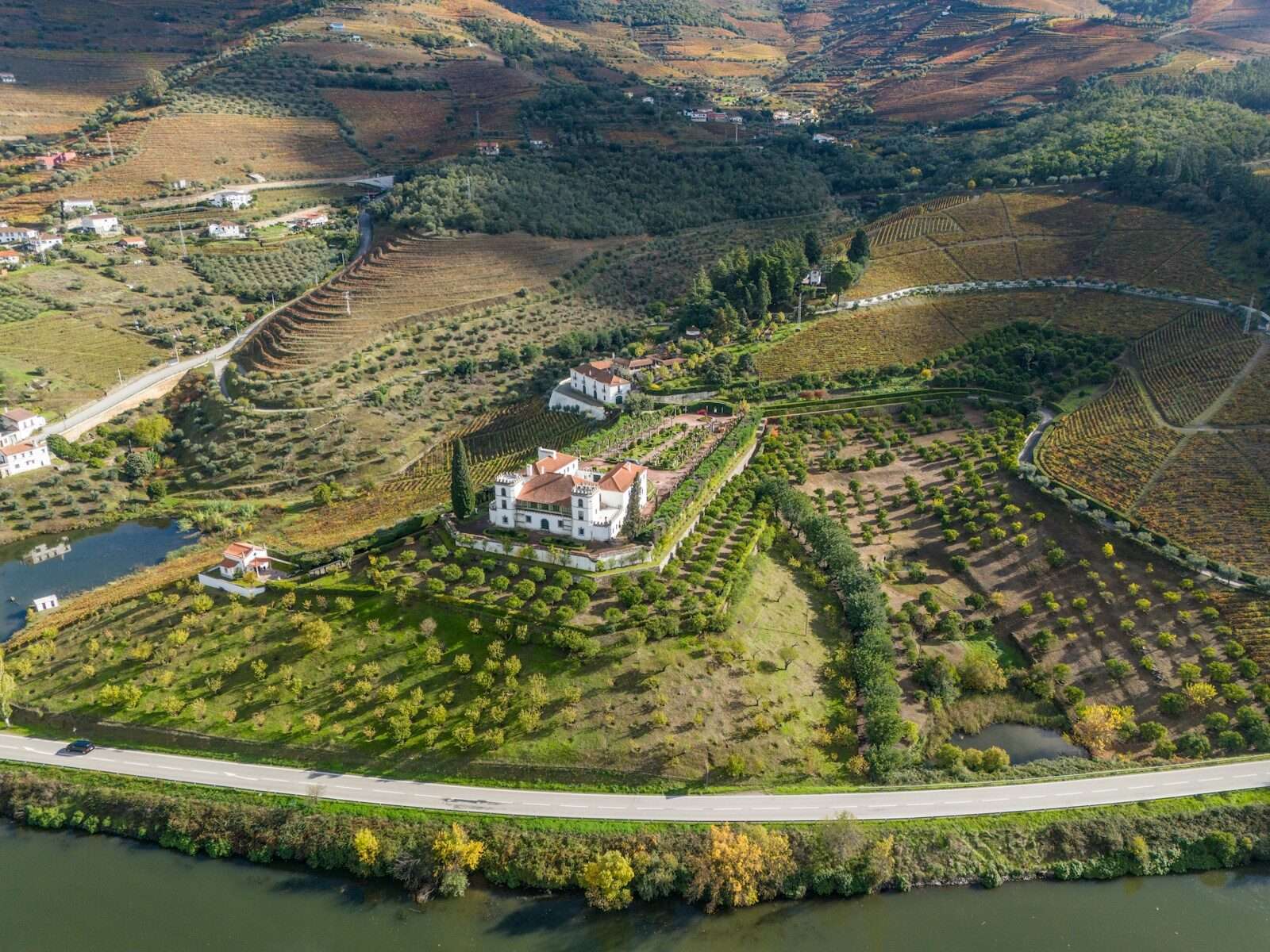
Why Wine Regions Matter
Wine doesn’t come from nowhere. It comes from specific places — specific soils, specific climates, specific grape varieties that humans have matched to those places over centuries. Understanding wine regions is the fastest way to make sense of wine because place is the organizing principle behind almost everything on a wine label.
In the Old World (Europe), wine regions are the primary label information. A bottle of Burgundy doesn’t tell you it’s Pinot Noir — it tells you it’s from a specific village or vineyard. The assumption is that knowing the place tells you everything. In the New World (Americas, Australia, South Africa), labels tend to lead with the grape variety, but the region still shapes everything about how that variety expresses itself.
Learning wine regions is learning a new map of the world — one organized by flavor, history, and human ambition rather than political borders.
How Wine Regions Are Defined
Wine regions exist within regulatory frameworks that vary by country:
- France: AOC/AOP (Appellation d’Origine Contrôlée / Protégée) — the template everyone else copied
- Italy: DOC and DOCG — Denominazione di Origine Controllata, with DOCG adding “Garantita” (guaranteed) for the strictest category
- Spain: DO and DOCa (Denominación de Origen Calificada, the top tier)
- United States: AVA (American Viticultural Area) — geographic boundaries only, no requirements on grape varieties or winemaking
- Australia: GI (Geographical Indication)
The key difference: European appellations typically regulate what grapes can be planted, yields, aging requirements, and winemaking methods. American AVAs only define geographic boundaries — a winery within Napa Valley can plant whatever it wants.
The Classic Old World Wine Regions
Burgundy (France)
No wine region is more studied, more obsessed over, or more internally complex than Burgundy. It covers a narrow strip of eastern France and is the spiritual home of both Pinot Noir (red) and Chardonnay (white). What makes Burgundy extraordinary — and maddening — is its focus on individual vineyard plots called lieux-dits, many of which were first delineated by Cistercian monks in the Middle Ages.
The hierarchy runs: regional AOC → village AOC → Premier Cru → Grand Cru. There are 33 Grand Cru vineyards in Burgundy. A Grand Cru Chambertin and a regional Bourgogne Rouge can come from vines 500 meters apart and taste like different planets.
Key sub-regions: Côte de Nuits (best reds), Côte de Beaune (best whites), Chablis (steely Chardonnay), Mâconnais (value whites).
Bordeaux (France)
Bordeaux is the world’s largest fine wine region by volume and the reference point for Cabernet Sauvignon-based blends globally. The region sits on the Atlantic coast and is divided by two rivers into the Left Bank (Cabernet Sauvignon dominant) and the Right Bank (Merlot dominant).
The 1855 Classification remains in use for Left Bank châteaux — a ranking system created for Napoleon III’s World Exhibition. First Growths (Premiers Crus) are Lafite, Latour, Margaux, Haut-Brion, and Mouton Rothschild. The Right Bank has its own stars — Pétrus, Cheval Blanc — outside the 1855 classification entirely.
Bordeaux is also the template for “Meritage” blends in California and many other New World regions.
Champagne (France)
Champagne is both a wine region and a legal term — sparkling wine from the delimited Champagne region using the traditional method (méthode champenoise) is the only wine legally allowed to use the name “Champagne” in Europe and most of the world. The region sits north of Paris at the cold edge of where grapes can ripen.
Key grapes: Chardonnay, Pinot Noir, and Pinot Meunier. Most Champagne is non-vintage — blended across years to maintain a house style. Vintage Champagne is declared only in exceptional years. Blanc de Blancs is 100% Chardonnay; Blanc de Noirs is white Champagne made from red grapes.
Tuscany (Italy)
Tuscany is Italy’s most internationally recognized wine region and the home of Sangiovese — the grape behind Chianti, Brunello di Montalcino, Vino Nobile di Montepulciano, and more. It’s a region of intense internal diversity: coastal Bolgheri (home of the “Super Tuscans”) produces entirely different wine than the inland, high-altitude Montalcino.
Chianti Classico — the historic heartland between Florence and Siena — is the everyday reference point. Brunello di Montalcino is the prestige expression: age-worthy, complex, one of Italy’s greatest wines.
The “Super Tuscans” emerged in the 1970s when producers began making wines outside DOC regulations — often using Cabernet Sauvignon, Merlot, or Syrah — and selling them as humble Vino da Tavola (table wine) until the IGT category was created to accommodate them.
Piedmont (Italy)
Piedmont is to Italy what Burgundy is to France: a region of obsessive terroir focus, complex internal geography, and wines built to age. Nebbiolo is king here, expressed in Barolo and Barbaresco — the two DOCG wines that anchor Piedmontese prestige.
Barolo — “the wine of kings” — requires a minimum of three years aging (five for Riserva) and develops extraordinary complexity: tar, roses, leather, dried cherries. Barbaresco is slightly lighter and more approachable young. Barbera and Dolcetto fill the everyday drinking roles.
Rioja (Spain)
Rioja is Spain’s most famous wine region and the benchmark for Spanish Tempranillo. It sits inland in northern Spain, sheltered by mountains, and produces red wine structured around oak aging. The classification system is based on time in oak and bottle: Joven (young), Crianza, Reserva, and Gran Reserva.
Traditional Rioja was aged in American oak, giving distinctive vanilla and dill notes. Modern Rioja increasingly uses French oak for more subtle fruit expression. The debate between traditional and modern styles is active and ongoing.
Important New World Wine Regions
Napa Valley (California, USA)
Napa Valley is California’s most prestigious wine region and one of the world’s great Cabernet Sauvignon addresses. It’s relatively small — about 30 miles long — but internally diverse, with 16 sub-AVAs that produce meaningfully different wines based on elevation, proximity to San Pablo Bay, and soil composition.
Stags Leap District produces more elegant, silky Cabernet. Howell Mountain makes powerful, tannic wines. Oakville sits in the warm valley floor and is home to Opus One and Harlan Estate. Carneros in the south, cooled by fog, is Pinot Noir and Chardonnay country.
Napa Valley wines are expensive by design — production is limited and demand is global.
Sonoma County (California, USA)
Sonoma is Napa’s neighbor to the west and is three times larger and more diverse. Where Napa is focused (Cabernet Sauvignon defines the county’s identity), Sonoma grows everything and grows it well. Russian River Valley produces some of California’s best Pinot Noir and Chardonnay. Alexander Valley is Cabernet country. Dry Creek Valley is known for Zinfandel. Sonoma Coast, cooled by Pacific influence, is the frontier of cool-climate experimentation.
Sonoma tends to attract producers who find Napa’s intensity excessive. The wines often have better freshness and restraint.
| Region | Best Known For | Climate | Benchmark Varieties |
|---|---|---|---|
| Napa Valley | Cabernet Sauvignon | Warm, Mediterranean | Cab Sauvignon, Merlot |
| Russian River Valley | Pinot Noir, Chardonnay | Cool, coastal fog | Pinot Noir, Chardonnay |
| Willamette Valley | Pinot Noir | Cool, marginal | Pinot Noir, Pinot Gris |
| Walla Walla | Cabernet, Syrah | Continental | Cab Sauvignon, Syrah |
| Columbia Valley | Diverse | Arid continental | Riesling, Cab, Merlot |
Willamette Valley (Oregon, USA)
Oregon’s flagship wine region and one of the world’s serious addresses for Pinot Noir. The Willamette Valley sits between mountain ranges that moderate Pacific influence, creating a cool, marginal climate that pushes grapes to struggle — and struggle makes interesting wine.
Oregon Pinot Noir is typically more restrained than California, with higher acidity and more savoury character. Dundee Hills, with its distinctive red Jory soil, is the most famous sub-AVA. Yamhill-Carlton, Chehalem Mountains, and Eola-Amity Hills each have advocates who argue for their district’s superiority.
Mendoza (Argentina)
Mendoza sits at the foot of the Andes and is home to Argentina’s signature grape: Malbec. The altitude is the story here — vineyards sit between 2,000 and 5,000 feet above sea level, meaning intense sun during the day and cold nights that preserve acidity and freshness.
Luján de Cuyo produces fuller-bodied, more structured Malbec. The Uco Valley, at higher altitude, produces more elegant, aromatic expressions. Argentine Malbec is one of the wine world’s great value propositions at entry level, with serious age-worthy wines at the top.
Barossa Valley (Australia)
The Barossa Valley in South Australia is one of the world’s great Shiraz regions. Old vines — some over 150 years old, surviving the phylloxera louse that devastated Europe — produce concentrated, powerful wines that have become internationally recognized. Penfolds Grange, Australia’s most celebrated wine, is primarily Barossa Shiraz.
The region sits inland, is warm and dry, and produces rich, full-bodied wines. Eden Valley, nearby and at higher altitude, is Riesling country and provides a cool-climate contrast.
Stellenbosch (South Africa)
South Africa’s most prestigious wine region sits near Cape Town, benefiting from ocean influence from both the Atlantic and Indian Oceans. Stellenbosch produces serious Cabernet Sauvignon, Syrah, and blends, along with Chenin Blanc — South Africa’s most widely planted white grape.
The Swartland, north of Stellenbosch, has become a hotbed of natural and biodynamic wine production, attracting a younger generation of producers rethinking South African wine identity.
How to Navigate Wine Regions as a Learner
The most efficient path through wine regions isn’t trying to memorize them all. It’s building a mental framework:
Start with France. Burgundy and Bordeaux are the origin points for two entire global traditions — Pinot Noir/Chardonnay and Cabernet-based blends. Understanding them makes the New World versions make sense.
Then add Italy. Sangiovese and Nebbiolo have no major equivalents outside Italy, so you’re learning genuinely new territory. Chianti and Barolo are accessible starting points.
Then pick one New World country. California or Argentina, depending on price tolerance. California maps well to Bordeaux (Napa) and Burgundy (Russian River). Argentina is the value path to understanding Malbec.
Let questions lead you. If you drink an interesting Riesling, read about Alsace and Mosel. If a Grenache catches you, look into the Rhône Valley and Priorat.
Wine Regions and Team Experiences
One of the best ways I’ve found to introduce wine regions to a group is through a structured tasting that moves geographically — a glass from Burgundy, then Oregon, then a comparison of Old World versus New World expressions of the same grape. This approach makes the abstract concrete: you’re not learning that Burgundy is cool-climate, you’re tasting why it matters.
The Wine Voyage designs regional tasting journeys for corporate teams that work exactly this way — mapping the world through the glass. Whether your group is complete beginners or seasoned wine drinkers, the regional structure gives everyone something to discover. Get in touch to explore a custom wine regions experience for your team.
To explore individual wine regions further, see our guides to Cabernet Sauvignon, Pinot Noir, Malbec, Tempranillo, Sangiovese, Syrah and Shiraz, Riesling, Chardonnay, and Pinot Grigio.
Further Reading
For beautifully illustrated deep dives into wine regions, Wine Folly’s wine regions section is the best visual resource available. For authoritative detail on individual appellations, Decanter’s wine regions guides offer consistently high-quality coverage written by regional specialists and Masters of Wine.