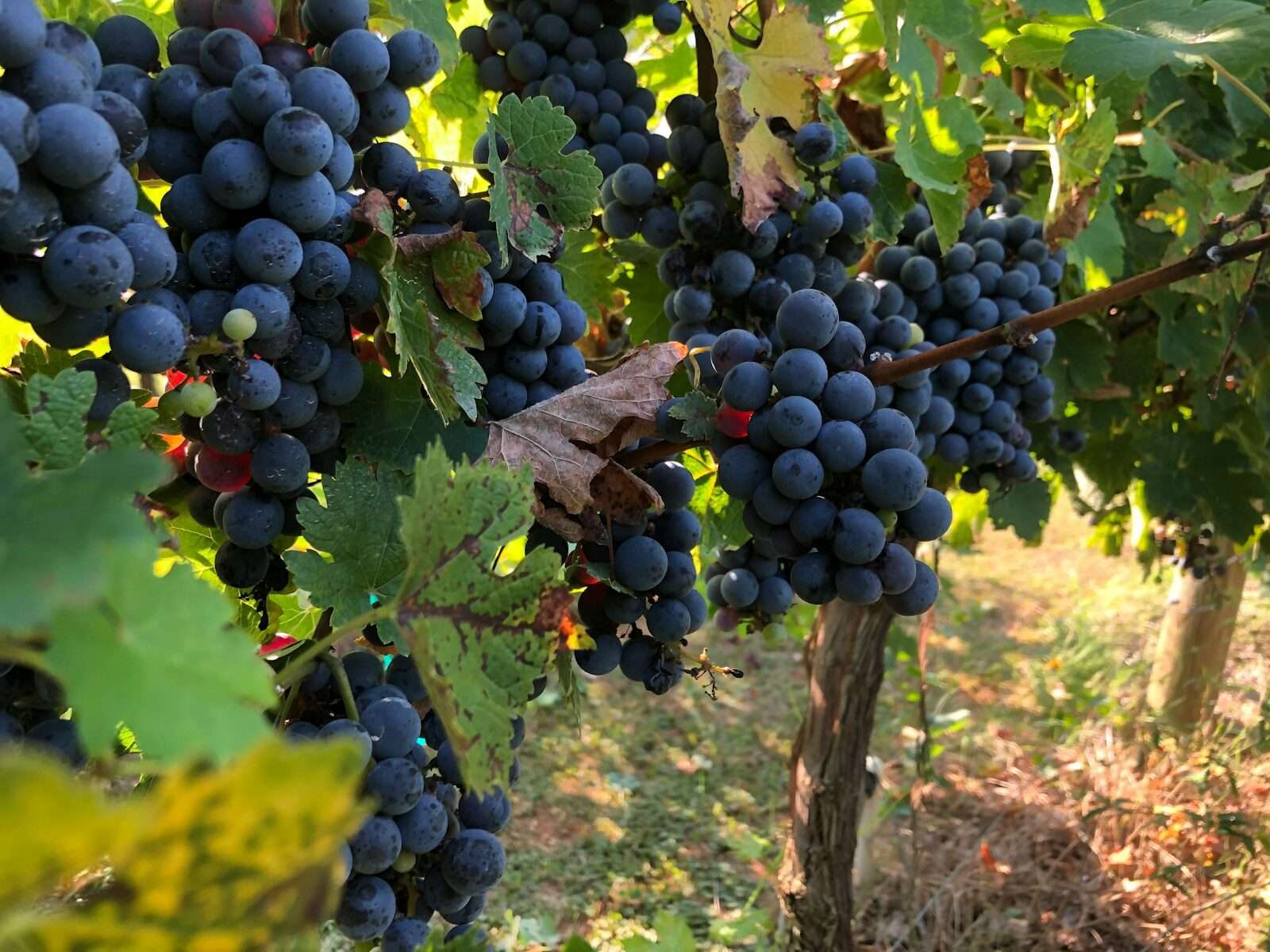
Cabernet Sauvignon is the world’s most planted red wine grape. It makes wine in virtually every major wine-producing country, and it’s the backbone of some of the most collected and celebrated bottles in the world — Bordeaux first growths, Napa cult wines, Opus One.
It’s also the grape most likely to make you feel red wine’s full structural impact: high tannin, dark fruit, structure that grips the palate. Understanding what makes Cabernet Sauvignon the way it is — and how that changes dramatically depending on where it grows — makes every bottle more interesting.
What Cabernet Sauvignon Tastes Like
Cabernet Sauvignon has one of the most recognizable flavor profiles in wine:
Dark fruit: Blackcurrant (cassis) is the signature — a distinctive dark, jammy, slightly herbal fruit character unlike any other grape. Also blackberry, dark plum, black cherry.
High tannin: The thick skins of Cabernet grapes are high in tannins — the compounds that create the drying, gripping sensation on your gums. Tannin is why Cabernet needs food (specifically protein and fat) to show at its best.
Medium to high acidity: Enough acid to keep the wine fresh and give it aging potential, balanced by the tannin.
Full body: Cabernet is almost always full-bodied — substantial alcohol, weight, and extraction.
Oak notes: Most serious Cabernet is aged in oak barrels, which adds vanilla, cedar, toasted oak, and sometimes chocolate notes.
Secondary and tertiary notes: In young wines — green pepper, tobacco, graphite, leather. In aged wines — dried herbs, dried fruit, earth, cigar box, and complex savory notes that develop over years.
The “green pepper” question: Young Cabernet sometimes has a distinct bell pepper note — a compound called pyrazine, more prominent in cooler climates or underripe grapes. It can be a pleasant green edge in the wine or an intrusive vegetal note. It typically fades with age.
How It Differs by Region
The same grape produces dramatically different wine depending on climate and winemaking choices.
Bordeaux, France
The origin of great Cabernet Sauvignon-based wine. The Left Bank of Bordeaux (Médoc, Haut-Médoc, and the famous communes of Pauillac, Saint-Julien, Saint-Estèphe, Margaux) produces Cabernet Sauvignon-dominant blends — typically blended with Merlot (which softens the tannin) and small amounts of Cabernet Franc, Petit Verdot, and Malbec.
The Classification of 1855 ranks the best estates (châteaux) from First Growth to Fifth Growth. The First Growths — Château Lafite Rothschild, Château Mouton Rothschild, Château Latour, Château Margaux, and Château Haut-Brion — are the benchmark for Bordeaux style. Prices reflect their reputation.
Bordeaux Cabernet style: More restrained than Napa. Earthy, cedar, graphite, dark fruit — complex but not immediately approachable when young. Built for aging — often 10–20+ years before reaching peak.
Value Bordeaux: The famous châteaux are expensive, but the region also produces excellent wine at lower appellations — Haut-Médoc, Listrac, Moulis, Médoc — often for $20–40 that drinks well sooner.
Napa Valley, California
The American benchmark. Napa Valley Cabernet is typically riper, more fruit-forward, and more immediately approachable than Bordeaux. The warmer, sunnier climate produces grapes with higher sugar (more alcohol) and more intense dark fruit concentration.
The “cult Cabernet” era: In the 1990s, collectors drove prices for certain Napa Cabernets to extraordinary heights — Screaming Eagle, Harlan Estate, Opus One, Shafer Hillside Select. These wines pioneered a very opulent, concentrated style that influenced Napa production broadly.
Napa Cabernet style: Dark fruit concentration, often vanilla and cedar from oak aging, smooth texture from ripe tannins, high alcohol (often 14.5%+). More immediately approachable than Bordeaux, though the best examples age well.
Sub-AVAs worth knowing: Oakville and Rutherford (the “Rutherford Dust” quality), Stags Leap District (elegant, fine-grained tannin), Howell Mountain and Spring Mountain (mountain fruit with more tannic structure), Calistoga (ripe and generous).
Napa vs. Bordeaux
The simplest comparison:
- Bordeaux: More terroir-driven, earthy, restraint, complex, built for aging, often austere young
- Napa: More fruit-forward, richer, immediately pleasurable, powerful, higher alcohol
Neither is better — they’re different philosophies and different drinking experiences.
Chile (Maipo Valley)
Chile produces excellent value Cabernet Sauvignon, particularly in the Maipo Valley near Santiago. Chilean Cab tends to have ripe dark fruit with herbal (eucalyptus, mint) notes that distinguish it from both Bordeaux and Napa. The climate produces reliably ripe fruit without the heat spikes of some California regions. Outstanding value at $15–30.
Key producers: Concha y Toro (Marques de Casa Concha is exceptional value), Montes, Santa Carolina, Errazuriz, Viña Almaviva.
Australia (Coonawarra and others)
Coonawarra, in South Australia, is Australia’s benchmark Cabernet region. The famous “terra rossa” (red earth over limestone) soil produces structured, elegant Cabernet with distinctive mint and eucalyptus notes alongside the classic dark fruit. Penfolds, Wynns Coonawarra, and Balnaves are key producers.
Margaret River (Western Australia) also produces elegant, Bordeaux-influenced Cabernet blends.
Washington State, USA
Washington’s Columbia Valley produces increasingly respected Cabernet, often with a combination of Napa ripeness and slightly more acid-driven freshness. Walla Walla Valley and Red Mountain AVAs produce the most structured wines.
Argentina (Mendoza, blended with Malbec)
While Malbec is Argentina’s signature, Cabernet Sauvignon is widely grown and often blended with Malbec. Argentine Cabernet tends to have dark fruit intensity with good acidity from the altitude. Frequently excellent value.
Cabernet Sauvignon Food Pairing
Cabernet Sauvignon’s high tannin determines its pairing. Tannins bind to protein and fat — which means Cabernet needs protein and fat to soften its grip and reach its potential.
The essential pairings:
Ribeye or grilled steak — the classic. The fat and protein in the beef tame the tannins; the tannins cut through the richness. The most famous food-wine pairing for a reason.
Lamb — rack of lamb, leg of lamb, braised lamb shanks. Lamb’s slight gaminess and fat content work with Cabernet’s earthiness.
Aged hard cheese — Cheddar, Manchego, aged Gouda. The fat and protein in the cheese work like meat.
Slow-braised meat — short ribs, beef stew, boeuf bourguignon. The long cooking softens the meat’s protein; rich braising liquid matches the wine’s weight.
Burgers — beef fat and protein do the same work as a steak.
Mushroom-based dishes — particularly in earthier Bordeaux styles, the umami and earthiness of mushrooms enhances the wine.
Avoid pairing Cabernet with:
- Delicate fish — the tannin overwhelms
- Light salads or vegetables — the wine dominates everything
- Spicy food — alcohol and tannin amplify heat dramatically
- Sweet desserts — the tannin reads as bitter and harsh against sweetness
How to Serve Cabernet Sauvignon
Temperature: 62–68°F (17–20°C). Cool room temperature, not warm. In a warm house (above 70°F), 5–10 minutes in the refrigerator brings it to the right range.
Decanting: Young Cabernet (1–5 years old) benefits significantly from 1–2 hours in a decanter. The tannins soften and the aromatics open. Older Bordeaux should be decanted carefully to separate sediment, then served quickly.
Glassware: A large-bowled Cabernet or Bordeaux glass concentrates the aromatics and allows swirling. The size of the bowl matters more for Cabernet than for most wines.
Age: Everyday Cabernet (under $25) is usually at its best within 3–7 years of vintage. Premium Napa Cabernet can age 10–20 years. Great Bordeaux from top châteaux and vintages ages 20–30+ years.
Prices and Value
Cabernet Sauvignon spans a wider price range than almost any other grape:
$15–25: Chilean Maipo, many Spanish Cabernet blends, entry-level Napa and Sonoma. These are everyday wines, not agers. Drink young.
$25–50: Good Napa Cabernet, solid Bordeaux from named communes, serious Chilean and Australian expressions. Quality level where terroir starts to show.
$50–100: Strong Napa appellations (Oakville, Stags Leap), mid-level Bordeaux classified growths, excellent Washington State.
$100+: Cult Napa wines, Grand Cru Bordeaux classified estates, premium single-vineyard expressions.
The reality of Cabernet’s aging potential: the $25 bottle isn’t designed to age; keep it 5 years and it fades. The $100+ bottle is designed for the cellar.
Cabernet Sauvignon is the definitive example of a bold, full-bodied red wine — see bold red wine guide for comparison with Syrah, Malbec, and Barolo. For pairing: wine pairing principles. For serving: wine serving temperatures.
Further Reading
For detailed Bordeaux vintage and château assessments, Wine Advocate remains the most influential voice. For Napa coverage, Wine Spectator’s California Cabernet section covers the range from cult wines to value bottles.