What Is Cabernet Franc?
Cabernet Franc is one of the most versatile and underappreciated red grapes in the wine world. While it often plays a supporting role in Bordeaux blends — giving structure and aromatics to wines dominated by Cabernet Sauvignon or Merlot — in the Loire Valley of France it takes center stage, producing some of the most elegant and food-friendly reds you’ll ever taste.
I find that people who discover Cabernet Franc tend to become devoted fans quickly. It has this wonderful savory quality — think graphite, dark herbs, and red fruits — that makes it distinctive without being heavy. If you’ve been working your way through bold reds and want something with more finesse, Cabernet Franc is the natural next step.
The grape is a parent of Cabernet Sauvignon (crossed with Sauvignon Blanc centuries ago), which means there’s family resemblance — the leafy notes, the firm tannins — but Cabernet Franc is generally lighter, more aromatic, and more approachable in its youth.
Cabernet Franc Flavor Profile
At its best, Cabernet Franc delivers a distinctive combination of red and dark fruits with an unmistakably herbaceous, mineral edge.
Typical aromas and flavors
- Red fruits: raspberry, red plum, cranberry, pomegranate
- Dark fruits: black cherry, blackcurrant (especially in warmer climates)
- Herbaceous notes: pencil shavings, tobacco leaf, green bell pepper, dried herbs
- Earth and mineral: graphite, wet gravel, forest floor
- Spice: clove, cinnamon, black pepper
- With oak: vanilla, cedar, dark chocolate
The bell pepper note (from a compound called methoxypyrazine) is Cabernet Franc’s most recognizable calling card. In cool climates and less ripe vintages, it can be pronounced. In warmer climates or fully ripe fruit, it softens into more of a dried herb quality. Neither version is wrong — they’re just different expressions of the grape.
How ripeness changes Cabernet Franc
| Ripeness Level | Climate | Flavors | Style |
|---|---|---|---|
| Cool/Medium | Loire Valley, Canada | Raspberry, cranberry, green pepper, mineral | Lighter, elegant, high acid |
| Medium/Full | Northern Italy, Argentina | Red cherry, plum, tobacco, dried herbs | Medium-bodied, balanced |
| Full | California, Napa | Blackberry, dark plum, chocolate, oak | Fuller, richer, more extracted |
Where Cabernet Franc Grows
Loire Valley, France
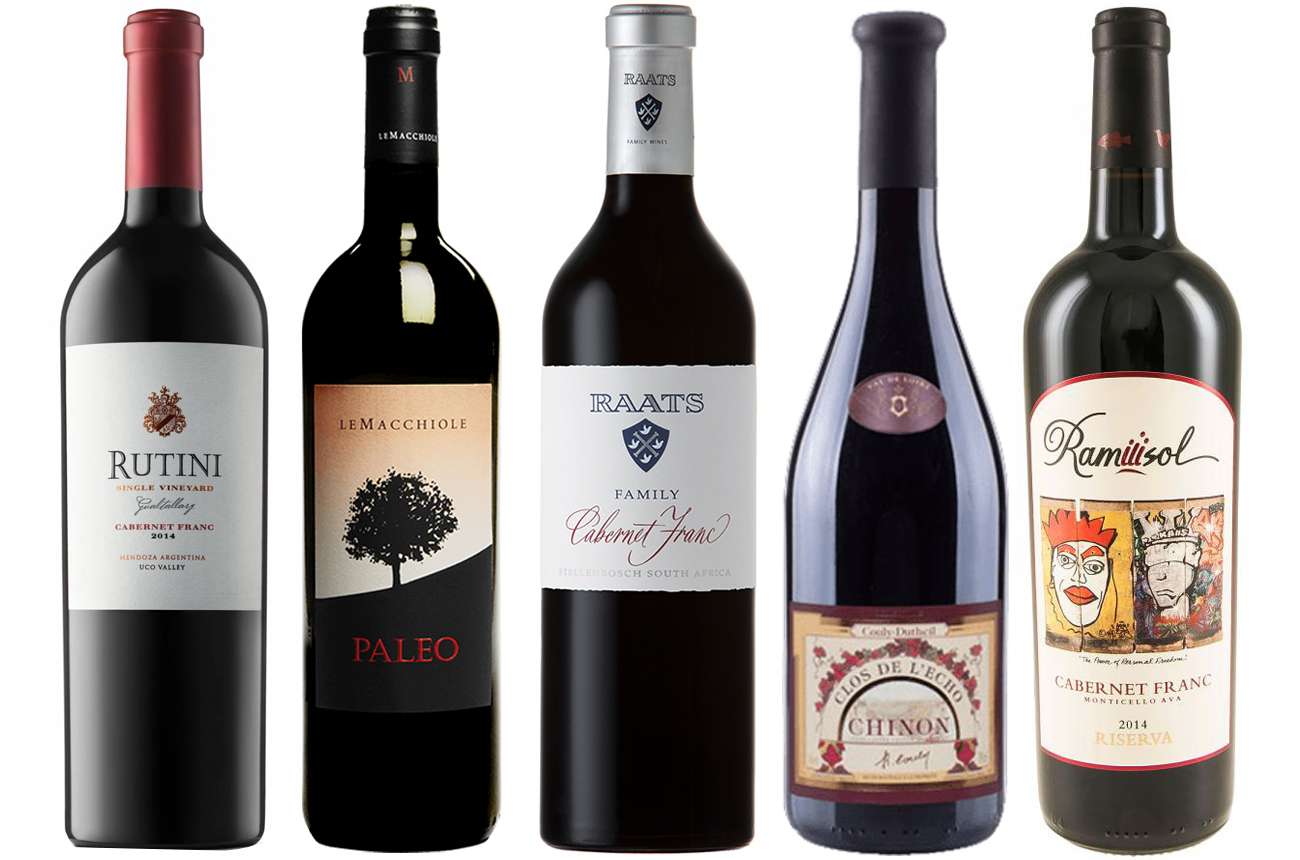
This is the spiritual home of Cabernet Franc as a standalone variety. The appellations of Chinon, Bourgueil, and Saint-Nicolas-de-Bourgueil produce wines that wine lovers obsess over — particularly at the cellar door, where prices remain shockingly fair for the quality.
Loire Cabernet Franc is typically medium-light bodied with bright acidity, pronounced minerality, and that signature pencil-shavings-and-raspberry character. These wines are made for the table: pair them with charcuterie, goat cheese, roast chicken, or anything earthy and savory.
Chinon is the most famous name in the region. The best examples come from plots of tufa (the soft volcanic rock that forms the cliff faces along the Vienne River) and can age beautifully for 10–15 years.
Bordeaux, France
In Bordeaux, Cabernet Franc is almost always blended. It contributes aromatic lift, silky tannins, and mid-palate complexity to Cabernet Sauvignon-dominant wines on the Left Bank. On the Right Bank — particularly in Saint-Émilion and Pomerol — it’s blended with Merlot and can make up a significant proportion of the wine.
Château Cheval Blanc, one of only four wines classified as Premier Grand Cru Classé A in Saint-Émilion, famously uses a high percentage of Cabernet Franc. It’s proof of what this grape can achieve at the very top.
Italy
Cabernet Franc thrives in northeastern Italy, particularly in Friuli-Venezia Giulia and the Veneto. Here it’s typically bottled as a varietal wine with a leaner, more mineral profile than its Bordeaux cousins. Tuscany also produces notable examples, sometimes blended with Sangiovese in so-called Super Tuscans.
North America
California has a long history with Cabernet Franc, and Napa Valley in particular produces excellent examples — both as a varietal and as a blending component. Washington State has emerged as a hotspot, with winemakers appreciating the grape’s natural acidity in a warm climate.
Canada’s Niagara Peninsula and British Columbia are producing impressive Cabernet Franc, with cooler conditions drawing out that lovely Loire-like minerality. In the northeastern US, Long Island and Virginia have both found Cabernet Franc to be one of their most reliable varieties.
Cabernet Franc vs. Similar Wines
If you’re wondering how Cabernet Franc fits in the landscape of red wines, this comparison should help:
| Wine | Body | Tannins | Key Flavors | Best For |
|---|---|---|---|---|
| Cabernet Franc | Light–Medium | Medium, silky | Raspberry, herbs, graphite | Food pairing, elegance |
| Cabernet Sauvignon | Full | High, firm | Blackcurrant, cedar, tobacco | Aging, steak, bold dishes |
| Merlot | Medium–Full | Medium, soft | Plum, chocolate, vanilla | Everyday drinking, rich foods |
| Pinot Noir | Light–Medium | Low–medium | Red cherry, earth, spice | Salmon, duck, mushrooms |
| Malbec | Medium–Full | Medium | Plum, violet, cocoa | Grilled meats, BBQ |
Cabernet Franc sits in a sweet spot — it has more structure and complexity than Pinot Noir but more elegance and food-friendliness than Cabernet Sauvignon. It’s particularly satisfying if you want something with personality but not power.
How to Pair Cabernet Franc with Food
Cabernet Franc’s high acidity and moderate tannins make it one of the most versatile red wines at the table. It’s particularly strong with:
- Charcuterie and cured meats: The umami and salt play beautifully against the wine’s red fruit and herbs
- Goat cheese and soft cheeses: A classic Loire pairing — the mineral edge cuts through richness
- Roast chicken and turkey: Especially with herb-based preparations; the herbaceous notes echo each other
- Duck and game birds: The fruit and earthiness are a natural match
- Mushroom dishes: Porcini pasta, mushroom risotto, earthy vegetable tarts
- Lamb: Particularly with rosemary and garlic preparations
I’d avoid very heavy, spiced red meat dishes where a bolder wine would shine more. Cabernet Franc is at its best when the food has some elegance to match.
Serving and Storage Tips
Temperature and glassware
Serve Cabernet Franc slightly cooler than most reds — around 60–65°F (15–18°C). This temperature highlights its aromatic lift and keeps the acidity refreshing.
A standard Bordeaux-shaped glass works well: a medium-to-large bowl with a slight taper to concentrate the aromatics. You don’t need anything special.
Does Cabernet Franc need decanting?
Young, tannic examples from warm climates benefit from 30–45 minutes of decanting. Loire Valley examples are often so light on their feet that they’re best poured straight from the bottle or given just 15 minutes of air. Older bottles of 8+ years may show some sediment — decant carefully.
Aging potential
This varies dramatically by style:
- Loire Valley Chinon/Bourgueil (top examples): 10–20 years
- Bordeaux blends with Cabernet Franc: 10–30+ years for top Châteaux
- New World varietal Cabernet Franc: Most drink best within 5–8 years, with quality examples going 10+
- Everyday bottles: Drink within 2–4 years
How to Shop for Cabernet Franc
Here’s what to look for:
For elegance and food-pairing (Loire style): Look for Chinon, Bourgueil, or Saumur-Champigny on the label. Producers to seek out include Charles Joguet, Catherine and Pierre Breton, and Bernard Baudry. Expect to pay $20–$40 for excellent quality.
For richer, fuller-bodied wines: Look at Napa Valley or Washington State single-varietal bottles, or seek out Right Bank Bordeaux blends where Cabernet Franc is prominent.
For value: Argentine Cabernet Franc from Mendoza and Italian examples from Friuli offer excellent quality at $15–$25.
Cabernet Franc at Team and Corporate Wine Tastings
For corporate wine experiences, Cabernet Franc is one of my favorite picks. It’s distinctive enough to be memorable and spark genuine conversation — “wait, what is that pencil-shavings note?” — but approachable enough that it doesn’t intimidate guests who are newer to wine.
A flight comparing a cool-climate Loire example alongside a warmer-climate New World version makes for a brilliant teaching moment. It shows how dramatically geography shapes flavor without requiring any technical wine knowledge to appreciate. That kind of concrete discovery is what makes wine tasting genuinely engaging rather than just a passive drinking experience.
At The Wine Voyage, Myrna builds tastings around exactly this kind of learning — wines that tell a clear story and give teams something to talk about long after the last glass.
If Cabernet Franc piqued your curiosity, you might also enjoy reading about Tempranillo for another underrated European red, or Grenache for a more fruit-forward take on elegant reds. For understanding how tannins shape wines like this, see the wine tannins guide. And if you’d like to explore the Loire’s white wines, Chenin Blanc is from the same region and just as compelling.
Further Reading
To deepen your knowledge of Cabernet Franc and the Loire Valley, these resources are excellent: Wine Folly’s Cabernet Franc guide and Decanter’s Cabernet Franc grape profile.