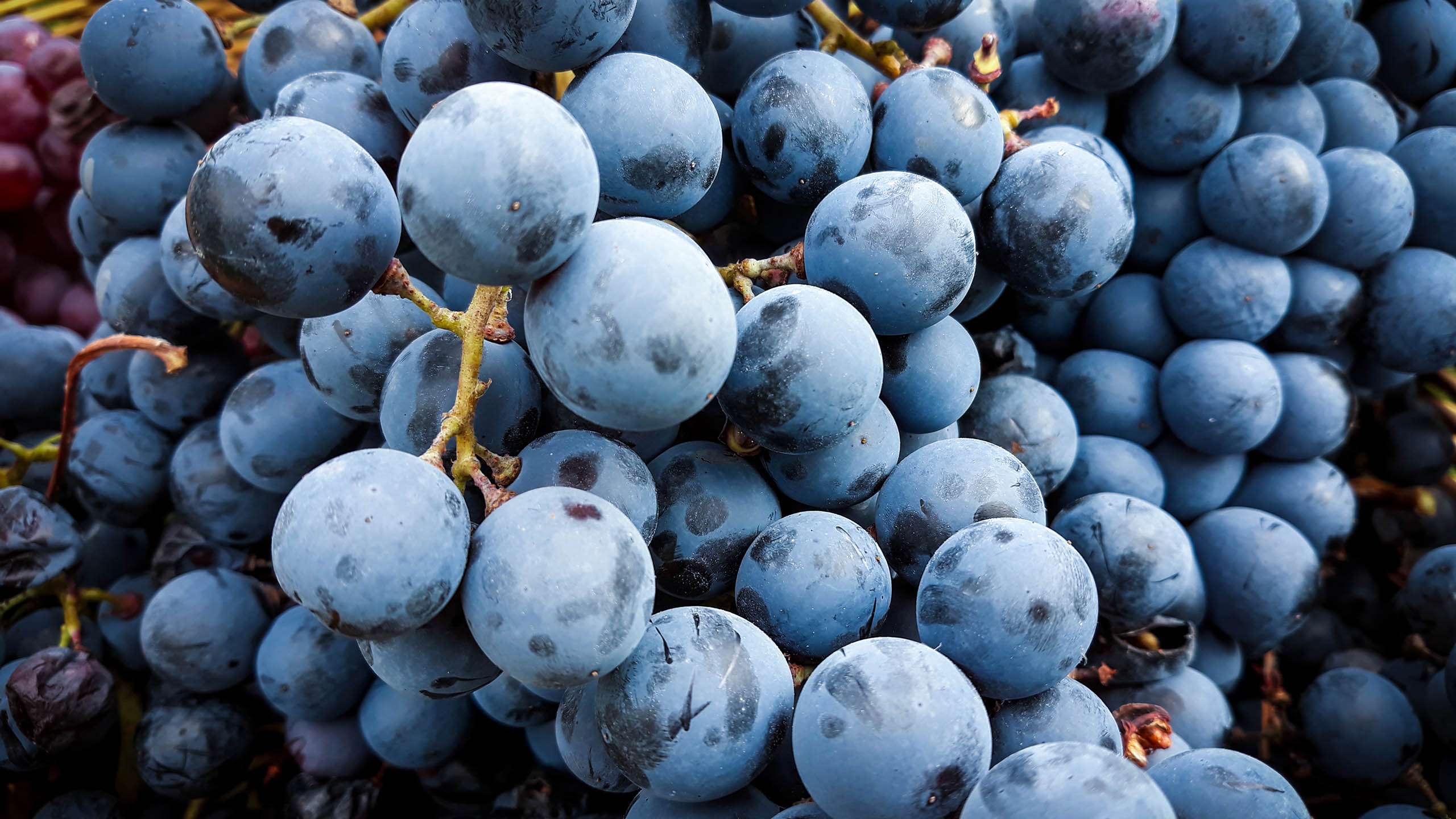
What Is Grenache?
Grenache is one of the world’s most widely planted red wine grapes — and one of the most underrated. If you’ve ever enjoyed a wine from the southern Rhône Valley, a Spanish Garnacha, an Australian GSM blend, or a bottle of Châteauneuf-du-Pape, you’ve tasted Grenache. It’s the backbone of countless great wines, often playing an ensemble role rather than a starring one, which may explain why it doesn’t get the name recognition it deserves.
In my experience, Grenache is one of the most food-friendly, approachable, and versatile red grapes you can find. It’s generous — full of red fruit, warmth, and a soft roundness that makes it easy to love without being simple. When it’s made well, from old vines in stony soils, it reaches heights that rival any of the world’s great red wines.
The grape goes by different names depending on where you are: Grenache in France, Garnacha in Spain, Cannonau in Sardinia. Wherever it grows, the thread connecting all expressions is a warm, ripe, generous character built on strawberry, raspberry, and spice.
Where Grenache Grows
Grenache thrives in hot, dry climates. It’s drought-resistant and late-ripening, which makes it perfectly suited to the sun-baked landscapes of southern France, Spain, and beyond.
Southern Rhône Valley, France
This is Grenache’s spiritual home. In the southern Rhône, Grenache forms the backbone of most blends, typically paired with Syrah, Mourvèdre, and other regional grapes. The result is what wine lovers call “GSM” — Grenache-Syrah-Mourvèdre — one of the great blending formulas in wine.
Châteauneuf-du-Pape is the region’s crown jewel. These wines, grown on a plateau of large rounded stones called galets roulés that retain daytime heat and radiate it back to the vines at night, can be among the most complex reds in the world. Grenache typically makes up 80% or more of the blend. Great Châteauneuf-du-Pape ages magnificently for 20+ years.
Other important southern Rhône appellations:
- Gigondas: Often called “budget Châteauneuf,” Gigondas produces powerful, structured Grenache-based wines at more accessible prices.
- Vacqueyras: Similar in style to Gigondas, slightly lighter.
- Côtes du Rhône: Broad appellation, wildly variable quality, but great value can be found here.
Spain (Garnacha)
Spain is actually Grenache’s likely homeland — most evidence points to Aragón as its birthplace, where it’s been growing for centuries. As Garnacha, it produces some of Spain’s most distinctive wines.
Priorat (Catalonia) produces some of the most powerful and concentrated Garnacha-based wines in the world. The region’s unique llicorella soils — slaty, dark, and rocky — push vines to struggle and produce tiny quantities of intensely flavored fruit. These wines can be extraordinarily complex.
Campo de Borja, Cariñena, and Calatayud in Aragón produce excellent value Garnacha, often from very old vines. These are some of the best wine values in the world right now.
Rioja includes Garnacha in many blends alongside Tempranillo.
Sardinia (Cannonau)
In Sardinia, Grenache is called Cannonau and produces robust, often rustic reds. Sardinia is one of the few places in the world where Grenache is routinely bottled as a straight varietal. There’s also an intriguing connection to longevity — Sardinia is one of the world’s “Blue Zones,” and some researchers have speculated about the potential antioxidant benefits of Cannonau consumption, though this remains contested.
Australia
Australian winemakers, particularly in McLaren Vale, Barossa Valley, and Clare Valley, have embraced GSM blends enthusiastically. Australian Grenache often shows riper fruit than its European counterparts — plum, black cherry, and a fuller body. Some producers are working with very old bush vine Grenache to produce remarkable single-varietal expressions.
United States
California and Washington produce some compelling Grenache, mostly in a Rhône-influenced style. The Santa Ynez Valley and Paso Robles are worth watching for Grenache and GSM blends.
Grenache Flavor Profile
Grenache occupies a warm, generous space in the flavor spectrum of red wine. It’s typically medium to full-bodied, lower in tannins than Cabernet or Nebbiolo, and high in alcohol — Grenache can easily reach 15–16% ABV when fully ripe.
Aromas and flavors:
- Red and dark fruits: strawberry, raspberry, cherry, dried cranberry
- Warm spice: white pepper, cinnamon, dried herbs (garrigue — the wild herbs of Provence)
- Earth: leather, tobacco, dried herbs, dusty stone
- With age: dried figs, dates, chocolate, coffee, tobacco, and an orange-peel note
Structure:
- Medium to high alcohol
- Low to medium tannins
- Medium acidity
- Full body in ripe, warm-climate expressions
Because of its lower tannins and higher alcohol, Grenache is surprisingly versatile at the table — its warmth and roundness work with a wide range of foods.
Comparing Key Grenache Styles
| Style | Region | Body | Tannins | Character |
|---|---|---|---|---|
| Châteauneuf-du-Pape | Southern Rhône, France | Full | Medium-High | Complex, earthy, age-worthy |
| Gigondas | Southern Rhône, France | Full | Medium-High | Rustic, powerful, great value |
| Old Vine Garnacha | Aragón, Spain | Full | Medium | Deep fruit, mineral, concentrated |
| Priorat (GSM) | Catalonia, Spain | Very Full | High | Intense, mineral, volcanic |
| Cannonau | Sardinia, Italy | Medium-Full | Medium | Rustic, herbal, food-friendly |
| GSM Blend | McLaren Vale, Australia | Full | Medium | Ripe fruit, plush, generous |
| Côtes du Rhône | Southern Rhône, France | Medium | Low-Medium | Approachable, fruity, everyday |
How Grenache Differs From Other Reds
One of the most helpful ways to understand Grenache is by comparing it to its common blending partners and near-neighbors:
Grenache vs. Syrah: Syrah brings structure, dark fruit, and savory pepper to a Grenache blend. Grenache provides body, warmth, and red fruit. Together, they complete each other — which is why GSM is such a successful formula.
Grenache vs. Pinot Noir: Both are relatively low in tannins and offer red fruit character. Grenache is warmer, fuller, and higher in alcohol. Pinot Noir tends to be more elegant, with higher acidity and a cooler-climate character.
Grenache vs. Tempranillo: Both are southern European grapes adapted to warm climates. Tempranillo is more tannic and structured; Grenache is rounder and softer. Both appear in Spanish wine, often in the same blends.
Food Pairing with Grenache
Grenache’s warmth and roundness make it one of the most versatile food wines available. Its relatively low tannins and fruit-forward character mean it plays nicely with a wider range of dishes than more tannic grapes.
Best pairings:
- Roast lamb: The classic Rhône pairing. Grenache’s garrigue notes echo the herbal flavors in lamb beautifully.
- Braised duck and game birds: The wine’s warmth and fruit handle the richness of duck confit or braised pheasant.
- Herbed pork dishes: Pork tenderloin with rosemary and thyme, or slow-roasted pork shoulder.
- Pizza and tomato-based pasta: The acidity and fruit in Grenache love tomatoes. This is a very forgiving pairing.
- Grilled vegetables: Especially eggplant, bell peppers, and zucchini — Mediterranean vegetables made for Mediterranean wine.
- Hard and semi-hard cheeses: Manchego, aged Gouda, or Gruyère.
- Charcuterie: Cured meats and sausages are natural partners.
Avoid: Very delicate fish and light salads — Grenache’s body will dominate.
Buying Grenache: What to Look For
Value hunters should pay attention here. Some of the best value in the red wine world right now comes from Grenache, particularly from Spain.
Under $20:
- Old vine Garnacha from Campo de Borja, Cariñena, or Calatayud in Aragón (look for “old vine” or viñas viejas on the label)
- Côtes du Rhône from reliable producers like E. Guigal, M. Chapoutier, or Famille Perrin
$20–$50:
- Gigondas from producers like Domaine Santa Duc or Château Rayas’s second label
- Australian GSM blends from McLaren Vale producers like d’Arenberg or Wirra Wirra
- Garnacha de Fuenmayor from Rioja producers
$50+:
- Châteauneuf-du-Pape from Château Rayas (among the most sought-after white and red wines in the world), Château Beaucastel, Domaine du Vieux Télégraphe, or Domaine de la Janasse
- Priorat from Álvaro Palacios (whose L’Ermita is one of Spain’s most prestigious wines), Mas Doix, or Clos Mogador
Grenache Rosé
It would be a serious omission to discuss Grenache without mentioning rosé. Grenache, with its bright red fruit character and relatively light tannic structure, makes exceptional rosé. The pale, dry rosés of Provence are frequently Grenache-dominant, and Garnacha produces some of Spain’s most distinctive rosados.
If you’re exploring Grenache and haven’t tried a good Grenache rosé, start with a Tavel (France’s only AOC dedicated exclusively to rosé — rich and full-bodied) or a simple Côtes de Provence.
Grenache for Corporate Wine Events
Grenache — particularly a side-by-side comparison of French, Spanish, and Australian expressions — makes for a compelling corporate tasting story. The same grape transformed by climate and soil into something almost unrecognizable across three continents is exactly the kind of discovery that makes a group wine event memorable and educational rather than just a drinking occasion.
Myrna Elguezabal and The Wine Voyage specialize in building those “aha” moments for corporate teams — the kind of guided tasting where people leave with a real framework for understanding wine rather than just a pleasantly fuzzy evening. A Grenache world tour is one of the most accessible and surprising experiences we offer, because so few people realize how much they already love this grape.
Explore related guides: Syrah/Shiraz is Grenache’s most important blending partner and worth understanding alongside it. For another Spanish grape with a very different character, see our Tempranillo guide. Sangiovese offers a useful contrast as Italy’s great warm-climate red. For lighter red wines, Pinot Noir and our medium-bodied red wine guide provide good counterpoints. For natural and minimal-intervention expressions of Grenache, see our natural wine guide.
Further Reading
For more on Grenache and the southern Rhône, Wine Folly’s Grenache deep dive is an excellent visual introduction, and Decanter’s Grenache/Garnacha coverage offers expert producer recommendations and regional guides.