The first time I seriously tried to write wine tasting notes, I stared at a glass of Pinot Noir for three minutes and produced: “smells like wine. Tastes like wine. Red.”
It took a while to build the vocabulary and structure to do better than that. But here’s what I eventually learned: writing wine tasting notes isn’t about knowing obscure flavor descriptors or having a certified palate. It’s about paying attention in a systematic way and having a framework to organize what you notice.
This guide gives you that framework — and explains why developing your own tasting notes practice will change how you experience wine entirely.
Why Bother Writing Wine Tasting Notes?
Before the how, let’s address the why. Some people find the idea of writing while drinking fussy or pretentious. I get it. But there are practical reasons to do it that have nothing to do with performing expertise.
Memory. You taste a wine you love, buy it again six months later, and it’s completely different — different vintage, different storage, you’re in a different mood. Without notes, your memory is unreliable. With notes, you have a record.
Learning. Your palate develops through pattern recognition. When you write down “dried cherry, light tannins, short finish” for a wine you later learn is Barbera d’Asti, that connection becomes a building block. Over time, you start tasting to patterns rather than from scratch.
Buying smarter. “I want something like that wine I had in April” is not a useful thing to say to a sommelier. “Medium-bodied red, low tannins, bright acidity, cherry fruit, around $25” gets you somewhere.
Better shared experiences. When you’re tasting with colleagues or friends, having a note-taking structure turns random tasting into genuine discovery. Everyone focuses differently, compares differently, and learns from each other.
The Classic Framework for Wine Tasting Notes
Professional tasters use a systematic approach that moves from visual observation through aroma to taste and finish. You don’t need to hit every element every time — but knowing the structure helps you go deeper when you want to.
1. Appearance
Hold the glass against a white background and observe.
- Color: What shade is it? For reds: pale ruby, medium garnet, deep purple, brownish-brick (which suggests age). For whites: pale straw, golden yellow, deep amber.
- Clarity: Is it clear or slightly hazy? (Haze in young wines can indicate a fault; in natural/unfiltered wines it’s expected.)
- Legs/tears: The streams that run down the glass after swirling indicate viscosity, loosely correlated with alcohol and sugar content. Interesting to note but not deeply diagnostic.
Appearance gives you your first clues about age and style.
2. Nose (Aroma)
This is where most of the information lives. Smell the wine before and after swirling — swirling releases volatile aromatic compounds.
Wine aromas are organized into three tiers:
Primary aromas come from the grape itself. These are the fruit, floral, and herbaceous notes — strawberry, black cherry, lemon, rose, green pepper, fresh herbs.
Secondary aromas come from fermentation. Yeast-derived notes: bread dough, butter, cream, cheese rind.
Tertiary aromas (also called bouquet) come from aging — in oak barrels or in the bottle. These are complex: vanilla, toast, cedar, leather, earth, mushroom, dried fruit, honey.
When writing tasting notes, try to identify at least two aromas at each tier if you can. Don’t worry about matching a checklist — describe what you actually smell, even if it’s unusual. I once wrote “swimming pool” for an aggressively chlorine-y white and later learned it was a known fault from chlorine compounds. The specific note mattered.
3. Palate (Taste)
When you take a sip, evaluate these structural elements:
Sweetness: Does it taste sweet, off-dry, or completely dry?
Acidity: Does your mouth water? High acidity (like Sauvignon Blanc or Riesling) creates a sharp, fresh sensation and lots of salivation. Low acidity feels rounder and flatter.
Tannins (reds): That drying, gripping sensation on your gums and inner cheeks. Rate as soft/low, medium, or firm/grippy.
Body: Light (like water), medium (like whole milk), or full (like cream)?
Alcohol: Does it feel warm in your throat? High alcohol (14%+) creates a noticeable heat.
Flavor: What fruits, spices, earth, or other flavors do you actually taste? These often differ from the aromas.
4. Finish
How long does the flavor linger after you swallow? Short (disappears immediately), medium (10–15 seconds), or long (30+ seconds of evolving flavor)? Quality wines generally have longer, more complex finishes.
Wine Tasting Notes Template
Here’s a simple template worth keeping in a notes app or small notebook:
| Element | Your Notes |
|---|---|
| Wine / Producer / Vintage | |
| Color & Clarity | |
| Primary Aromas | |
| Secondary/Tertiary Aromas | |
| Sweetness | Dry / Off-dry / Sweet |
| Acidity | Low / Medium / High |
| Tannins (if red) | Soft / Medium / Firm |
| Body | Light / Medium / Full |
| Key Flavors | |
| Finish | Short / Medium / Long |
| Overall Impression | |
| Score (optional) | /100 or /5 stars |
You don’t need to complete every row every time. Even filling in three or four elements gives you something useful.
Reading Other People’s Wine Tasting Notes
Professional wine tasting notes can feel like a foreign language. Here’s how to decode them.
“Notes of black cherry, cassis, and tobacco with hints of cedar and a long, structured finish” — This is a serious red wine (probably Cabernet-based), aged in oak, with firm structure and good aging potential. “Structured” means tannins are present and notable. “Long finish” means quality.
“Bright, fresh, with citrus and green apple aromas, crisp acidity, and a clean finish” — Light white wine, high acidity, probably unoaked. Great with food. Drink young.
“Complex bouquet of dried roses, forest floor, and red fruits with silky tannins” — Mature or premium red, probably Pinot Noir or Nebbiolo. “Forest floor” is a classic Burgundy/Pinot descriptor. “Silky tannins” means smooth, integrated, not drying.
The vocabulary can feel overblown, but most descriptors are genuinely trying to communicate something specific about the aromatic or textural profile. Trust your own perception over others’ — if it smells like green pepper to you and the note says “bell pepper,” you’re in agreement. If you smell strawberry and the note says blackberry, that’s worth noting.
Common Wine Tasting Note Vocabulary by Style
| Wine Style | Typical Descriptors |
|---|---|
| Sauvignon Blanc | Grapefruit, lime, green apple, cut grass, passionfruit |
| Chardonnay (oaked) | Butter, vanilla, toasted oak, pineapple, cream |
| Riesling | Petrol (aged), lime, peach, honey, slate |
| Pinot Noir | Strawberry, cherry, forest floor, dried herbs, earthy |
| Cabernet Sauvignon | Blackcurrant, cedar, tobacco, dark chocolate, graphite |
| Malbec | Plum, blackberry, violet, chocolate, leather |
| Syrah/Shiraz | Black pepper, smoked meat, blackberry, olive, tar |
| Gamay | Cranberry, fresh cherry, banana (Beaujolais nouveau), light earth |
These aren’t rules — they’re starting points. The fun is when a wine surprises you.
Developing Your Palate Through Comparative Tasting
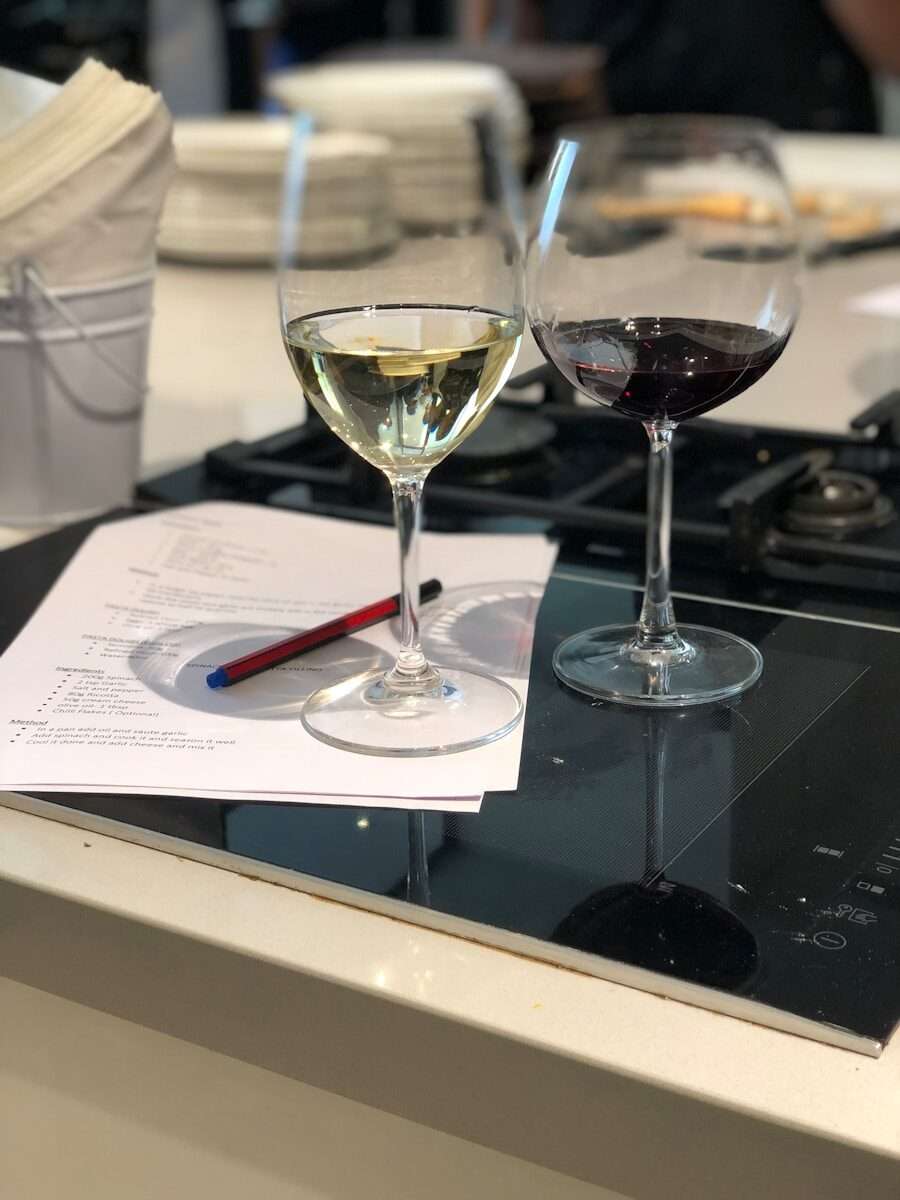
The fastest way to improve your tasting notes is to taste wines comparatively rather than solo. When you have two glasses in front of you, your brain automatically looks for contrast — this one is more acidic, that one is fuller-bodied, this one has a longer finish. Contrast is easier to perceive than absolute qualities.
This is exactly why structured tasting events accelerate learning so dramatically. At a blind tasting, you’re forced to engage your palate analytically rather than just enjoy passively. You notice things you’d otherwise miss.
The Wine Voyage builds wine tasting notes practice directly into our corporate event formats. In a Blind Tasting Competition, each participant writes their own notes before the team discussion — which means you get the benefit of personal focus first, then the broadened perception of your group. It’s remarkable how often someone at your table smells something you missed entirely.
For teams new to wine tasting, we often run a brief facilitated tasting-notes session before the competition: here’s the framework, here’s how to use your nose before your palate, here’s what “finish” means. Twenty minutes of structured instruction turns a room of self-described non-wine-drinkers into engaged participants.
If you’re planning a corporate event around wine education, a tasting-notes format gives people a genuine skill they take home. It’s one of the most lasting pieces of value from an experiential event — people who attended three years ago still use the framework.
Digital Tools for Tracking Tasting Notes
If pen-and-paper isn’t your thing, several apps make tasting note management easier:
Vivino: Large community database. You can log your tastings, rate wines, and see what others noted for the same wine. Best for building a searchable personal cellar.
CellarTracker: More serious/professional tool. Better for people building a cellar and tracking aging potential.
Delectable: Simple mobile interface, good for quick tasting notes on the go.
Notes app on your phone: Honestly often the best option. Searchable, always with you, no friction.
The best tool is whatever you’ll actually use consistently. Don’t let perfection be the enemy of a useful record.
From Notes to Knowledge
Writing wine tasting notes is a practice, not a performance. Your early notes will be vague. Your later notes will get more specific. At some point you’ll start noticing your own biases — maybe you always underestimate acidity, or consistently mistake Merlot for Malbec — and that self-knowledge is genuinely useful.
More importantly, the practice of paying deliberate attention to what’s in your glass transforms wine from a beverage you consume into an experience you engage with. That’s worth more than any vocabulary list.
For the vocabulary foundation that makes tasting notes click, see our how to describe wine guide. If you want to put your notes skills into practice in a structured setting, our how to host a blind wine tasting guide walks through everything you need. And for group tasting formats that work for teams of any size, explore wine tasting games for groups.
Further Reading
The Jancis Robinson Wine Basics section is one of the most authoritative free resources for building tasting vocabulary, written by one of the world’s foremost wine educators. For a visual approach to wine flavor profiles, Wine Folly’s flavor chart is an excellent reference to keep open while tasting.