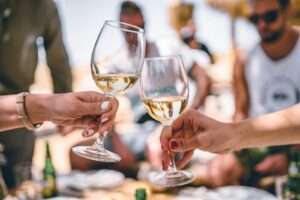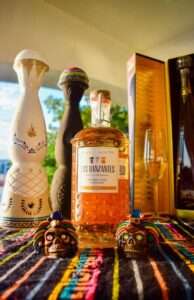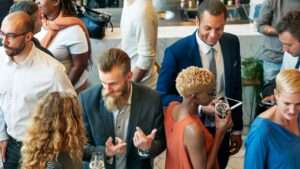

A wine brand activation succeeds when it turns a casual taster into someone who remembers the wine, talks about it, and comes back for it. Most wine brand activation campaigns fail because they mistake exposure for experience — a table, a sample pour, and a branded glass don’t create a memory. The formats in this guide are built around what makes wine brand activation actually work: participation, a structured moment, and a reason to remember.
Most brand activations fail for the same reason: they create exposure without experience.
A booth at a festival. A branded table at an event. A bottle with a QR code. People walk by, they might look, they move on. Nothing happened to them. Nothing connected the brand to something they felt.
Wine brand activations have an advantage that most product categories don’t: the product itself creates an experience. You taste it. You notice things. You form an opinion. You remember it. And if the activation is designed around that moment — the actual experience of tasting — it becomes something that sticks.
Here’s what works.
Why Alcohol Brand Activations Hit Different
When a soap brand activates, it hands you a product you’ll use in the shower in three days and forget you got for free. When a wine brand activates well, it gives you a story you tell at dinner.
“I tried this weird orange wine at that event — it tasted like apricots and pencil shavings, I know that sounds bad but it was incredible — and I’ve bought it four times since.”
That’s a customer. That’s also brand advocacy. And it started with one glass and someone who knew how to talk about what was in it.
The mechanics of alcohol — the complexity, the ritual, the social context — make well-designed activations unusually effective. The challenge is designing them well.
The Formats That Build Real Brand Preference
1. Guided Blind Tasting
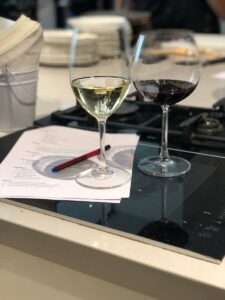
The setup: Attendees taste two or three wines without seeing the label. They form opinions, discuss what they’re noticing, and make a preference call. Then you reveal what they were drinking.
Why it works: When someone correctly identifies that they prefer your wine in a blind comparison, they’ve done the convincing themselves. There’s no sales pressure — just a preference they discovered. That’s far more durable than being told your wine is great.
The conversion moment: After the reveal, give them a card or QR code to buy the bottle they liked. The warm-to-purchase rate on blind tasting reveals is substantially higher than standard sampling because the preference decision has already been made.
Execution notes:
- Keep the comparison honest — you don’t need to win against every competitor, just be genuinely interesting in comparison
- Train your pour staff to be curious and conversational, not salesy
- The reveal is a performance — timing matters
2. Winemaker or Brand Story Session
The setup: A 20–30 minute session where someone with real authority — the winemaker, the founder, the head of brand — tells the actual story behind the wine while people taste it.
Why it works: Wine is a narrative product. Where the grapes came from, why that vintage was unusual, what the winemaker was trying to achieve — all of this changes how the wine tastes. It’s not psychology; it’s context. When you know why a wine is made a certain way, you notice the thing they were trying to create.
The conversion moment: The story session creates an emotional connection to the brand before people have had a chance to decide whether they care about it. By the time the session is over, they’re not just tasting wine — they’re tasting the decision to plant Grenache instead of Syrah, or the choice to age in concrete instead of oak.
Execution notes:
- The storyteller doesn’t need to be the founder — they need to be someone who genuinely cares about the product
- Keep it conversational, not scripted
- Limit to 25–40 people for the dynamic to work; large crowds thin out the intimacy
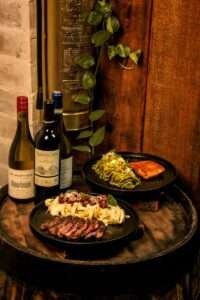
3. Food and Wine Pairing Workshop
The setup: Attendees work through 3–4 wine-and-food combinations — some obvious, some surprising — and experience firsthand how the same wine changes completely depending on what’s next to it.
Why it works: Pairing workshops solve a real problem people have: they don’t know what to drink with what. When your brand becomes the one that taught them that Albariño transforms next to garlic shrimp, or that a tannic Cab softens completely against aged cheddar, that’s useful knowledge attached to your label.
The conversion moment: The practical utility of the knowledge creates a natural follow-through — “I want to try this at home.” Make sure you have buy-now information at the table, not just at a table in the corner.
Execution notes:
- The food needs to be good — low-quality snacks undermine the experience
- Design the sequence deliberately: start with the expected pairing, then the surprising one
- Give people a take-home pairing card with your wines featured
4. Vintage Comparative Experience
The setup: Attendees taste the same wine from two or three different years — a vertical tasting — and experience how the same product varies with conditions outside anyone’s control.
Why it works: Vintage variation is one of the most compelling things about wine that most consumers have never experienced. When people taste a 2021 versus a 2019 and feel the difference, they become slightly more wine-literate, and they associate that moment of learning with your brand.
The execution challenge: You need bottles available for multiple vintages, which requires planning. This works best at owned events or wine-focused venues rather than third-party activations.
The story angle: Frame the vintage variation around a narrative — what was unusual about that year, what challenge the winemaker navigated, why the result was worth waiting for.
5. Custom Blending Session
The setup: Attendees blend their own version of a wine from component varietals. They taste the components separately, blend to their preference, evaluate the result, and optionally take it home.
Why it works: Ownership is the most powerful form of brand connection. When someone has made their own blend, they’ve participated in the craft. The brand is no longer something external — it’s something they understand from the inside.
The conversion angle: Blending sessions are highly shareable (the process, the final product, the label if you can print custom labels on-site) and create strong social content for attendees without you having to ask for it.
Execution notes:
- Work with a winemaker or brand rep who can guide without dictating
- 3–4 varietals is the right range — more becomes overwhelming, fewer limits the exploration
- If you can print a simple custom label on-site, do it
What Makes an Alcohol Brand Activation Fail
Sampling without story. Handing someone a cup of wine at a table in a busy venue is sampling, not activation. They’ll drink it and keep walking. Activation requires enough time and structure to create an actual experience, not just a taste.
The wrong event fit. A premium wine brand at a loud music festival with plastic cups is a mismatch that undermines both the event and the brand. The activation environment needs to match the brand positioning. High-energy products work at high-energy venues; experience-first brands need experience-first settings.
Staff who don’t believe in the product. The person pouring the wine is doing more than serving. They’re the brand in that moment. If they’re uncertain about the wine, distracted, or just going through motions, the activation communicates exactly that.
No clear next step. Every activation should end with a conversion path — a way to buy, a QR code, a card, a follow on social, a subscription offer. If people leave the activation with a good memory but no way to connect that memory to a purchase, you’ve done expensive sampling.
Building an Activation Strategy for a Wine or Spirits Brand
The most effective alcohol brand activations share three characteristics:
They’re repeatable with variation. A blind tasting format can run at a dozen different events with different wines in the comparison, different audiences, and different reveals. The format is consistent; the content varies. This creates a brand signature around the format rather than just the product.
They create content. The best activations generate social sharing, press coverage, or at minimum email capture. Design for content from the start — not as an add-on.
They’re honest about the product. The brands that use blind tastings confidently believe they can win on merit. The brands that do blending sessions know their product story is compelling. The worst activations are ones where the format doesn’t fit the product’s actual strengths.
Wine Brand Activations at Scale
For brands looking to build an ongoing activation program — not just a one-off event — the infrastructure matters:
- Pour staff training: They need to know the wine, the story, and how to have a real conversation about it. This is different from event bartending.
- Venue partnerships: Develop relationships with venues that attract your target audience and align with your positioning. The venue does some of the brand-positioning work for you.
- Measurement: Track what you can — QR code scans, email captures, on-site sales if permitted, social tags. Activation is hard to measure precisely, but directional data helps you iterate.
The brands that do this well treat activation as a customer acquisition channel with a measurable cost per converted customer, not as marketing spend that’s good for awareness and hard to justify further.
Running a Wine Brand Activation Through The Wine Voyage
The Wine Voyage designs and runs wine brand activations and experiential events for wine and beverage brands. Whether you’re launching a new label, entering a new market, or building preference among a specific audience, get in touch to talk through what would work.
Also worth reading: how wine tasting elevates team building experiences and how to host a wine tasting event from scratch.
Further Reading
For research on experiential marketing effectiveness, Harvard Business Review’s marketing section covers the principles behind why experience-based brand strategy outperforms traditional advertising. For wine industry context on consumer engagement, Wine Enthusiast’s consumer coverage tracks the formats and brand stories that build loyalty in the wine category.