Grüner Veltliner is Austria’s most important grape, and it’s one of the most food-friendly white wines in the world. Bone dry, high in acidity, with a distinctive white pepper and herb character that sets it apart from every other white wine variety — it’s the kind of wine that wine professionals drink when they want something useful rather than showy.
And yet most people outside of Austria have never tried it. That’s worth fixing.
What Does Grüner Veltliner Taste Like?
Grüner Veltliner has one of the most recognizable flavor profiles in white wine:
White pepper — the defining characteristic, present in virtually every Grüner Veltliner at some level. Not the aggressive heat of black pepper, but the dry, clean spice of white pepper.
Fresh herbs — dill, parsley, fresh cut grass. An herbal quality that makes it feel green and precise.
Citrus — lime, grapefruit, lemon zest. The high acidity is always present; the citrus notes come alongside.
Stone fruit — in richer examples (especially from prime sites), there’s peach, apricot, and sometimes white nectarine.
Minerality — a stony, chalky quality from Austria’s loess, gravel, and crystalline rock soils.
Light Grüner Veltliner is lean and snappy — think Chablis, but with pepper. At the higher end of quality, it becomes textured, complex, and capable of aging for a decade or more.
Where Grüner Veltliner Comes From
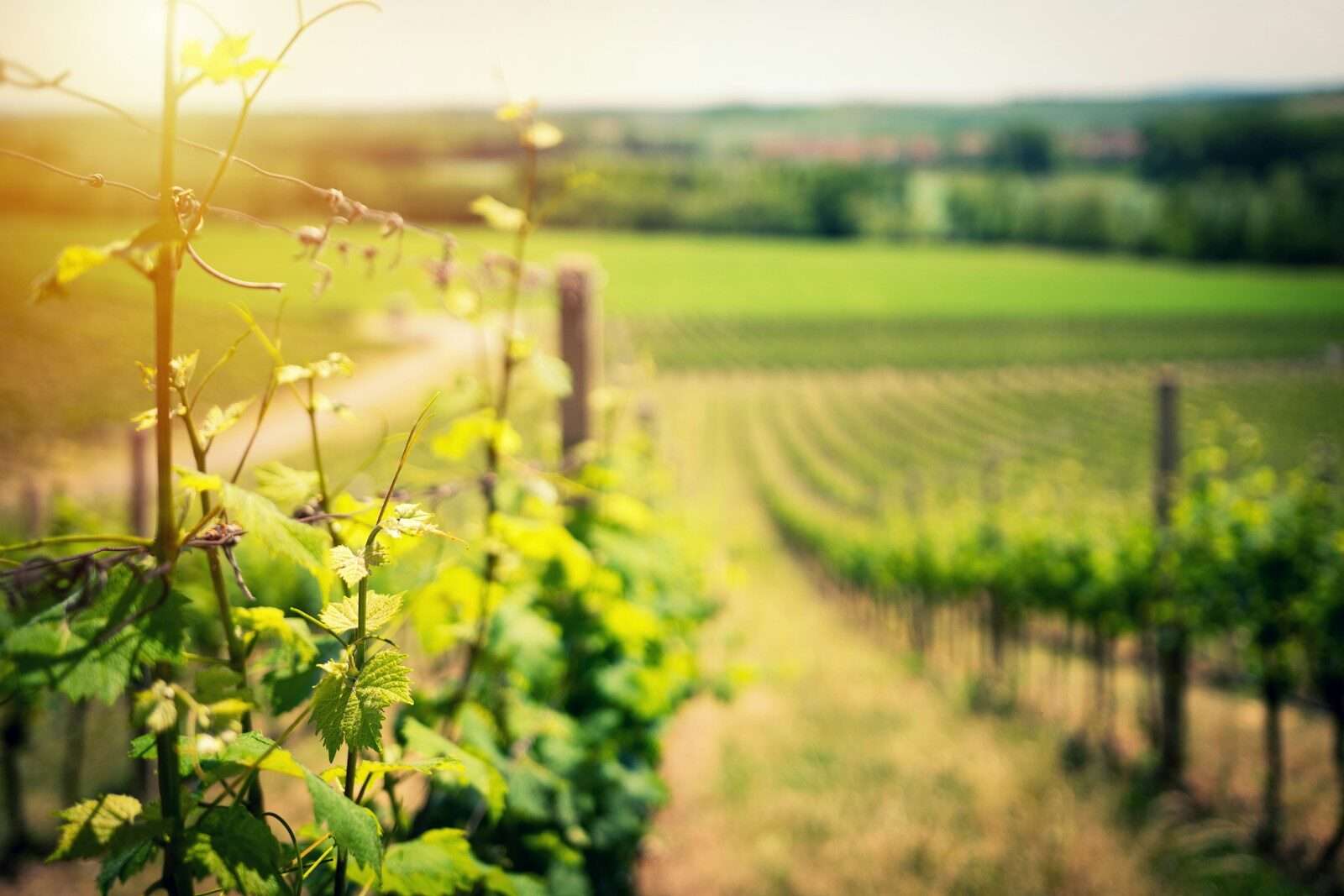
Grüner Veltliner is grown almost exclusively in Austria. It accounts for about 30% of Austria’s vineyard area — the dominant white grape in the country. Small amounts are grown in neighboring Czech Republic, Slovakia, and Hungary, and there are plantings in New Zealand, California, and a few other places, but Austria is where it matters.
The Key Austrian Wine Regions
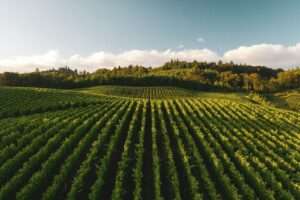
Wachau — the most prestigious appellation. A dramatic stretch of the Danube River gorge west of Vienna, with steep terraced vineyards of granite and gneiss. Wachau Grüner Veltliner can age for 10–20 years. The appellation uses its own classification:
- Steinfeder — lightest, most delicate, under 11.5% alcohol. Drink young.
- Federspiel — medium weight, 11.5–12.5% alcohol. The most versatile style, good for a few years.
- Smaragd — the richest, most concentrated style, named after a local lizard. Over 12.5% alcohol. These are the wines that age and develop complexity over many years.
Kamptal — the Kamp River valley, producing Grüner with distinctive mineral character from loess and crystalline rock. Producers: Bründlmayer, Hirsch, Jurtschitsch.
Kremstal — around the town of Krems, with a range of soils including loess, sand, and primary rock. Balanced, versatile Grüner.
Traisental, Wagram, Weinviertel — the Weinviertel (meaning “wine quarter”) is Austria’s largest wine region and produces most of Austria’s everyday Grüner Veltliner — lighter, herb-forward, and good value.
Vienna (Wien) — uniquely among major world capitals, Vienna has significant vineyard area within city limits. Viennese Grüner Veltliner is typically fresh, light, and sold in wine taverns (Heurigen) in the same year as harvest.
Grüner Veltliner Styles
Everyday Grüner (Weinviertel, basic Kamptal/Kremstal): Light-bodied, high-acid, pepper-forward. This is what you’d order by the glass at a restaurant looking for a versatile white. Usually under $20, drink within 2–3 years.
Mid-range regional Grüner (Federspiel level, good Kamptal/Kremstal): More texture and complexity. Peach and stone fruit come through alongside the pepper. Good with food. Usually $20–40.
Top-end Wachau and single-vineyard Grüner: Rich, structured, built for aging. Smaragd-level Grüner from Loibner Berg, Achleiten, or Kellerberg sites can rival white Burgundy in complexity and longevity. Usually $40–100+.
How to Pair Grüner Veltliner With Food
This is where Grüner Veltliner earns its reputation. Its combination of high acidity, herbal character, and white pepper makes it extraordinarily versatile with food — more so than most white wines.
Vegetables — The herbal, peppery character makes Grüner Veltliner one of the few wines that works genuinely well with asparagus (a notoriously difficult wine pairing), artichokes, and green vegetables generally. The classic pairing.
Viennese cuisine — Wiener Schnitzel, tafelspitz (boiled beef), fish dishes. Austrian food was developed alongside Austrian wine — they co-evolved to work together.
Seafood — Lighter styles with shellfish, oysters, and delicate white fish. Richer styles with salmon, grilled fish, and sea bass.
Poultry — Roast chicken, chicken with herbs, turkey. The herbal notes in the wine echo herbs in the dish.
Spicy food — The high acidity and dry profile handle moderate heat well — Thai salads, Vietnamese dishes, lightly spiced Indian food.
Sushi and Japanese — One of the best wine pairings for sushi and sashimi. Clean, dry, mineral, with no tannin to clash with fish.
Green salads and vegetable-forward dishes — Most whites struggle with raw green vegetables and vinaigrette. Grüner handles both because its acidity is high enough to compete with the acidity in the dressing.
What to avoid: Heavy red meat dishes, rich braised meats, dishes with aggressive tannin-heavy sauces. These call for red wine with more structure.
Grüner Veltliner vs. Other White Wines
How does it compare to wines you might already know?
vs. Sauvignon Blanc — Both are high-acid, herbaceous whites. Sauvignon Blanc tends toward tropical fruit and grassiness; Grüner Veltliner is drier, peppery, and more mineral. Grüner is typically better with food.
vs. Pinot Grigio — Grüner is more complex and characterful. Pinot Grigio is lighter and more neutral. Grüner Veltliner gives you more personality in the glass.
vs. Chardonnay — Very different. Chardonnay (especially oaked) is richer and more textured. Grüner is leaner and more acidic. Neither is better — they work in different contexts.
vs. Riesling — Closest in structure (both high-acid), but different flavor profiles. Riesling is more aromatic — floral, petrol — and ranges from bone dry to intensely sweet. Grüner is more savory and peppery. If you love Riesling, Grüner Veltliner is the next natural step.
Producers to Know
Domäne Wachau — The Wachau’s cooperative producer, reliably excellent across all three levels. Great entry point for understanding the appellation.
Nikolaihof — One of the oldest wineries in Austria, now biodynamic. Benchmark Smaragd Grüner.
F.X. Pichler — Among the most celebrated producers in Austria. Intense, structured, long-lived Smaragd.
Emmerich Knoll — Traditional winemaking style, extraordinary single-vineyard wines.
Alzinger — Smaller producer, meticulous quality, often under the radar.
Bründlmayer (Kamptal) — Sophisticated, food-friendly style. Excellent range from everyday to top single-vineyard.
Hirsch (Kamptal) — Known for mineral, precise Grüner from volcanic and crystalline soils.
Loimer (Kamptal/Kremstal) — Biodynamic farming, consistent quality at reasonable prices.
How to Serve Grüner Veltliner
Temperature: 45–52°F (7–11°C). Lighter styles toward the cooler end; richer Smaragd wines toward 52°F so they open up.
Glass: A standard white wine glass works fine. For top-end Smaragd wines, a wider-bowled glass (similar to what you’d use for white Burgundy) lets the aromatics develop.
With or without age: Everyday Grüner is best within 2–4 years of vintage. Top Smaragd wines from great producers and vintages can be cellared for 10–15+ years and develop in the bottle.
Why You Should Know Grüner Veltliner
The practical case: Grüner Veltliner is one of the most useful whites you can know. It handles food situations that stump other wines — vegetables, Asian food, the difficult first course — and it’s rarely overpriced.
The interesting case: Austrian wine culture is genuinely distinct from the rest of the wine world. The Wachau classification, the Heurigen wine tavern tradition, the local varieties — it’s worth exploring as its own world, not just as an alternative to French or Italian wine.
And if you start with Grüner Veltliner, Austria’s other varieties — Riesling (exceptional in the Wachau), Blaufränkisch (the top red grape), Zweigelt — become natural next steps.
For more on white wine variety and body, see our guide to medium-bodied white wines — Grüner Veltliner fits in the medium-to-light category. For food pairing by principle rather than by grape, see how to pair wine with food. And for the Austrian red wine counterpart, Blaufränkisch appears in our medium-bodied red wine guide.
Further Reading
For deep coverage of Austrian wine appellations and producers, Wines of Austria’s official site is the authoritative resource. For buying recommendations by vintage and producer, Jancis Robinson’s wine search covers Austrian wine in depth with vintage notes.