Wine has a lifespan — opened and unopened. The useful windows are shorter than most people assume for open bottles and much longer than most people assume for the right unopened wines stored correctly.
Here’s the realistic picture.
How Long Wine Lasts After Opening
Once a bottle of wine is opened, oxygen gets in and the wine begins to oxidize. How fast that happens depends on the wine’s structure and how you store it.
Light White Wine and Rosé: 1–3 Days
Light whites (Pinot Grigio, Sauvignon Blanc, Muscadet, Albariño) and dry rosé have modest structure and relatively delicate aromatics. Once oxidized, they lose their freshness quickly — the primary fruit fades and the wine starts to taste flat, sometimes slightly vinegary.
Best practice: Recork or seal with a wine stopper and refrigerate immediately after opening. Drink within 48 hours for best quality; 3 days is the outer limit.
Full-Bodied White Wine: 3–5 Days
Richer whites — oaked Chardonnay, Viognier, white Burgundy — have more structure and hold up slightly longer after opening. The acidity and extract help preserve them. Still refrigerate; still drink within 5 days.
Light Red Wine: 2–3 Days
Light reds (Pinot Noir, Gamay, Beaujolais) are fragile. Low tannin means less natural protection from oxidation. Refrigerate (despite the instinct to leave reds at room temperature) and drink within 3 days, ideally 2.
Medium to Full-Bodied Red Wine: 3–5 Days
More tannic, structured reds (Cabernet Sauvignon, Syrah, Barolo, Rioja Reserva) have natural antioxidants from the tannins and phenolic compounds. They can hold for 3–5 days well-sealed. Some benefit from their second-day open — the oxidation opens up aromatics before the wine deteriorates.
For big reds with lots of tannin: The day after opening is often the best day to drink them. The wine has relaxed, the tannins have softened slightly, and the aromas have opened up. By day 4–5, quality starts to fall.
Sparkling Wine: 1–3 Days
This is where the loss is most immediately noticeable — bubbles dissipate within hours of opening. A sparkling wine stopper (a pressure-sealing stopper specifically designed for sparkling bottles) can extend bubble retention to 1–3 days in the refrigerator. A regular cork or wine stopper won’t work as well. The wine itself stays drinkable but flat Champagne is significantly less pleasurable.
Hack: Some people claim a metal spoon in the neck of a Champagne bottle preserves bubbles. This is a myth. It doesn’t work. Use a Champagne stopper.
Fortified Wine (Port, Sherry, Madeira): Weeks to Months
Fortified wines have high alcohol content (18–22% ABV) and often significant residual sugar — both of which inhibit oxidation. An opened bottle of Ruby Port keeps well for 2–3 weeks. Tawny Port, with its oxidative character already built-in during production, keeps for 4–6 weeks. Amontillado and Oloroso Sherry keep for 2–4 weeks. Madeira is the most robust — it can keep for months or even years after opening.
Dessert Wine (Sauternes, Late-Harvest): 1–2 Weeks
The high residual sugar in dessert wines acts as a preservative. Sauternes and similar wines, re-sealed and refrigerated, stay enjoyable for 1–2 weeks after opening.
How to Extend Wine Life After Opening
Refrigerate everything. The cold slows oxidation significantly. Even red wine keeps better in the fridge overnight — just bring it back to serving temperature 20–30 minutes before drinking.
Use a wine stopper or vacuum pump. Basic wine stoppers provide a better seal than the original cork. Vacuum pumps (the kind that suck air out of the bottle) add extra protection — they’re not perfect but they extend life by a day or two.
Pour into a smaller bottle. If half a bottle is left, pour it into a smaller bottle (a half-bottle or even a clean water bottle) and seal it. Less air space means slower oxidation.
Coravin system. A Coravin uses a hollow needle to extract wine through the cork, replacing it with inert gas (argon). The cork reseals itself when the needle is removed. The bottle stays sealed — the remaining wine doesn’t oxidize at all. This is the only method that truly preserves an opened bottle indefinitely. Coravin systems are expensive ($200+) but serious for collectors.
How Long Unopened Wine Lasts: The Realistic Windows
The question of unopened wine longevity is more nuanced than “can I drink this old bottle?” It depends on whether the wine was made to age and whether it’s been stored properly.
The General Rule
Most wine sold in the world is made to be drunk within 1–5 years of the vintage date. It’s not made for aging. Keeping it longer doesn’t improve it — it just slowly fades.
By Wine Style
Everyday white wine (Pinot Grigio, Sauvignon Blanc, basic Chardonnay): Best within 1–3 years of vintage. Kept longer, it loses freshness and can develop flat, nutty, oxidative character unintentionally.
Everyday red wine (basic Merlot, young Grenache, entry-level Cabernet): Best within 2–4 years. The fruit fades; what’s left is dry and less interesting.
Sparkling wine (non-vintage): Best within 1–3 years of release. Non-vintage Champagne and Prosecco are blended for current drinking, not aging. Stored longer, the bubbles don’t technically disappear but the wine’s freshness fades.
Vintage Champagne: Can age for 10–30+ years under proper conditions. Develops extraordinary complexity.
Mid-range red wine (Rioja Crianza, Chianti Classico, decent Malbec): 3–7 years from vintage is the sweet spot.
Premium age-worthy red wine (Barolo, Barbaresco, Grand Cru Burgundy, Napa Cabernet, vintage Bordeaux, northern Rhône Syrah): These wines are built for aging. Great vintages from top producers can age 20–40+ years. They often need time to reach their peak — drinking a top Barolo 5 years after vintage may give you a wine that’s still closed and tannic.
White wines built for aging: Dry German Riesling (Spätlese and above), white Burgundy from top appellations, Hunter Valley Semillon — these can age 15–30 years and develop remarkable complexity.
Dessert wine: Sauternes, TBA Riesling, late-harvest wines — among the longest-lived wines in the world. The combination of residual sugar, acidity, and botrytis creates wines that develop over decades. Château d’Yquem has been known to last 100+ years in ideal conditions.
Fortified wine: Port (especially Vintage Port) ages for 20–40 years. Madeira is virtually immortal — there are drinkable Madeiras from the 1800s.
Wine Storage: Why It Matters
Unopened wine degrades fast under bad storage conditions:
- Heat is the biggest enemy. Wine stored at 75°F ages two to three times faster than wine stored at 55°F.
- Light degrades wine. UV light in particular causes “light strike” — a specific defect that smells like wet cardboard or cooked vegetables.
- Vibration disturbs sediment and can accelerate chemical reactions.
- Humidity fluctuation affects corks — too dry and they shrink; too wet and mold can develop.
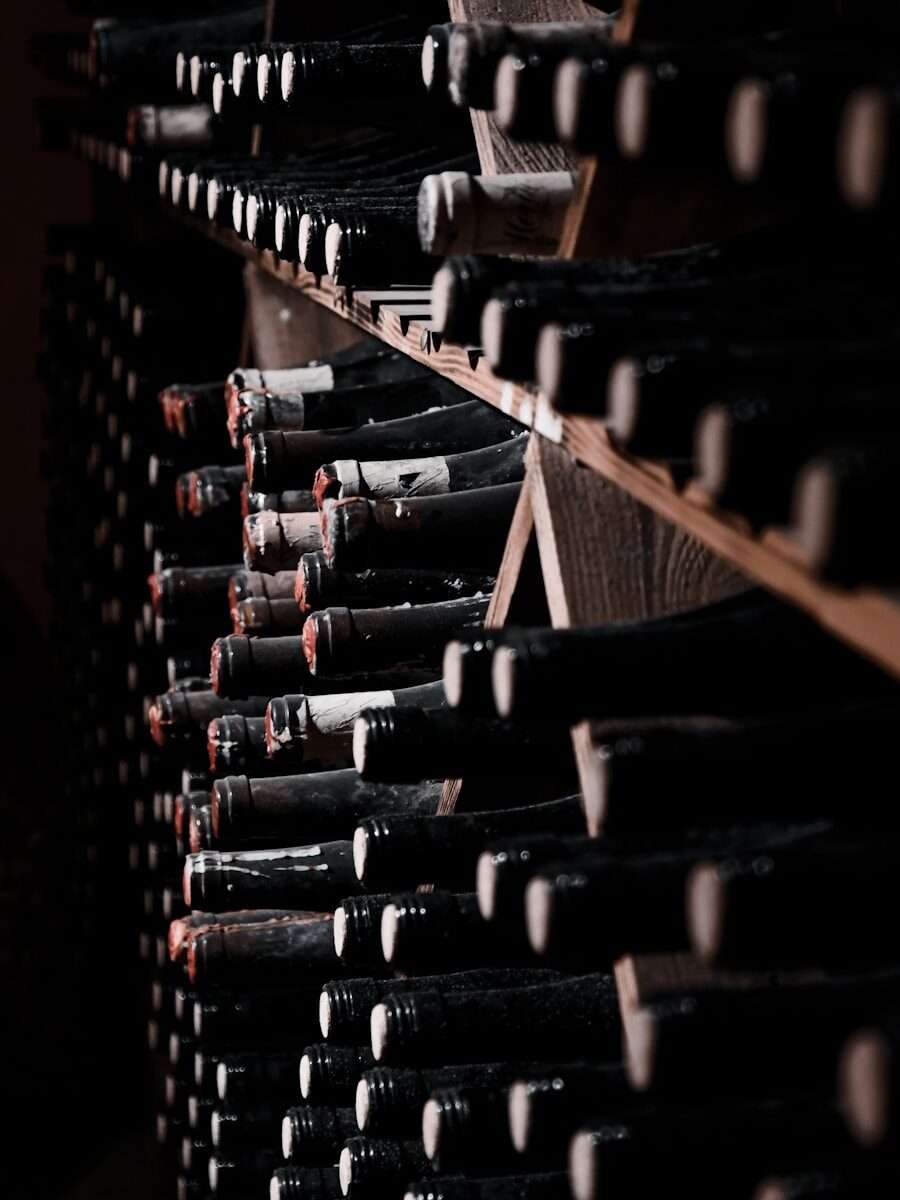
If you’re storing wine for more than a few weeks, a wine fridge (55°F, consistent humidity, vibration-free, dark) makes a meaningful difference in how long the wine lasts and how it tastes when you open it.
How to Tell If Wine Has Gone Bad
Smell: Vinegary (volatile acidity), wet cardboard or wet newspaper (TCA cork taint — “corked” wine), cooked fruit or Madeira-like character in a wine that shouldn’t have it (heat damage). Any smell that makes you recoil is a bad sign.
Color: White wines turn deep gold and then brown as they oxidize. Red wines turn orange-brown at the rim (some is normal in aged wines; complete browning throughout is not). Very young red wine that looks orange-brown has been damaged.
Taste: Flat, vinegary, or cooked. Tannins that feel harsh and dry without any fruit to balance them. Loss of structure.
Important: “Corked” wine (TCA contamination from the cork) can be subtle — it doesn’t smell dramatically like cork. It smells musty, damp, or like a wet dog. The wine tastes muted and flat rather than obviously off. A good wine shop will replace a corked bottle.
For proper storage: see our wine fridge guide for whether you need one and how to choose. For serving what you have: wine serving temperatures covers every wine type. And for understanding what you’re drinking: wine for beginners starts from scratch.