What Is Gewürztraminer?
Gewürztraminer is the wine that makes people stop mid-sentence. The name is a mouthful — guh-VERTS-truh-MEE-ner — and the wine itself is equally unforgettable. Rich, perfumed, and unmistakably exotic, Gewürztraminer smells like a rose shop crossed with a lychee stand, with a dusting of ginger and cinnamon underneath. There’s nothing subtle about it, and that’s exactly the point.
“Gewürz” means spice in German. “Traminer” refers to the village of Tramin in northern Italy, where this grape may have originated. Put them together and you have a name that describes the wine perfectly: the spiced Traminer grape.
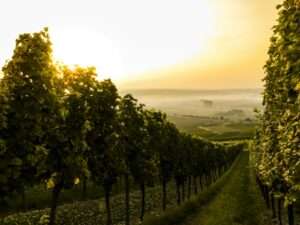
Gewürztraminer is most closely associated with Alsace, the slender French region tucked between the Rhine River and the Vosges mountains — a place that has been French, German, and French again over its history, and whose wines reflect that cultural layering beautifully. But the grape also thrives in Germany, Austria, northern Italy’s Alto Adige, New Zealand, and parts of California and Oregon.
I’ve poured a lot of Gewürztraminer at tastings over the years, and it consistently gets the most dramatic reactions. Either people lean in and say “what IS this?” — or they decide immediately it’s too much. There’s rarely a lukewarm response. That polarizing quality is actually a feature: Gewürztraminer has a point of view.
The Flavor Profile of Gewürztraminer
Gewürztraminer’s aromatics are some of the most distinctive in the wine world. Once you know them, you’ll recognize the grape instantly.
Primary aromas:
- Rose petal, Turkish rose, potpourri
- Lychee, guava, passion fruit
- Ginger, cinnamon, allspice
- Orange peel, mandarin zest
- Sometimes: smoke, petrol (especially in Alsace Grand Cru)
On the palate: The body is full and rich — similar to Viognier in weight but distinct in character. Acidity is low to moderate, giving the wine a round, almost unctuous texture. Alcohol runs high, often 13.5–15%. There’s a bitterness on the finish that’s characteristic and intentional — it provides structure where the low acidity doesn’t.
Residual sugar varies widely. Dry versions (Alsace’s standard style) taste rich but finish dry. Off-dry and sweet versions (Vendange Tardive and Sélection de Grains Nobles in Alsace, Spätlese and Auslese in Germany) lean into the sweetness. Reading the label carefully matters here.
One important note: the grape’s phenolic compounds (similar to tannins but in white wine) give Gewürztraminer a distinctive slightly bitter, almost phenolic finish. Some people love this; others find it takes getting used to.
Where Gewürztraminer Is Grown
Alsace, France — The Benchmark
Alsace produces the world’s most celebrated Gewürztraminer. The region’s unique position — sheltered from rain by the Vosges mountains to the west, warmed by continental sun — allows the grapes to ripen fully while retaining aromatic complexity.
Alsace Gewürztraminer divides into four quality levels:
Alsace AOC — The entry level, covering the whole region. These are typically rich, aromatic, and approachable; most are technically dry but may have a few grams of residual sugar. Producers to know: Trimbach, Hugel, Léon Beyer.
Alsace Grand Cru — 51 classified vineyard sites of exceptional terroir. Gewürztraminer thrives especially on limestone and sandstone soils. The wines are more complex, age-worthy, and expensive. Look for Grand Crus like Rangen, Brand, and Goldert.
Vendange Tardive (VT) — Late harvest wines from fully ripe, often botrytized grapes. Rich, concentrated, off-dry to sweet. These are occasion wines, not everyday drinking.
Sélection de Grains Nobles (SGN) — The pinnacle: wines made from individually selected botrytized berries, similar to German Trockenbeerenauslese. Extraordinarily sweet, complex, and rare.
Germany and Austria
German Gewürztraminer tends toward more delicacy than Alsace — slightly lighter, crisper, more mineral. The Pfalz and Baden regions produce the most notable examples. Austrian Gewürztraminer, concentrated in Styria and the Wachau, leans toward dry, mineral expressions with more defined acidity.
Alto Adige, Italy
This alpine region in northeastern Italy (also called Südtirol — it was Austrian until 1919) produces some of Europe’s most elegant Gewürztraminers. The altitude keeps temperatures cool, which preserves acidity and floral freshness that the Alsace versions can sometimes lack. Elena Walch and Tramin are reliable producers.
New Zealand and California
New Zealand’s cool-climate Marlborough and Central Otago regions produce crisp, aromatic Gewürztraminers that trade some of the grape’s signature richness for freshness and precision. California examples from Anderson Valley and the Sonoma Coast similarly tend toward lighter, more aromatic styles.
Gewürztraminer vs. Other Aromatic Whites
| Wine | Dominant Aromas | Body | Acidity | Sugar | Best With |
|---|---|---|---|---|---|
| Gewürztraminer | Rose, lychee, spice | Full | Low | Dry to sweet | Asian cuisine, strong cheese |
| Viognier | Peach, apricot, jasmine | Full | Low–Med | Dry | Poultry, curry |
| Riesling | Citrus, apple, petrol | Light–Med | High | Dry to sweet | Almost anything |
| Muscat Blanc | Grape, orange blossom | Light–Med | Low | Dry to sweet | Aperitif, dessert |
| Torrontés | Floral, citrus, stone fruit | Med | High | Dry | Seafood, aperitif |
Among aromatic whites, Gewürztraminer is the most dramatic and polarizing. Riesling is the most versatile. Viognier is the most opulent. Gewürztraminer is the most distinctly itself — you’re either on its frequency or you’re not, but it’s always worth trying.
Food Pairing: Where Gewürztraminer Shines
Gewürztraminer is one of the great food wines of the world when matched thoughtfully. Its low acidity means it won’t cut through rich, fatty dishes the way Champagne or Chablis does — but its aromatic intensity and slight sweetness make it uniquely suited to several categories of food.
Classic pairings:
Alsatian cuisine — The regional match is almost too perfect. Choucroute garnie (sauerkraut with pork and sausages), foie gras, tarte flambée, munster cheese — these dishes evolved alongside Gewürztraminer for centuries.
Asian cuisine — This is where Gewürztraminer really earns its reputation. The wine’s slight sweetness and aromatic intensity handle spicy Thai, Vietnamese, and Indian dishes better than almost any other white. Try it with green curry, pad thai, mango chicken, or Vietnamese pho.
Spicy Mexican food — Enchiladas in mole sauce, chiles en nogada, tamales. The wine’s sweetness dampens heat while its aromatics match the complexity of spice blends.
Foie gras — Rich, silky foie gras with a Vendange Tardive Gewürztraminer is one of the classic luxury pairings in French cuisine.
Washed-rind and strong cheeses — Munster, Époisses, Limburger. The wine’s intensity matches the cheese’s intensity in a way that more delicate wines can’t.
Fruit-based desserts — Apple tart, pear tatin, lychee sorbet. The wine’s fruit character bridges to the dessert naturally.
What to avoid:
- Very delicate fish (overwhelmed by the wine’s intensity)
- Lean proteins with no sauce (nothing to match the wine’s richness)
- Light salads (the low acidity doesn’t work against fresh greens)
In my experience, the most underrated Gewürztraminer pairing is spicy Thai takeout on a Tuesday night. The wine’s floral sweetness against green curry is extraordinary — and it’s the kind of discovery that changes how you think about wine pairing forever.
How to Serve Gewürztraminer
Temperature: 48–54°F (9–12°C). Colder than that and the aromatics disappear. Warmer and the alcohol becomes noticeable. Pull from the fridge 15–20 minutes before serving.
Glass: A medium-to-large white wine glass. Wide enough to allow the aromatics to bloom, but not so enormous that the wine warms too quickly.
Decanting: Usually unnecessary. For older Grand Cru or VT bottles (5+ years), a brief 15-minute decant can help.
Aging: Standard Alsace AOC Gewürztraminer is best within 3–5 years of vintage. Grand Cru wines can age 8–15 years. Vendange Tardive and SGN wines can age 20+ years and are built for it.
Reading the Label
Gewürztraminer labels can be confusing because sweetness level isn’t always stated directly.
In Alsace:
- No designation = dry or off-dry (the producer’s choice, unfortunately not standardized)
- “Vendange Tardive” = late harvest, off-dry to sweet
- “Sélection de Grains Nobles” = very sweet, dessert wine level
In Germany:
- Kabinett = light, usually off-dry
- Spätlese = riper, off-dry
- Auslese = rich, sweet
- Beerenauslese / Trockenbeerenauslese = very sweet, dessert level
In Italy (Alto Adige): Most are labeled simply “Gewürztraminer” or “Traminer Aromatico” and are dry.
When in doubt, ask your wine shop. With Gewürztraminer, the difference between dry and sweet isn’t obvious from the name alone, and it matters enormously for food pairing.
Buying Gewürztraminer: A Price Guide
Budget ($12–$20)
California producers like Fetzer and Chateau Ste. Michelle (Washington) offer straightforward, aromatic examples. For Alsace in this range, Trimbach’s entry-level Gewürztraminer is a reliable benchmark.
Mid-Range ($20–$40)
This is where Alsace gets interesting. Hugel’s “Classic” and Famille Hugel’s regular bottlings, Domaine Weinbach, and Zind-Humbrecht’s village wines all land here and represent excellent quality.
Splurge ($40–$100+)
Grand Cru Alsace Gewürztraminer: Zind-Humbrecht’s Rangen de Thann, Trimbach’s “Cuvée des Seigneurs de Ribeaupierre,” and Domaine Weinbach’s Grand Cru Furstentum are extraordinary wines that reward aging.
For Alto Adige, Elena Walch’s “Kastelaz” Gewürztraminer regularly outperforms its price.
Gewürztraminer in Group Wine Experiences
Gewürztraminer is, in my experience, the single most conversation-generating wine you can put in front of a group. The rose and lychee aromatics are so distinctive that most first-timers have never encountered anything quite like it. “This smells like my grandmother’s garden” is a real thing people say. That’s a feature.
At The Wine Voyage, Myrna Elguezabal uses Gewürztraminer strategically in corporate tasting sessions — often pairing it with an Asian-inspired food course to demonstrate how dramatically the right wine transforms a meal. The moment a group sees a wine handle spicy food where their usual go-to Chardonnay would collapse is the moment wine education clicks. If you’re designing a team-building wine event, including Gewürztraminer alongside a spicy dish pairing is one of the most memorable things you can do.
Common Questions
Why is Gewürztraminer so aromatic? The grape contains exceptionally high concentrations of terpenes — aromatic compounds including linalool, geraniol, and citronellol. These are the same compounds found in many flowers and spices, which is why the wine smells like both.
Is Gewürztraminer always sweet? No. Most Alsace examples are dry, though the intense aromatics can create an impression of sweetness. Late harvest versions (VT, SGN) are genuinely sweet and meant for dessert pairings.
Can I age Gewürztraminer? Standard bottles are best young (within 3–5 years). Grand Cru wines benefit from aging. VT and SGN are built for decades in the cellar. Most grocery-store bottles should be consumed within 2 years of purchase.
What food should I absolutely try with Gewürztraminer? Spicy Thai or Indian food. The pairing is almost unfairly good.
For more on aromatic whites, see our guides to Viognier, Riesling, and Chenin Blanc. If you’re building your palate from scratch, our white wine for beginners guide is a good starting point.
Further Reading
For authoritative deep dives into Gewürztraminer and Alsace, I recommend Decanter’s Gewürztraminer guide and Wine Folly’s Gewürztraminer overview, both of which cover the full range of styles and regional expressions.