
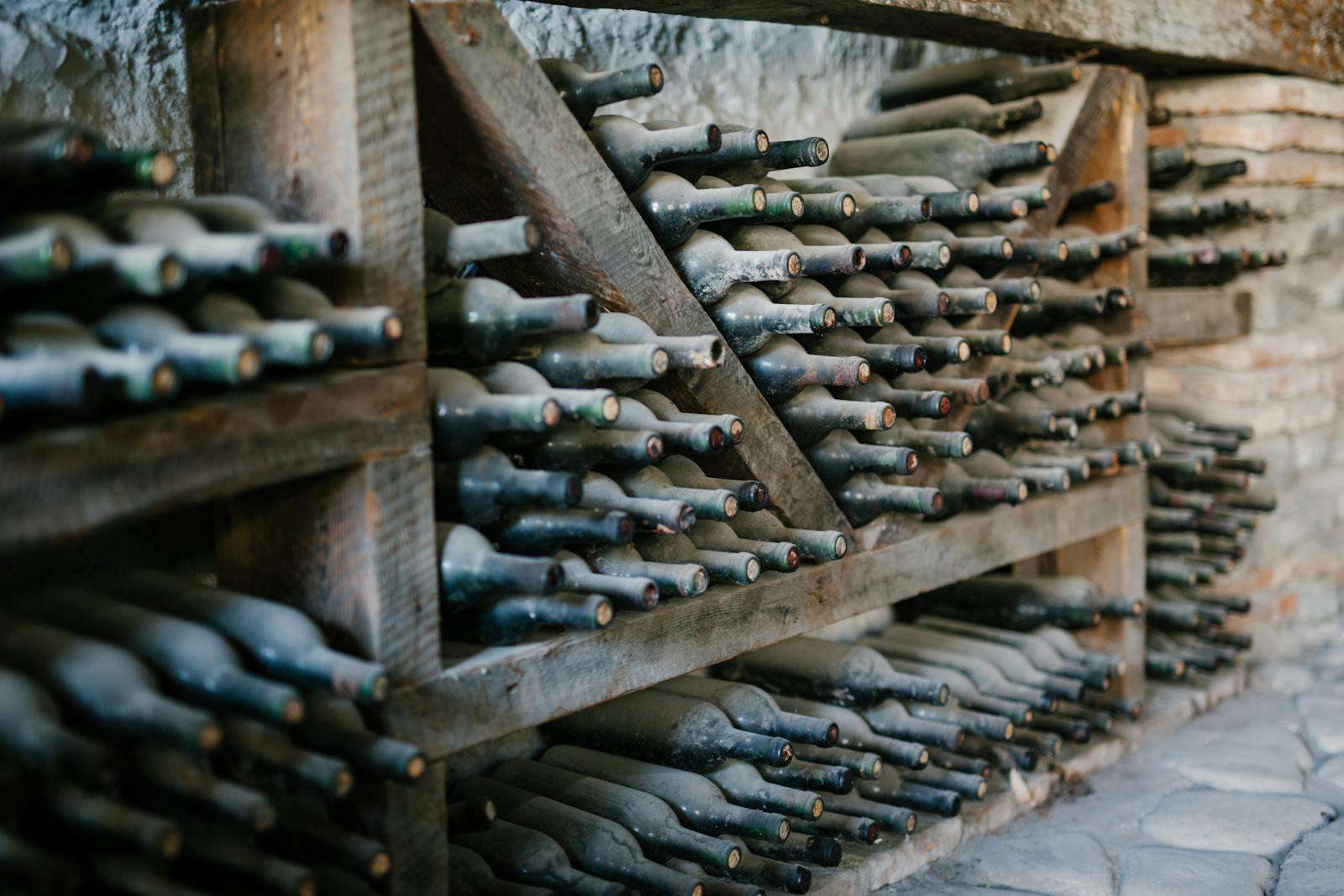
Why Wine Storage Actually Matters
Most wine never gets the chance to age poorly — it gets drunk within 48 hours of purchase. But for the bottles you’re setting aside, whether for a few weeks or several years, understanding how to store wine correctly is the difference between a wine that’s better than the day you bought it and one that’s faded, oxidized, or cooked.
The good news: wine storage isn’t complicated once you know what you’re protecting the wine from. This guide covers the key variables, practical solutions for every budget and living situation, and how to think about which wines actually benefit from extended storage.
The Four Enemies of Wine
Before getting into solutions, it helps to understand what you’re protecting wine against.
Heat
This is the biggest threat. Wine ages through chemical reactions, and heat accelerates those reactions dramatically. A bottle stored at 80°F (27°C) ages roughly four times faster than one stored at 55°F (13°C). The damage from heat is often described as “cooked” — the wine tastes flat, jammy, and lifeless, and the fruit character that made it interesting has been destroyed.
Consistent warmth is bad enough, but temperature swings are worse. Repeated expansion and contraction of the liquid can push wine past the cork, introducing oxidation.
Light
UV light degrades the compounds in wine that give it aroma and flavor — a process called light strike. This is why wine bottles are typically dark green or amber glass, and why serious storage facilities are kept dark. Fluorescent and incandescent light can cause damage with prolonged exposure; direct sunlight is especially damaging.
Vibration
This one is more disputed among wine professionals, but there’s evidence that sustained vibration can disturb the sediment in older wines and may interfere with the slow chemical reactions that allow wine to develop complexity over time. Storing wine on top of a refrigerator or near a washing machine is worth avoiding.
Oxidation
Once a bottle is opened, exposure to oxygen begins degrading the wine rapidly. For sealed bottles, oxidation is caused by a dried-out cork — which is why bottles should be stored horizontally to keep the cork moist. A moist cork maintains its seal; a dry cork shrinks and lets air in.
Short-Term Storage (Under 3 Months)
For most people, most of the time, short-term storage is the relevant question. You’ve bought a few bottles for dinner next week, a case for the holidays, or a special bottle you want to drink in a month or two.
The key principles for short-term storage:
Find the coolest, darkest spot in your home. A closet on an interior wall away from heat sources is often better than you’d think. A basement is ideal. Avoid the kitchen — ambient heat from cooking, the stove, and the refrigerator all make it a poor wine environment.
Keep bottles out of direct light. A cardboard box or wine rack in a dark pantry works fine for a few weeks.
Lay bottles on their side. This applies to any wine with a natural cork. Screw-cap wines don’t require this, but it doesn’t hurt.
Don’t store in the main refrigerator long-term. A standard fridge is 35–38°F (2–3°C) — too cold for wine storage and the dry environment will eventually dry out corks. A quick chill before serving is fine; weeks of storage is not.
Long-Term Storage (3 Months to Years)
This is where wine storage becomes more specific. The ideal conditions for aging wine:
| Factor | Ideal Range | Why It Matters |
|---|---|---|
| Temperature | 50–59°F (10–15°C) | Slow, consistent chemical development |
| Humidity | 60–70% | Keeps corks moist without mold growth |
| Light | Darkness | Prevents light strike and UV degradation |
| Vibration | Minimal | Avoids sediment disruption |
| Airflow | Gentle, consistent | Prevents musty odors from seeping into cork |
Wine Fridge (Thermoelectric or Compressor)
For most home collectors, a dedicated wine refrigerator is the practical solution. A quality wine fridge maintains consistent temperature and humidity without the extremes of a regular refrigerator. Thermoelectric models are quieter and vibrate less; compressor models are more powerful and can maintain lower temperatures in warm environments.
A 12–bottle unit starts around $100; a 50–bottle unit with dual zones (one for reds, one for whites) runs $200–500. For serious collectors, built-in units integrated into cabinetry can hold hundreds of bottles.
Wine Cellar
A proper cellar — whether a converted basement space, a closet retrofitted with insulation and a cooling unit, or an underground room — is the gold standard. The goal is a naturally stable environment where temperature doesn’t swing more than a few degrees across seasons.
Building a functional wine cellar doesn’t require a Victorian townhouse. A small insulated closet with a dedicated cooling unit can hold hundreds of bottles at ideal conditions.
Climate-Controlled Wine Storage Facilities
If you’re buying wine for long-term aging and don’t have space at home, professional storage is worth the cost. These facilities maintain optimal conditions precisely and provide inventory tracking. Pricing varies from $5–30/case per month depending on location and facility quality.
Storing Different Types of Wine
Not all wine benefits from extended storage — in fact, most wine is made to be drunk within 1–5 years of release. Understanding which wines age well helps you store intentionally.
| Wine Type | Drink Within | Age Potential |
|---|---|---|
| Light white (Pinot Grigio, Sauvignon Blanc) | 1–2 years | Minimal — drink young |
| Full white (aged Chardonnay, white Burgundy) | 2–5 years | Up to 10–15 years |
| Rosé | 1–2 years | Minimal |
| Light red (Beaujolais) | 1–3 years | Minimal |
| Medium red (Pinot Noir, Merlot) | 3–7 years | Up to 15–20 years |
| Full red (Cabernet Sauvignon, Barolo) | 5–10 years | 20–40+ years |
| Sweet wine (Sauternes, Port) | 5–15 years | Decades |
| Sparkling wine (Champagne) | 1–5 years NV | Vintage: 10–25+ years |
The wines worth investing in proper storage for are full-bodied reds with high tannin and acidity, quality sweet wines, and top-tier whites from Burgundy or Germany. Everything else should be on your drinking list, not your storage list.
After Opening: How to Store an Unfinished Bottle
Once a bottle is open, oxygen has entered and degradation has begun. How long you have depends on the wine:
- Light white and rosé: 1–3 days in the fridge, re-corked or with a wine stopper
- Full-bodied white: 3–5 days in the fridge
- Light red: 2–3 days at room temperature or slightly chilled
- Full-bodied red: 3–5 days at room temperature
- Sparkling wine: 1–3 days with a sparkling wine stopper (the kind that clamps over the bottle)
- Fortified wine (Port, Sherry): 2–4 weeks in the fridge (the high alcohol slows oxidation)
A vacuum pump that removes air from an open bottle can extend these windows by a day or two. A private preserve spray (inert gas that sits on top of the wine) works even better. Neither is magic, but both help.
Common Storage Mistakes to Avoid
Storing above the refrigerator. It’s warm up there — the refrigerator motor generates heat, and heat rises from cooking below. This is one of the worst spots in most kitchens.
Keeping wine in direct sunlight or near a window. Even indirect light through glass can cause light strike over weeks.
Repeatedly refrigerating and removing wine. Temperature cycling is hard on wine. Decide when you want to drink it, chill it the day before, and leave it until then.
Forgetting about stored wine. Many bottles bought with the intention of aging get lost at the back of a rack and drunk too late, or never. Keep a simple list — even a note on your phone — of what you have and when you intended to drink it.
Storing all wine the same way. A Beaujolais Nouveau and a first-growth Bordeaux have entirely different storage needs. The former should be drunk before spring; the latter might not be ready for a decade.
A Practical Storage Setup for Most People
If you’re not building a cellar and don’t need to store hundreds of bottles, here’s a pragmatic approach:
- A 20–50 bottle wine fridge for bottles you’ll drink within the next year. Keep it at 55°F (13°C) for reds, 48°F (9°C) for whites if it has dual zones.
- A cool, dark closet for overflow or bottles you’ve forgotten to transfer.
- A simple inventory list — even a spreadsheet — so you know what you have and when to open it.
This covers 95% of home wine storage needs without a significant investment or dedicated space.
Wine Storage and Team Building
When I work with corporate groups on wine experiences, proper storage comes up more than you’d expect. Teams that host internal events — a holiday party, a client dinner, a quarterly offsite — often buy wine in advance without thinking about storage. A case of good wine left in a warm conference room for two weeks before an event tastes noticeably worse than it should.
At The Wine Voyage, Myrna often includes a short segment on wine storage in corporate tasting events precisely because it’s immediately actionable. People leave knowing something they can put into practice the next day, which makes the experience feel educational rather than just fun. If you’re planning a wine-themed event for your team, a practical knowledge component like this is often what makes it memorable.
Related reading: our wine cellar guide covers building a dedicated storage space, the wine fridge guide goes deeper on choosing equipment, and how long does wine last covers what happens after the bottle is open.
Further Reading
For a deeper dive into wine preservation science, Wine Folly’s wine storage guide is a practical visual resource, and Decanter’s storing wine section covers professional cellar management alongside home storage advice.