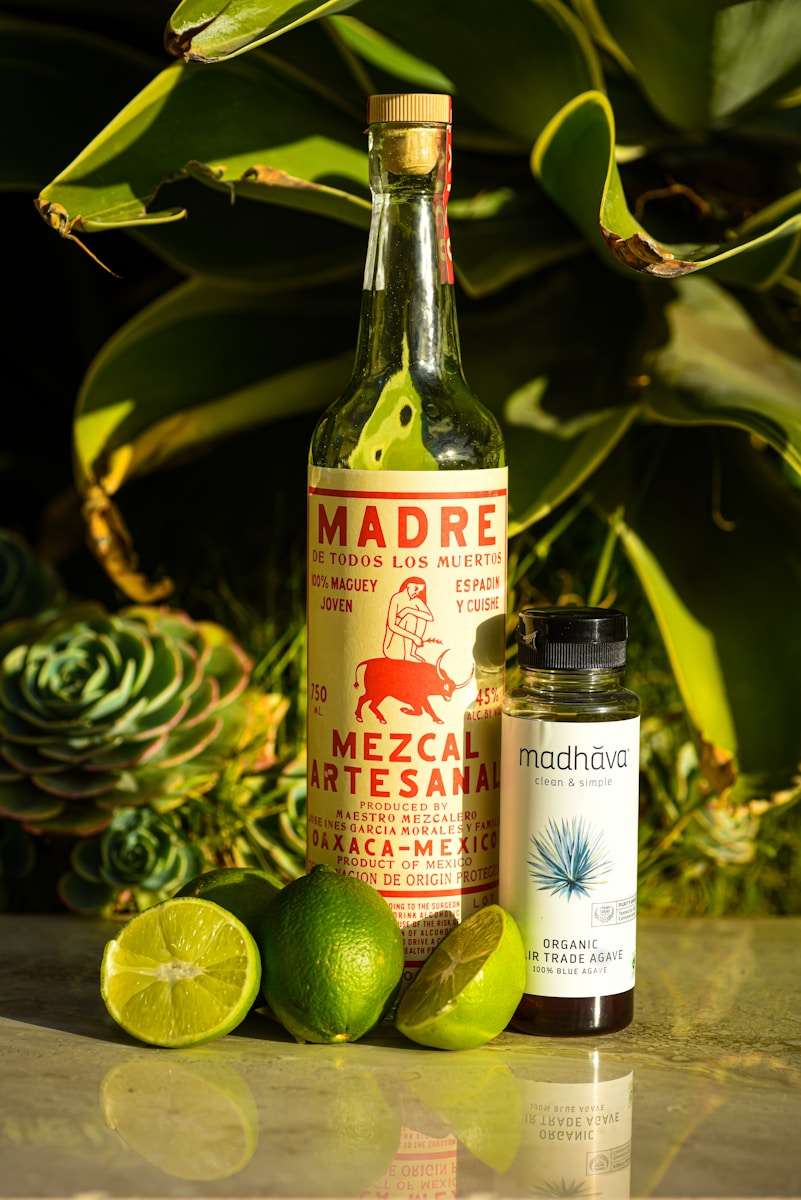
The first time I tasted mezcal — really tasted it, slowly, with a guide who knew what they were talking about — I remember thinking: this is what spirits are supposed to feel like. There’s smoke, yes, but there’s also fruit and earth and flowers and something almost mineral that I couldn’t name. It tasted like a place.
That’s the thing about mezcal that separates it from almost every other spirit category. Each bottle carries the fingerprint of where the agave grew, who harvested it, how it was cooked and fermented and distilled. It’s one of the most place-specific, producer-specific spirits in the world — which means the learning curve is real, but the reward is extraordinary.
This guide covers everything: what mezcal is, how it’s made, the major styles and producers, how to taste it, and how to navigate a bottle shop or tasting menu without feeling lost.
What Is Mezcal?
Mezcal is a distilled spirit made from agave plants — specifically, the cooked and fermented hearts (piñas) of agave plants grown primarily in Mexico. It’s the broader category of which tequila is a subset: all tequila is mezcal, but not all mezcal is tequila.
The name comes from the Nahuatl word mexcalli, which means “oven-cooked agave.” That cooking process — traditionally in underground pit ovens lined with hot rocks — is what gives many mezcals their characteristic smokiness. Though not all mezcal is smoky, the pit-roasting method remains common among traditional producers.
Official Definition: Under Mexican law, mezcal must be produced in designated states — Oaxaca, Guerrero, Durango, San Luis Potosí, Zacatecas, Puebla, Guanajuato, Michoacán, and Tamaulipas — and must be made from agave. Unlike tequila, which is restricted to Blue Weber agave, mezcal can be made from dozens of agave varieties.
How Mezcal Is Made
Understanding the production process is the key to understanding why mezcal tastes the way it does.
Harvesting the Agave
Agave plants take between 7 and 30 years to mature, depending on the species. When a plant is ready, it sends up a tall flower stalk called a quiote. Farmers (called jimadores) cut this stalk before it flowers, redirecting the plant’s energy back into the piña — the heart of the agave. Then the piña is harvested, often weighing anywhere from 20 to 200 pounds.
Wild and semi-wild agave varieties, particularly Tepeztate, can take 25+ years to mature. This is why single-varietal mezcals from rare agaves carry significant prices — they represent decades of growth.
Cooking the Piñas
This is where traditional mezcal diverges most sharply from tequila. Traditional mezcal producers roast their piñas in underground pit ovens (hornos), lined with rocks heated by burning wood. The piñas cook for several days. This imparts that iconic smokiness — along with notes of chocolate, leather, and dried fruit that develop during the slow roast.
Some modern producers use clay ovens or autoclave pressure cookers instead, which produces mezcal with less smoke and a lighter profile.
Crushing and Fermentation
After roasting, the piñas are crushed to extract their juices. Traditional producers use a large stone wheel (a tahona) pulled by horse or donkey, grinding the piñas against a stone pit. More modern facilities use mechanical shredders.
The mashed agave fiber and juice are then transferred to wooden vats, clay pots, or even animal hides, where wild yeast fermentation begins naturally. This wild fermentation process — using ambient yeast rather than commercial strains — contributes significantly to each batch’s unique character.
Distillation
Mezcal is typically distilled twice in copper or clay pot stills. Clay pot distillation, still used by some traditional producers in Oaxaca, produces a particularly textured, earthy style. The resulting spirit must be between 36% and 55% ABV by Mexican law.
Mezcal Agave Varieties
This is where things get genuinely exciting. Unlike tequila — restricted to one agave species — mezcal can be produced from over 40 recognized agave varieties, each bringing a distinct flavor profile.
| Agave Variety | Maturity | Flavor Profile | Notes |
|---|---|---|---|
| Espadín | 7–10 years | Smoky, sweet, versatile | ~90% of mezcal production |
| Tobalá | 10–15 years | Floral, fruity, complex | Wild-harvested, smaller yield |
| Tepeztate | 25–35 years | Herbal, earthy, intense | Rare; long wait for harvest |
| Arroqueño | 15–20 years | Rich, tropical, creamy | Southern Oaxaca |
| Mexicano | 12–18 years | Citrusy, fruity, delicate | Less smoky profile |
| Madrecuixe | 10–14 years | Green, vegetal, bright | Cuixe family |
| Cuishe | 8–12 years | Fruity, floral, lighter | Related to Madrecuixe |
| Jabali | 12–15 years | Distinctive, almost gamy | Difficult to ferment cleanly |
Espadín dominates the market and is the best starting point for new mezcal drinkers — it’s approachable, widely available, and gives you a good baseline for what to expect from the category.
Once you’ve oriented yourself with a good Espadín, start exploring single-varietal bottlings of Tobalá (floral, elegant) and Tepeztate (herbal, wild, unlike anything else in the spirits world).
Mezcal Classifications
The mezcal category has a formal classification system under Mexican law.
By Production Method
- Mezcal — minimum standards met; may use mechanized production
- Mezcal Artesanal — tahona or manual crushing; fermentation in natural vessels; copper or clay pot distillation
- Mezcal Ancestral — entirely traditional; clay pot distillation only; all stages by hand
Most of the interesting small-batch producers operate in the Artesanal or Ancestral categories. Look for these designations on the label when you’re buying.
By Age
- Joven (Young) — unaged or rested less than 2 months; most mezcal is this style
- Reposado — aged 2–12 months in oak
- Añejo — aged 1–3 years in oak
- Extra Añejo — aged over 3 years
Most serious mezcal enthusiasts gravitate toward Joven expressions — the oak aging tends to mask the agave character that makes mezcal interesting in the first place. But a well-made Reposado can show beautiful integration of agave and wood.
How to Taste Mezcal
Mezcal rewards slow tasting. Rush it and you get smoke and heat. Take your time and you find extraordinary complexity.
The Right Glass
Use a copita (a small clay or ceramic vessel traditional to Oaxaca), a Glencairn whiskey glass, or a stemless white wine glass. Avoid wide, flat glasses — they diffuse the aromatics. Never use a shot glass.
Step-by-Step Tasting
- Pour and observe — Note the color. Most Joven mezcal is crystal clear. Any color suggests aging.
- Nose slowly — Hold the glass at chest height first, then bring it toward your nose gradually. Don’t stick your nose directly in — the alcohol will overwhelm your senses. Take three or four short sniffs. Let the glass warm slightly in your hand between sniffs.
- First sip — A small sip. Let it sit in the middle of your tongue for a moment before swallowing. Notice the entry (first impression), the mid-palate (how the flavors develop), and the finish (what lingers after you swallow).
- Add a drop of water — Even for mezcal at lower ABV. Water opens up aromatics and softens the ethanol. You’ll find flavors you didn’t taste before.
- Repeat — Mezcal is not a spirit that reveals everything immediately. Return to the glass every few minutes and you’ll find it changing.
What to Look For
- Smoke: how prominent, what kind (camp fire, rubber, wood smoke, gentle char)
- Fruit: citrus, tropical, dried fruit, stone fruit
- Florals: lavender, honeysuckle, jasmine
- Earth: clay, minerals, forest floor
- Spice: pepper, cinnamon, anise
- Sweetness: roasted agave, caramel, vanilla (more common in aged expressions)
Mezcal vs. Tequila: Key Differences
| Feature | Mezcal | Tequila |
|---|---|---|
| Agave varieties | 40+ permitted species | Blue Weber agave only |
| Production regions | 9 Mexican states | 5 states (Jalisco focus) |
| Cooking method | Pit ovens (mostly) | Autoclave / steam ovens |
| Fermentation | Wild yeast, often | Commercial yeast common |
| Distillation | Clay or copper pot stills | Stainless steel column stills |
| Smokiness | Often (varies widely) | Minimal |
| Scale | Mostly artisanal batches | Large industrial producers |
| Price range | $40–$200+ | $25–$150+ |
The short version: tequila tends toward precision and consistency; mezcal tends toward personality and variation. Neither is better — they’re different experiences.
Regions and Producers Worth Knowing
Oaxaca produces roughly 80% of all mezcal and is home to most of the small-batch producers that define the category’s identity. The valley around the city of Oaxaca is dotted with family distilleries (palenques) that have been making mezcal for generations.
Durango produces increasingly acclaimed mezcals from wild Cenizo agave — lighter, more delicate styles that contrast sharply with smoky Oaxacan expressions.
Guerrero is known for Cupreata agave mezcals — rich, full-bodied, slightly tropical.
San Luis Potosí is the home of Sotol (technically a different plant, not legally mezcal) and some excellent Salmiana agave expressions.
Producers to Explore
- Vago — transparent, producer-focused label from Oaxaca; excellent entry point for serious exploration
- Los Siete Misterios — single-varietal focus; great for learning what different agaves taste like side by side
- Del Maguey — one of the producers that sparked the American mezcal obsession; Vida is the accessible expression, Pechuga the showpiece
- Banhez — ensemble mezcal from Oaxaca; approachable and widely available
- El Silencio — good for beginners; widely distributed; solid introduction
Drinking Mezcal: Pairings and Occasions
Mezcal shines as a sipping spirit, but it also works beautifully in cocktails and at the table.
Food Pairings
- Smoked meats and barbecue — the smoke echoes; the agave sweetness cuts through fat
- Mole — one of the great pairings; the complexity of both amplifies the other
- Dark chocolate — especially with Espadín; the roasted notes harmonize
- Aged cheeses — the earthiness of a good Manchego or Comté alongside a Tobalá is exceptional
- Oysters — high-acid, saline, briny; mezcal’s minerality is a perfect counterpoint
Cocktails
- Mezcal Negroni — substitute mezcal for gin; one of the best applications for smoky Espadín
- Oaxacan Old Fashioned — equal parts mezcal and reposado tequila, agave syrup, mole bitters; created by Phil Ward at Death & Co
- Tommy’s Margarita with Mezcal — agave syrup, lime, mezcal; cleaner and more agave-forward than a traditional margarita
Mezcal as a Shared Experience
One of the things I find most meaningful about mezcal is that it’s designed to be shared. The traditional Oaxacan way of drinking mezcal — sitting with friends, pouring small amounts, passing a shared jícara (gourd) — is fundamentally communal.
That spirit translates beautifully to group settings. I’ve run mezcal and tequila tastings for corporate teams and the format consistently delivers something that standard happy hours can’t: genuine curiosity, conversation that goes beyond the surface, and the experience of discovering something unexpected together.
If you’re looking to bring this to your team, our Tequila & Mezcal Experience offers a guided exploration of artisanal agave spirits — the stories behind small-batch producers, proper tasting technique, and the kind of discovery that makes people talk about it afterward.
Interested in expanding your spirits knowledge? Read our companion guide to mezcal vs. tequila for a deeper side-by-side comparison, or explore how spirits tastings work as corporate event ideas for your team.
Further Reading
For deep dives into mezcal culture and producers, Wine Folly’s mezcal guide offers excellent visual context for the production process and agave varieties. For authoritative coverage of the spirits industry and artisanal producers, Decanter’s spirits section tracks emerging producers and regional styles worth knowing.