
I’ve worked in corporate event production for fifteen years, and I’ve seen every version of team bonding go right and go wrong. I’ve watched axe-throwing events where the entire team spent two hours staring at their phones. I’ve watched a simple blind wine tasting turn a group of near-strangers into people who were still laughing together at midnight.
The difference between a team bonding idea that works and one that doesn’t usually comes down to a single question: does it give people something real to talk about? Not a prompt on a worksheet. Not a forced sharing circle. An actual shared experience with enough novelty, stakes, or surprise to generate genuine conversation.
Here are the team bonding ideas I’ve seen work consistently, with honest notes on what makes each one land.
What Makes Team Bonding Actually Work
Before the list, a framework worth keeping. The best team bonding ideas share three characteristics:
They create novelty. The brain pays more attention when it encounters something unfamiliar. A novel experience — tasting a spirit you’ve never tried, blending your own wine, navigating a competition you can’t prepare for — keeps people present in a way that familiar activities can’t.
They produce shared narrative. “Remember when Marcus said the $12 Malbec was definitely a premium Napa Cab?” becomes a story the team tells for months. Team bonding ideas that generate stories build culture in a way that games with forgettable outcomes don’t.
They create genuine equality. The best activities level the playing field. The person who’s been at the company three months should have the same shot at winning as the twenty-year veteran. Activities that favor tenure, physical fitness, or extroversion tend to reinforce existing dynamics rather than disrupting them.
With that in mind:
15 Team Bonding Ideas Worth Considering
1. Blind Wine Tasting Competition
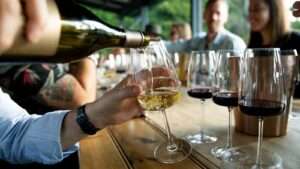
Pour six wines, cover the labels, split into teams, and see who can identify grape, region, or vintage. Nobody needs prior knowledge — the whole point is that wine expertise doesn’t predict success. The accountant who “doesn’t drink wine” often beats the self-proclaimed connoisseur.
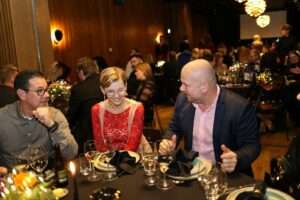
This is my single most recommended team bonding idea for corporate groups because it requires zero physical ability, creates natural conversation, and generates those story-worthy moments at every single reveal. I’ve never run one where the room didn’t erupt at least twice.
2. Wine Blending Competition
Each team receives base wines (typically Cabernet Sauvignon, Merlot, and Cabernet Franc) and blending instructions. Teams experiment with ratios, blend their ideal bottle, give it a name and a backstory, and present to a judging panel.
The blending competition works especially well for groups with strong opinions and competitive instincts. It rewards creativity and collaboration simultaneously, and the presentations are reliably hilarious — teams get unexpectedly invested in the story of their wine.
3. Cooking Class
A structured cooking class works for team bonding when it’s genuinely collaborative — not everyone watching one person cook, but teams dividing tasks, making decisions under time pressure, and eating what they made together. The eating matters. Shared meals are ancient bonding technology.
4. Escape Room
Escape rooms are reliable team bonding because they create real urgency and require genuine communication to solve. The format surfaces leadership dynamics, problem-solving styles, and communication patterns — which can be as valuable debrief material as entertainment. Best for groups under 20; larger groups need multiple rooms or it fragments.
5. Improv Workshop
Professional improv classes for corporate groups are underused and underrated. The format teaches active listening, builds tolerance for uncertainty, and requires collaboration in a way that’s viscerally felt rather than intellectually understood. “Yes, and” turns out to be a useful communication principle in most organizations.
6. Trivia Night
Trivia works best when the categories are designed for your specific group — mixing general knowledge with company history, pop culture, and local geography. The format is familiar, low-anxiety, and scales from 10 to 200 people. Add a small prize for the winning team and the stakes get surprisingly real.
7. Tequila and Mezcal Tasting Experience
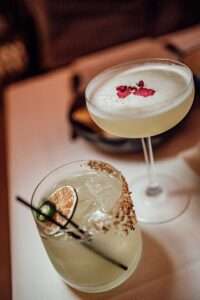
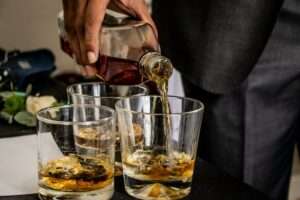
Spirits tastings have the same leveling power as wine tastings, with an added advantage: most people have pre-existing opinions about tequila or mezcal that the tasting immediately challenges. Guiding a group from “tequila is just for shots” to “I can taste the difference between highland and lowland Blue Weber agave” in ninety minutes creates exactly the kind of discovery arc that generates conversation afterward.
8. Volunteer Day
Volunteering together works as a team bonding idea when there’s genuine physical or collaborative work involved — building something, serving food, planting, cleaning. Administrative volunteer work (stuffing envelopes together) rarely builds bonds because there’s nothing to struggle through together. Choose activities where the team works alongside each other toward a visible result.
9. Outdoor Adventure
Hiking, kayaking, ropes courses — physical challenge with real stakes bonds people because stress chemistry is similar to bonding chemistry. The key is calibrating difficulty: accessible enough that nobody feels excluded, challenging enough that completing it feels like an achievement. Debrief after matters more than the activity itself.
10. Pottery Class
Underrated. Ceramics requires patience, fine motor skills, and tolerating failure — all of which produce interesting reactions in people who usually project competence. Watching your director fumble with a clay bowl while laughing about it has genuine equalizing power.
11. Food and Wine Pairing Dinner
A structured pairing dinner — where each course is matched with a wine chosen for specific reasons — is among the most memorable team bonding ideas for groups that appreciate good food. The learning is embedded in the pleasure, which makes it stick. Include guided tasting notes and you’ve created both education and a shared dining experience.
12. Murder Mystery Dinner
Murder mystery formats are reliable team bonding because everyone has a role and the competitive reveal gives the evening structure. Better with evening meals than daytime events; best when the murder mystery is customized to your industry or company culture.
13. Scavenger Hunt
A well-designed city scavenger hunt forces small groups to collaborate under time pressure across unexpected situations. The best ones include creative challenges (photograph your team recreating a famous painting) rather than just location-finding. Requires meaningful planning to execute well.
14. Art Workshop
Painting classes, printmaking, or collaborative mural projects give people permission to engage the creative part of their brain that work usually suppresses. Groups that work together on something visual often find the experience unusually revealing — who’s confident, who second-guesses, who helps without being asked.
15. Custom Craft Experience
Candle making, glassblowing, leatherworking, terrarium building — any craft where teams leave with a handmade object they created creates a tangible memory. People keep these objects on their desks for months. Every time they look at the lopsided candle they made, they remember the afternoon with their team.
How to Choose the Right Activity
Use this comparison as a starting point:
| Activity | Group Size | Energy Level | Best For |
|---|---|---|---|
| Blind Wine Tasting | 8–60 | Low/Medium | Any corporate group |
| Wine Blending | 10–40 | Medium | Creative, competitive teams |
| Escape Room | 6–20 | Medium | Problem-solvers |
| Improv Workshop | 10–30 | High | Communication-focused teams |
| Volunteer Day | Any | Medium/High | Culture-building goals |
| Food & Wine Pairing | 10–40 | Low | Client entertainment, milestone events |
| Trivia Night | 10–200 | Medium | Large groups |
| Outdoor Adventure | 10–50 | High | Active, outdoorsy teams |
| Cooking Class | 10–30 | Medium | Collaborative groups |
| Art Workshop | 6–30 | Low | Creative or reflective goals |
Practical Notes on Making Any Activity Work
Timing matters more than the activity itself. A team bonding experience at the end of a heavy all-hands day will underperform no matter how well-designed it is. Mid-week afternoon or start-of-morning when energy is higher will outperform Friday 4pm every time.
Brief the facilitator. If you’re using a professional facilitator, share key context about your group — recent reorg, mixed tenure levels, any sensitivities. Good facilitators adjust in real time when they know what to adjust for.
Small groups bond better. If you have 80 people, structure the event so people spend most of the time in groups of 8–12, not as a single room-sized herd. Connection happens at human scale.
End with shared recognition. However you close the event, take five minutes to call out moments of genuine collaboration or cleverness you observed during the activity. It anchors the memory and tells people their contributions were noticed.
Don’t manufacture emotion. The events that generate real bonds do it through genuine experience, not prompted vulnerability. Trust the activity. The connection follows.
Bringing a Professional Experience to Your Team
The most consistent team bonding ideas I see deliver results are experiences with a clear beginning, middle, and end — where there’s something at stake, something to discover, and a satisfying reveal or culmination that the group experiences together.
At The Wine Voyage, our events are built exactly around that arc. Our Blind Tasting Competition, Perfect Blend Competition, Tequila & Mezcal Experience, and Food & Wine Pairing events have been designed over years of corporate facilitation to hit those beats reliably, regardless of whether the group knows wine or not. We’ve worked with teams at the Carter Center, Sazerac, GoFundMe, and dozens of mid-sized companies across industries.
If you want a team bonding experience that people are still talking about in the quarterly review, a facilitated wine or spirits event is one of the highest-reliability options I know.
For more ideas specifically in the wine and spirits category, see our guide to team building ideas for work and unique team building activities. Our wine tasting team building article covers the specific arc of how tasting events build connection, and corporate event ideas has a broader menu for larger gatherings.
Further Reading
For research-backed perspectives on what makes team bonding work, I recommend Harvard Business Review’s team management coverage — particularly their research on psychological safety and what actually builds trust at work — and SHRM’s team building resource library, which includes practical frameworks for HR professionals planning bonding programs with real outcomes in mind.