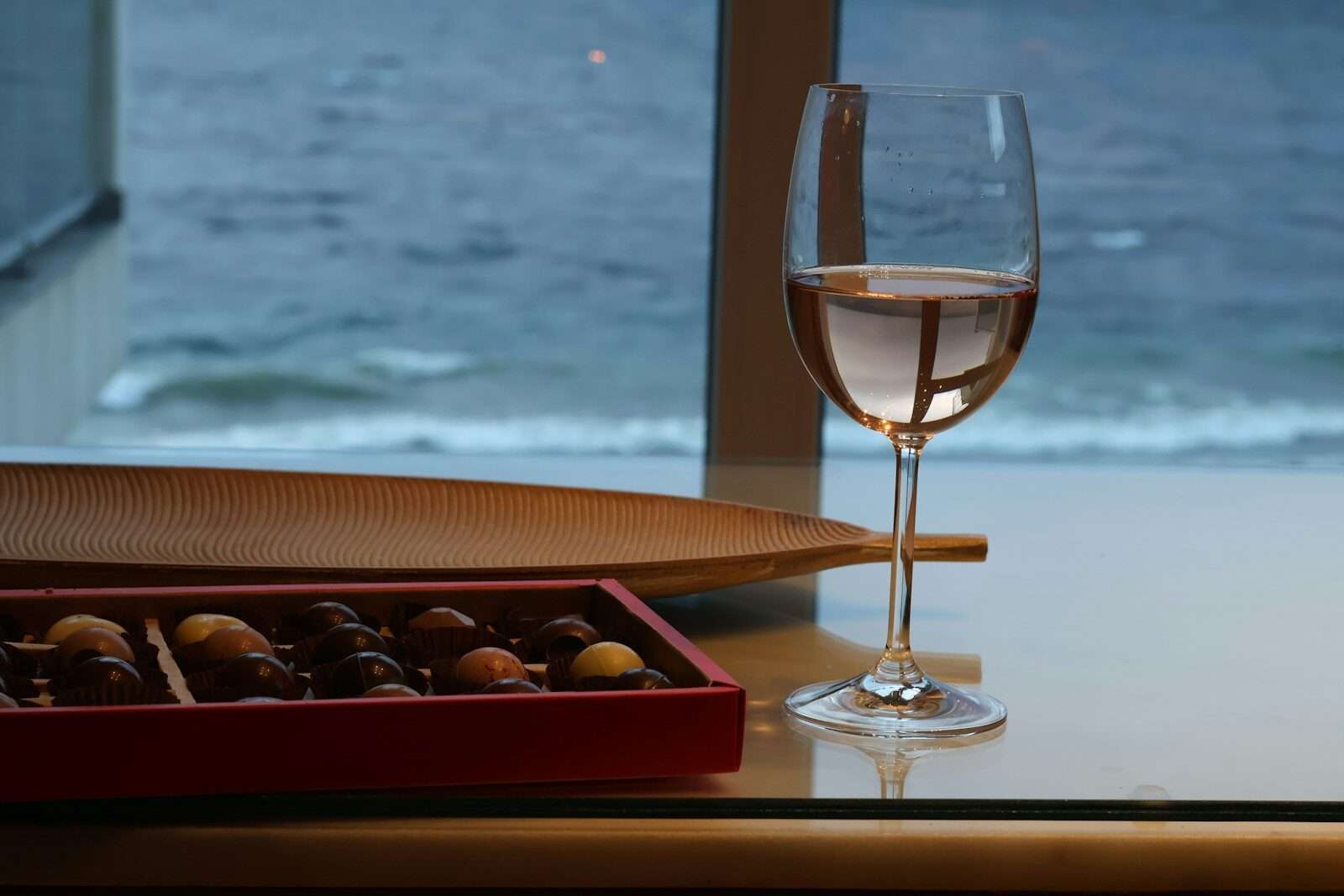
Wine and chocolate sounds like an obvious dream pairing — two beloved pleasures, better together. In practice, it’s one of the trickiest combinations to get right. Chocolate, especially dark chocolate, can clash violently with the wrong wine, making both taste worse. But when the match works, it’s genuinely extraordinary.
The good news: the rules for pairing wine and chocolate are straightforward once you understand the underlying principle. Get that principle right, and you can navigate any chocolate dessert with confidence.
The Core Rule: Sweet With Sweet (or Sweeter)
Here’s the principle that governs every wine and chocolate pairing: the wine must be at least as sweet as the chocolate, and ideally slightly sweeter.
When a dry wine meets chocolate, the bitterness in the chocolate amplifies the wine’s tannins. The result is an astringent, mouth-coating bitterness that overwhelms everything. This is why dry Cabernet Sauvignon and dark chocolate — the pairing everyone assumes is classic — actually often tastes harsh and unpleasant.
Conversely, when a sweet or fortified wine meets chocolate, the wine’s sweetness softens the chocolate’s bitterness while the chocolate’s richness rounds out the wine. Each element makes the other taste better.
That said, texture and flavor intensity also matter. A delicate, lightly sweet wine may get overwhelmed by intensely bitter 85% dark chocolate. Match body to body, intensity to intensity.
Wine and Chocolate Pairing by Chocolate Type
| Chocolate Type | Cacao % | Best Wine Pairing | Why It Works |
|---|---|---|---|
| Dark (bittersweet) | 70–90% | Tawny Port, Banyuls, Maury | Fortified sweetness tames bitterness |
| Dark (semisweet) | 55–70% | Vintage Port, Zinfandel, Amarone | Rich fruit and sweetness match intensity |
| Milk chocolate | 30–50% | Ruby Port, Brachetto d’Acqui, Lambrusco | Lighter, fruitier wines match the creaminess |
| White chocolate | 0% cacao | Moscato d’Asti, late harvest Riesling, Sauternes | Delicate sweetness complements vanilla and cream |
| Ruby / red fruit chocolate | Varies | Pinot Noir, Brachetto, light Grenache | Shared berry notes amplify each other |
| Salted chocolate | Varies | Tawny Port, Oloroso Sherry | Salt enhances sweet wine’s fruit depth |
| Chili chocolate | Varies | Zinfandel, Malbec, Petite Sirah | Spice needs bold fruit and some sweetness |
| Chocolate truffles | Varies | Vintage Port, PX Sherry | Intensity matches intensity |
Dark Chocolate: What Actually Works
Dark chocolate is the hardest to pair because the high cacao content means more bitterness and complexity. Dry red wines almost always clash. Your best options:
Tawny Port is the classic match. The oxidative, nutty sweetness of a 10 or 20 Year Tawny Port harmonizes beautifully with dark chocolate’s roasted, bitter notes. The caramel and dried fruit flavors in the Port echo the same complexity you find in high-quality dark chocolate.
Banyuls and Maury are fortified wines from southern France made primarily from Grenache. They’re often chocolate-friendly by nature — the wines have a natural roasted, almost chocolatey character that mirrors the flavors in the food. These are worth seeking out specifically for wine and chocolate pairing.
Vintage Port works with semisweet dark chocolate (55–70% cacao). The wine’s density and dark fruit intensity hold their own against the chocolate without being overwhelmed.
Zinfandel is the best dry red for dark chocolate — particularly a late-harvest or port-style Zinfandel. The high fruit concentration and natural sweetness in a ripe California Zinfandel can bridge the gap. It’s not a perfect pairing, but it’s the most forgiving dry red.
Milk Chocolate: More Forgiving Territory
Milk chocolate has less cacao bitterness and more dairy sweetness, which opens up more pairing options. The wine still needs some sweetness, but you have more room to work.
Ruby Port is excellent — fruitier and less complex than Tawny, it matches the lighter, creamier character of milk chocolate without overpowering it.
Brachetto d’Acqui is an Italian sparkling sweet red wine with flavors of strawberry and rose. It’s delightful with milk chocolate and underused in this context. Light, charming, and genuinely fun.
Lambrusco (the sweet, sparkling version) works in a similar way — the berry fruit and gentle sweetness pair well, and the bubbles cut through the dairy fat in the chocolate.
Raspberry or fruit-flavored milk chocolate specifically works well with Pinot Noir. The shared red berry notes amplify each other. This is one of the few cases where a dry red actually succeeds with chocolate — because the fruit-forward character of both elements aligns.
White Chocolate: Think Delicate
White chocolate contains no cocoa solids — just cocoa butter, sugar, and dairy. It’s sweet, creamy, and delicate. The wrong wine (anything tannic, bold, or dry) overwhelms it completely.
Moscato d’Asti is ideal. The low alcohol, effervescence, and gentle peach-and-apricot sweetness match white chocolate’s creamy lightness without overpowering it.
Late harvest Riesling works beautifully — the honeyed sweetness and slight acidity complement white chocolate while the wine’s intensity is calibrated appropriately.
Sauternes is a luxurious option. The botrytized richness of a good Sauternes elevates white chocolate into something genuinely special, especially with vanilla bean or citrus-infused white chocolate.
The Exceptions: When Dry Wine Can Work
There are a few genuine exceptions worth knowing:
Dark chocolate with sea salt and Oloroso Sherry. Salt is a flavor amplifier. On salted dark chocolate, an oxidative, nutty Oloroso Sherry — which is technically dry but intensely flavored — can work through sheer force of character. The salt bridges the two.
Chocolate with strong herbal or spice notes (chili, cardamom, rosemary) and Zinfandel or Malbec. When the chocolate has bold secondary flavors, there’s more overlap with a dry wine’s character. The spice creates common ground.
Mexican-style hot chocolate paired with Mezcal or aged rum. Not a traditional wine pairing, but the smoky, complex notes in both work together in a way dry wine almost never achieves with chocolate.
Setting Up a Wine and Chocolate Tasting
Wine and chocolate pairing is one of the most accessible and enjoyable tasting formats for groups. It’s especially effective because:
- Almost everyone has strong chocolate preferences already
- The contrast between bad and good pairings is obvious and immediate
- The format is naturally conversational — people want to argue about whether they prefer the Tawny Port or the Banyuls
For a simple wine and chocolate tasting at home:
- Choose 3–4 chocolates across the spectrum: a dark (70%+), a semisweet (55–65%), a milk, and a white
- Select one wine per chocolate type (Port, Ruby Port, Brachetto, Moscato)
- Taste each wine alone first, then with each chocolate
- Compare notes on which pairings work and which clash
The contrast is genuinely instructive. Most people are surprised by how bad the “obvious” Cabernet and dark chocolate pairing is, and how good the Tawny Port actually is.
Wine and Chocolate as a Corporate Experience
Wine and chocolate tasting works particularly well for corporate groups because it’s accessible to people who don’t think of themselves as wine drinkers. Chocolate is universally loved, and using it as a lens to explore wine pairing lowers the stakes and raises the engagement.
Myrna Elguezabal and the Wine Voyage team have incorporated wine and chocolate pairings into corporate tasting events specifically because the format creates immediate, visceral reactions — good pairings feel like discoveries, and even “wrong” pairings generate conversation. It’s a format that works whether the group is a team of wine enthusiasts or people who usually order house red without thinking about it.
For more on pairing and dessert wines, see our guides to sweet wine, dessert wine, port wine, wine and cheese pairing, wine tasting party, Moscato, how to taste wine, and Zinfandel.
Further Reading
To go deeper on this pairing, see Wine Folly’s illustrated chocolate and wine pairing guide and Decanter’s expert guide to pairing wine with chocolate.