
What Is Moscato?
Moscato is a wine made from the Muscat grape family — one of the oldest cultivated grapes in the world, with a lineage that traces back thousands of years to ancient Greece and Egypt. The name “Moscato” is Italian, and Italy remains the heartland of the style, though Muscat-based wines are made across France, Spain, Portugal, Australia, and California.
What makes Moscato distinctive is its aroma. No other grape smells quite like it: intensely floral, with notes of orange blossom, peach, apricot, and a distinctive musky sweetness that is somehow both exotic and immediately approachable. For many people, Moscato is the wine that makes them realize wine can actually be fun.
The style ranges from delicately fizzy and low-alcohol (Moscato d’Asti, at around 5–5.5% ABV) to fully sparkling (Asti Spumante), to still, dry, or deeply sweet. The unifying thread is always that signature aromatic intensity.
The Main Styles of Moscato
Moscato d’Asti
This is the benchmark. Made in Piedmont in northwestern Italy, Moscato d’Asti is a DOCG wine — the highest Italian quality designation. It’s lightly sparkling (frizzante rather than fully sparkling), very low in alcohol, and gently sweet. The fizz is subtle, more like a persistent tingle than a proper bubble.
In my experience, Moscato d’Asti is one of the most misunderstood wines in terms of its range of quality. At its best, from producers like Vietti, La Spinetta, or Saracco, it’s genuinely elegant: precise, fragrant, with a freshness that keeps the sweetness from feeling heavy. At its worst — in cheap, mass-market versions — it tastes like carbonated grape candy. The difference in price between the two is usually $10–15.
Asti Spumante
Made in the same region and from the same grape, Asti Spumante is the fully sparkling version. More bubbles, similar sweetness profile, slightly less refinement than the best Moscato d’Asti. It’s excellent as an aperitif or with dessert, particularly fruit-based pastries and cakes.
Pink Moscato
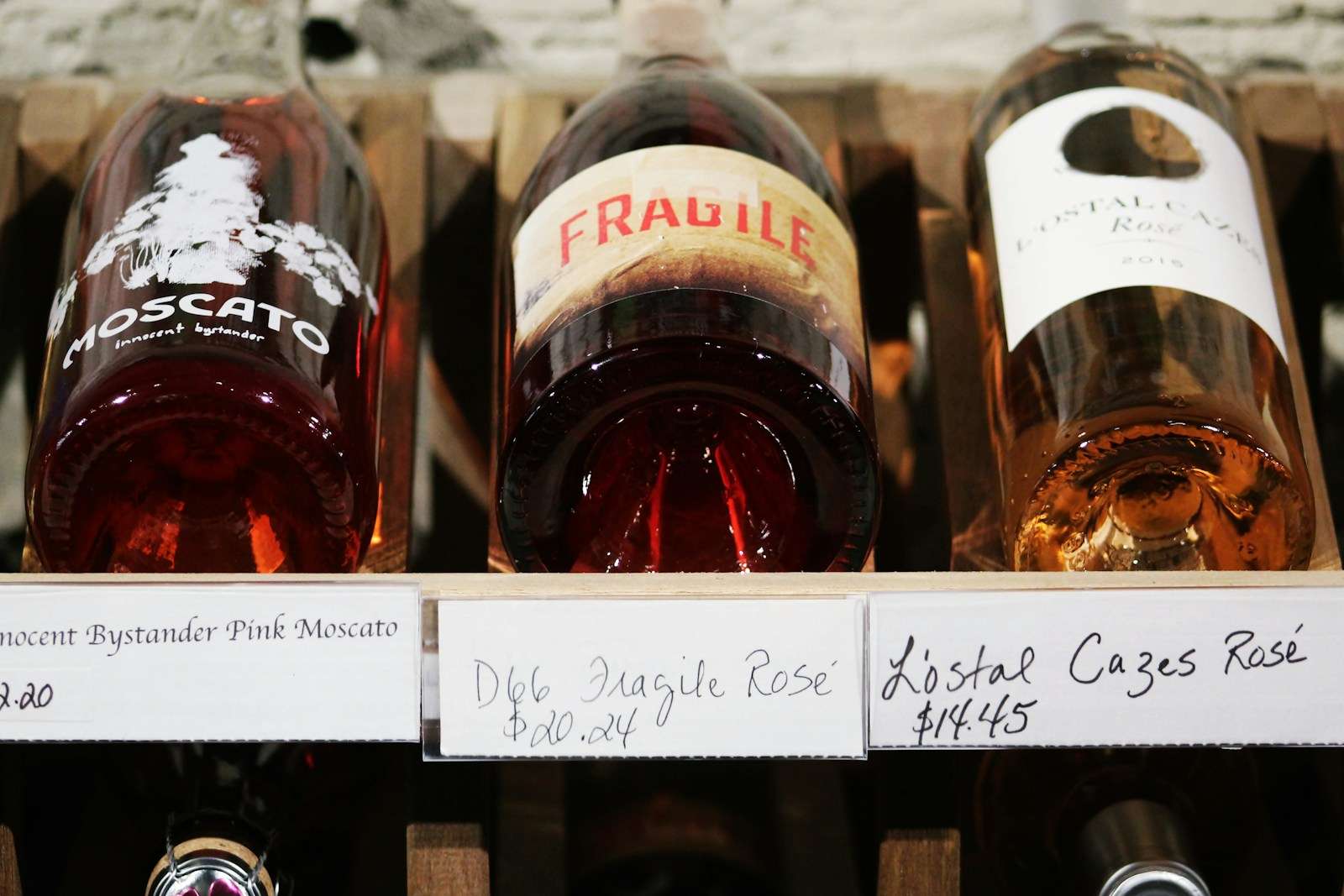
Pink Moscato gained enormous commercial traction in the US market in the 2010s, and honestly, its reputation has suffered unfairly for its popularity. A well-made Pink Moscato — typically a blend of white Moscato with a small amount of Merlot or other red grape for color — offers all the floral, peach-forward character of the original with added strawberry and raspberry notes. It’s not sophisticated, but it’s genuinely enjoyable.
Moscato d’Alexandria (Muscat of Alexandria)
This is a larger-berried, more robust Muscat variety used across the Mediterranean. In Portugal and Spain it forms the base of some excellent fortified dessert wines. In Greece, it produces Muscat of Samos and Muscat of Lemnos — rich, honeyed, magnificent dessert wines that serious collectors seek out.
Australian Rutherglen Muscat
This is the extreme end of the Moscato world. Rutherglen in Victoria, Australia, produces fortified Muscat wines that spend years or decades aging in a solera system — a cascade of older and newer barrels where wines are blended progressively. The result is intensely concentrated: raisin, toffee, fig, dark caramel, coffee. Almost syrup-thick. One of the most remarkable dessert wines anywhere.
Dry Muscat
Less common but worth knowing: Muscat Blanc à Petits Grains (the same variety behind Moscato d’Asti) can be made completely dry. Alsatian producers make excellent dry Muscat that retains all the aromatic intensity of the sweet versions while finishing clean. A revelation if you love the smell of Moscato but find the sweetness too much.
How Moscato Tastes
Moscato is one of the easiest wines to describe to someone who’s never tried it — which is part of its broad appeal.
Aromatically: Orange blossom, jasmine, white peach, apricot, ripe pear, honey, occasionally a faint musk. The nose is generous and immediately recognizable.
On the palate: Sweet, medium-to-low acidity (which makes it feel softer and rounder than a Riesling), light body, gentle fizz (in the frizzante styles). The sweetness is clean — it doesn’t linger cloyingly because the low alcohol level keeps it light.
Finish: Short to medium. This is not a wine for lingering contemplation. It’s a wine for enjoyment.
The low alcohol (5–5.5% in the best Moscato d’Asti) is more significant than it sounds. It means you can have a glass before dinner, a glass with dessert, or a glass on a summer afternoon without the weight of a full-ABV wine. For many people, this is exactly what they want.
Moscato vs. Other Sweet Wines
| Wine | Sweetness Level | Bubbles | Alcohol | Key Aromas |
|---|---|---|---|---|
| Moscato d’Asti | Medium-sweet | Frizzante (gentle) | ~5.5% | Peach, apricot, orange blossom |
| Asti Spumante | Medium-sweet | Fully sparkling | ~7–9% | Peach, floral, citrus |
| Riesling (Spätlese) | Medium-sweet | Still | ~8–10% | Lime, apricot, petrol |
| Gewürztraminer | Dry–sweet (varies) | Still | 12–14% | Lychee, rose, spice |
| Prosecco (Extra Dry) | Off-dry | Fully sparkling | 11% | Green apple, pear, cream |
| Sauternes | Very sweet | Still | 13–14% | Honey, botrytis, apricot |
Food Pairing with Moscato
Moscato’s sweetness, low alcohol, and aromatic character make it one of the more versatile food pairings in the sweet wine category.
Classic pairings:
- Fresh fruit and fruit tarts
- Peach or apricot-based desserts
- Almond biscotti and light pastries
- Fresh berries with cream
- Light cheeses: brie, ricotta, mild chèvre
Surprising but excellent:
- Spicy Asian food — the sweetness cuts through heat beautifully
- Fried food — salt and sweet is a winning combination
- Foie gras and rich pâtés (classic Alsatian pairing with dry Muscat)
- Sushi and sashimi
To avoid: Heavy red meat, rich stews, aged hard cheeses — these flavors overwhelm Moscato’s delicacy and make the wine taste thin and sweet without context.
One approach I find works well: serve chilled Moscato d’Asti with a spread of fresh fruit, mild cheeses, and charcuterie as an aperitivo. It’s informal, it’s genuinely delicious, and nobody can resist it.
How to Choose a Moscato
For quality and value: Look to Piedmont DOCG producers. A Moscato d’Asti from a serious producer (Vietti, La Spinetta, G.D. Vajra, Ceretto) in the $18–28 range will be markedly better than mass-market options. The extra spend is worth it.
For casual occasions: There’s nothing wrong with a straightforward Asti Spumante or Pink Moscato at $12–15. It’s unpretentious and crowd-pleasing.
For gifting or something special: Rutherglen Muscat from Australia — particularly the “Grand” or “Classic” designations — is a beautiful and unusual gift. It’s shelf-stable, deeply complex, and something most wine drinkers have never encountered.
For dry wine drinkers who want to try Moscato: Seek out dry Alsatian Muscat from producers like Trimbach, Hugel, or Zind-Humbrecht. You get the aromatics without the sweetness.
Serving Moscato
Temperature: Serve cold — 45–50°F (7–10°C). Moscato’s delicacy is best expressed when it’s properly chilled. Too warm and the sweetness becomes cloying; at the right temperature, the freshness and aromatics come alive.
Glassware: A standard white wine glass works well. Some prefer a tulip-shaped glass that concentrates the aromatics. A large Burgundy glass is overkill for Moscato.
When to open it: Moscato is not a wine for aging. Drink Moscato d’Asti within 1–2 years of vintage. The freshness and floral character that define it fade quickly. When you see it at the wine shop, check the vintage year — buy the most recent one available.
After opening: If you don’t finish a bottle of frizzante Moscato, seal it and refrigerate. It will lose some of its fizz within 24 hours but remains pleasant for 2–3 days.
Moscato in a Team Setting
Here’s something I’ve noticed about Moscato in group settings: it’s unusually disarming. At wine tastings — particularly those introducing wine to people who don’t drink it regularly — starting with a Moscato d’Asti breaks down the self-consciousness that often comes with wine tasting. The aroma is so immediately appealing and the style so approachable that even the most reluctant participants lean in.
The Wine Voyage uses this principle in corporate wine experiences. Myrna Elguezabal, founder of The Wine Voyage, has found that beginning a structured tasting with an aromatic, approachable wine like Moscato creates a more open, engaged group for the rest of the session. When people aren’t worried about saying the wrong thing — because the wine is genuinely easy and pleasant — they participate more and learn more. It’s a facilitation tool as much as a wine choice.
If your team is considering a wine tasting experience, the style progression matters enormously. Moscato is an excellent starting point.
Interested in exploring more wine styles? Our guides to sweet wine, white wine for beginners, Riesling, Gewürztraminer, Chenin Blanc, and Prosecco cover adjacent territory worth exploring. For red wine discovery, Pinot Noir and Grenache offer an interesting contrast to Moscato’s floral profile.
Further Reading
For deeper exploration of Moscato and the broader Muscat family, I recommend Wine Folly’s Muscat grape guide for visual learners and Jancis Robinson’s Muscat variety reference for comprehensive ampelographic detail.