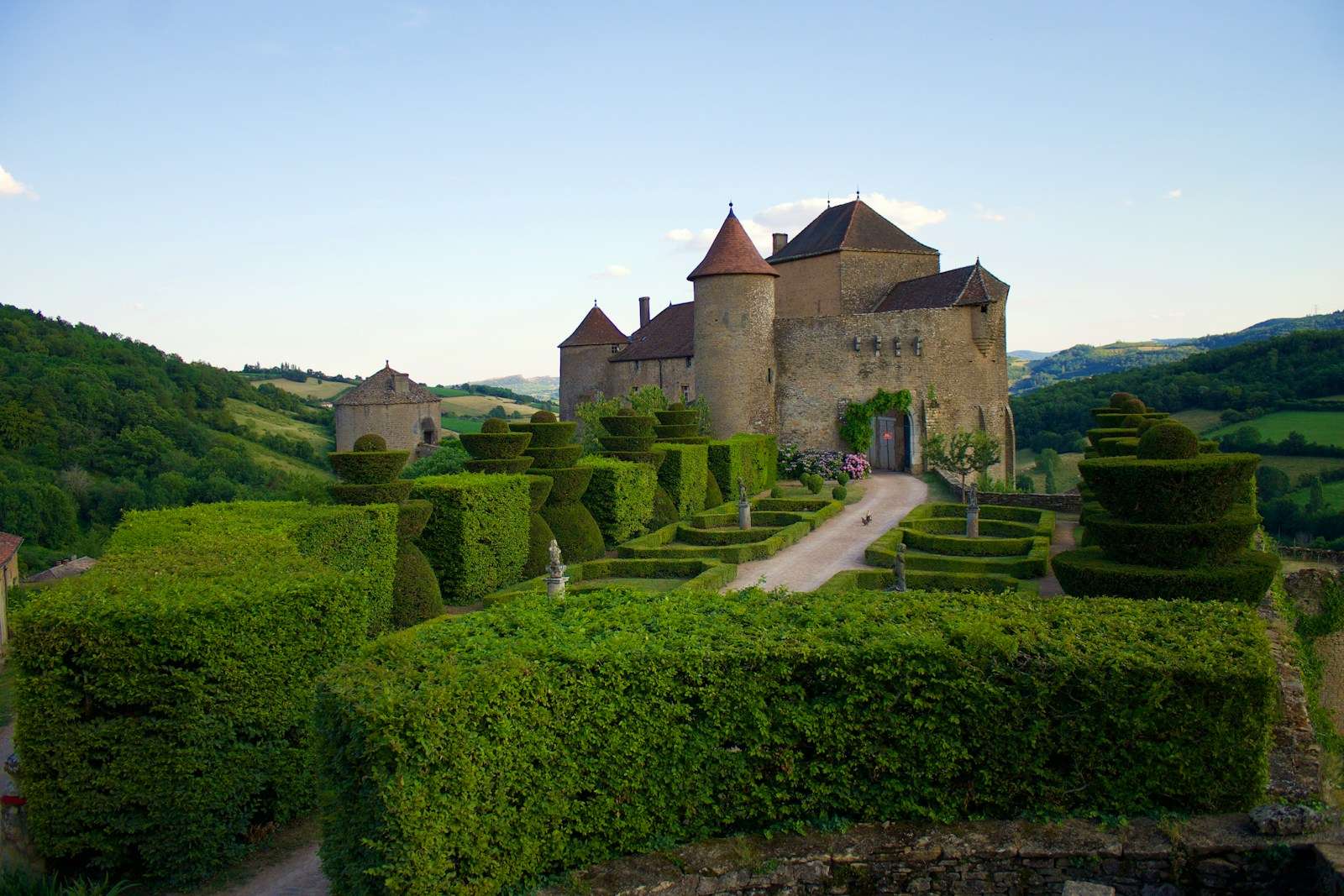
The Region That Rewired How We Think About Wine
If you want to understand why wine people obsess over terroir — the idea that a specific patch of earth produces something unrepeatable — look at Burgundy. Burgundy wine is the purest expression of that philosophy anywhere in the world. Two adjacent vineyards, separated by nothing but a stone wall, can produce wines that taste completely different. Same grape, same winemaker, different earth.
That’s what makes Burgundy wine both endlessly fascinating and genuinely maddening. Learning it takes time. The appellation structure alone — regional, village, premier cru, grand cru — is enough to fill a textbook. But once you start to understand it, you’ll never look at a bottle of Pinot Noir or Chardonnay the same way again.
The Grapes: Pinot Noir and Chardonnay
Burgundy is essentially a two-grape region. Red Burgundy is Pinot Noir. White Burgundy is Chardonnay. That’s it — with a few exceptions (Gamay in Beaujolais, Aligoté in a handful of appellations, and tiny amounts of Pinot Blanc and Pinot Gris). The singular focus on these two varieties is part of what makes Burgundy wine so distinctive: there’s nowhere to hide. Every wine is an expression of place and vintage, not blending skill.
Pinot Noir in Burgundy produces wines with red and dark cherry fruit, earthy depth, and silky tannins when mature. It’s a thin-skinned grape that’s notoriously difficult to grow — susceptible to frost, rot, and inconsistent ripening — which is part of why great red Burgundy is so rare and expensive.
Chardonnay in Burgundy ranges from lean, mineral, almost austere (in Chablis) to rich, textured, and complex (in Meursault and Montrachet). The best white Burgundies are among the greatest white wines in the world, with aging potential that rivals the finest reds.
The Geography: Five Regions Within Burgundy
Burgundy isn’t one thing. It’s a 250-kilometer stretch of eastern France, south of Paris, divided into distinct sub-regions that each have their own character.
Chablis
The northernmost outpost of Burgundy wine, Chablis produces Chardonnay on Kimmeridgian limestone soils full of ancient marine fossils. The result is among the most distinctive white wines in the world — steely, mineral, with crisp citrus and a characteristic flinty quality. Good Chablis has almost nothing in common with a warm-climate, oak-forward Chardonnay. Premier Cru and Grand Cru Chablis can age for a decade or more.
Côte de Nuits
The northern half of the Côte d’Or (the “golden slope”), Côte de Nuits is where the greatest red Burgundy wines are made. Village names here read like a who’s who of the wine world: Gevrey-Chambertin, Morey-Saint-Denis, Chambolle-Musigny, Vosne-Romanée, Nuits-Saint-Georges. The grand cru vineyards — Chambertin, Musigny, Richebourg, Romanée-Conti — produce wines of extraordinary complexity and longevity.
Côte de Beaune
The southern half of the Côte d’Or, Côte de Beaune is where the greatest white Burgundy wines are produced. Meursault, Puligny-Montrachet, and Chassagne-Montrachet are the key villages. The grand cru whites — Le Montrachet, Bâtard-Montrachet, Chevalier-Montrachet — are among the most coveted white wines anywhere. Red wines are also made here, particularly in Pommard, Volnay, and Beaune, with a lighter, more elegant style than Côte de Nuits.
Côte Chalonnaise
South of the Côte d’Or, Côte Chalonnaise produces excellent everyday Burgundy wine at more accessible prices. Mercurey, Givry, Rully, and Montagny are the key appellations. These wines won’t match the complexity of grand cru or premier cru, but a well-made Mercurey or Givry is one of the best value Pinot Noirs in France.
Mâconnais
The southernmost Burgundy region, Mâconnais is almost entirely white wine — Chardonnay — with Pouilly-Fuissé as its most famous appellation. Mâcon-Villages and Saint-Véran offer excellent everyday white Burgundy at a fraction of the price of Côte de Beaune.
The Classification System: From Regional to Grand Cru
The Burgundy wine quality classification is a four-tier pyramid, based on specific vineyard sites rather than châteaux or estates.
| Level | Examples | What It Means |
|---|---|---|
| Grand Cru | Chambertin, Musigny, Montrachet | The finest individual vineyards, about 2% of production |
| Premier Cru | Gevrey-Chambertin “Les Cazetiers,” Meursault “Perrières” | Excellent individual vineyards, ~10% of production |
| Village | Gevrey-Chambertin, Meursault, Nuits-Saint-Georges | Wines from a specific village’s appellation |
| Bourgogne Régionale | Bourgogne Pinot Noir, Bourgogne Chardonnay | Wines from anywhere in Burgundy |
This is the inverse of Bordeaux, which classifies producers (châteaux) rather than vineyards. In Burgundy, the vineyard is paramount. Multiple producers can own vines in the same grand cru vineyard and make completely different wines from them.
Domaine vs. Négociant: Two Paths to Burgundy Wine
Understanding who made the wine is crucial in Burgundy.
Domaines are family estates that grow their own grapes and make their own wine. Buying from a respected domaine means you’re getting wine made by people with intimate knowledge of their specific vines and parcels. Famous names include Domaine de la Romanée-Conti, Domaine Leflaive, Domaine Rousseau, and Domaine Dujac.
Négociants buy grapes, juice, or finished wine from growers and bottle it under their own label. Historically, some négociants were known for blending down quality. But today, the best négociants — Maison Louis Jadot, Joseph Drouhin, Louis Latour, Bouchard Père & Fils — produce excellent wines and control significant vineyard holdings of their own. For buyers who can’t find a specific domaine’s wine, négociant bottles are often the practical alternative.
The rise of micro-négociants — winemakers who buy small quantities of exceptional fruit and vinify it themselves — has added another layer. Names like Frédéric Mugnier (also a domaine), Benjamin Leroux, and Maison Roche de Bellene fall into this category.
Vintages in Burgundy: High Stakes, High Variance
Burgundy’s continental climate means growing seasons vary enormously. A warm summer produces ripe, generous wines. A cool, wet year can produce underripe, dilute Pinot Noir — though the best producers still make compelling wines in difficult years, often more elegant and age-worthy than expected.
Standout recent vintages:
- 2015 — warm, generous, immediately approachable, excellent whites and reds
- 2019 — ripe and concentrated, excellent quality across both colors
- 2020 — small yields due to hail and frost, but exceptional quality in what survived
- 2022 — another warm vintage, powerful wines with good structure
- 2023 — early reports suggest excellent quality, watch this space
Challenging but interesting years like 2016 (badly hit by frost) produced tiny quantities — the wines that exist are often superb, and scarcity drove prices up dramatically.
Why Burgundy Wine Is So Expensive
The short answer: supply and demand, with supply brutally limited.
Burgundy’s finest vineyards are tiny. The entire Romanée-Conti grand cru covers just 1.8 hectares and produces roughly 5,000–6,000 bottles per year. Total grand cru production for all of Burgundy is around 2% of total output. Add global demand from collectors in the US, UK, Japan, China, and elsewhere, and you have prices that defy gravity.
But here’s the thing: the vast majority of Burgundy wine is not expensive. Village-level Bourgogne Pinot Noir and Mâcon Chardonnay are among the most food-friendly, versatile wines you can buy for $20–35. The region’s reputation for inaccessible pricing is accurate at the top but misleading overall.
Finding Good Value in Burgundy Wine
- Bourgogne Aligoté — the other white grape, often excellent and very affordable
- Côte Chalonnaise — Mercurey, Givry, Rully at half the price of Côte d’Or equivalents
- Mâconnais whites — especially Pouilly-Fuissé and Saint-Véran
- Lesser-known villages — Fixin, Marsannay, and Savigny-lès-Beaune offer real Burgundy character at saner prices
- Village Bourgogne from great producers — a declassified wine from Domaine Leflaive or Rousseau is still exceptional wine
I also look at younger domaines — younger winemakers who took over from their parents in the 2010s often have excellent quality at prices the famous names can’t match.
Pairing Burgundy Wine with Food
Red Burgundy (Pinot Noir) is one of the most food-friendly wines in the world. The key pairings:
- Duck confit, roast chicken, turkey
- Mushroom dishes — the earthy connection is natural
- Grilled salmon and other fatty fish (yes, red wine with fish works here)
- Aged cheeses like Comté or Époisses
- Charcuterie
White Burgundy (Chardonnay) pairs beautifully with:
- Roast chicken with cream sauce
- Lobster and scallops
- White fish — sole, halibut, turbot
- Soft cheeses — Brie, Camembert
- Veal and pork with light sauces
The general principle: Burgundy wine is less tannic and more acid-driven than Bordeaux, which makes it more versatile at the table.
Burgundy Wine for Corporate and Team Experiences
Burgundy is extraordinary for team wine tasting events — not despite its complexity, but because of it. The classification pyramid gives facilitators a natural structure: start with regional Bourgogne, work up to premier cru, and let the group experience how the same grape expresses differently across levels. The Left Bank/Right Bank comparison from Bordeaux has its equivalent here in red versus white Burgundy, or Côte de Nuits versus Côte de Beaune.
Myrna Elguezabal at The Wine Voyage has built Burgundy-focused tastings specifically for corporate groups who want to move beyond the basics. In my experience, this format creates the most animated conversations of any regional tasting — because Burgundy wine rewards attention and generates strong opinions fast. Groups leave with a framework they can actually use when they’re at a restaurant or wine shop.
Quick Reference: Key Burgundy Villages by Style
| Village | Region | Primary Grape | Style |
|---|---|---|---|
| Chablis | Chablis | Chardonnay | Lean, mineral, austere |
| Gevrey-Chambertin | Côte de Nuits | Pinot Noir | Powerful, structured, earthy |
| Chambolle-Musigny | Côte de Nuits | Pinot Noir | Elegant, perfumed, silky |
| Vosne-Romanée | Côte de Nuits | Pinot Noir | Complex, sensual, age-worthy |
| Meursault | Côte de Beaune | Chardonnay | Rich, nutty, textured |
| Puligny-Montrachet | Côte de Beaune | Chardonnay | Mineral, complex, profound |
| Mercurey | Côte Chalonnaise | Pinot Noir | Fruity, earthy, good value |
| Pouilly-Fuissé | Mâconnais | Chardonnay | Round, apple, accessible |
If Burgundy’s singular focus on Pinot Noir and Chardonnay appeals to you, go deeper with our Pinot Noir guide and Chardonnay guide. For a contrast in style and philosophy, Bordeaux wine is the natural comparison. And if you’re exploring other French classics, the Champagne guide and Rosé guide are worth your time.
Further Reading
To go further with Burgundy wine, I recommend Wine Folly’s Burgundy breakdown and Decanter’s complete Burgundy region guide.