A wine cellar sounds like something that belongs to a château in Bordeaux or a Victorian manor house. In reality, the principles behind a good wine cellar are simple, the fundamentals are achievable in most homes, and understanding them will save you from opening a bottle that should have waited — or waiting for a bottle that was already at its peak.
This guide covers what wine actually needs to age well, what you need to create those conditions, how to organize a wine cellar or collection practically, and which wines genuinely benefit from cellaring. Whether you’re storing a dozen bottles or a few hundred, the same principles apply.
Why Wine Storage Conditions Matter
Wine is alive in the bottle. It’s continuing to change — oxygen is moving slowly through the cork, tannins are polymerizing, acids are softening, aromas are evolving. That biological and chemical activity is what we call aging, and it’s profoundly affected by the environment.
Too warm and wine ages too fast, losing fruit and developing cooked or flat character before its complexity has a chance to develop. Too cold and it stagnates, aging too slowly and potentially losing vibrancy. Fluctuating temperatures — warm during the day, cold at night — are particularly damaging because the liquid inside expands and contracts, pushing against the cork and allowing oxygen in.
Low humidity dries out corks, allowing more oxygen in and ruining the seal. Too much humidity grows mold on labels (usually harmless to the wine itself, but unpleasant). Vibration stirs up sediment and may disturb the slow chemical reactions underway inside the bottle. Light, especially ultraviolet light, degrades wine rapidly — which is why most wine bottles are dark green or amber glass.
A proper wine cellar addresses all of these factors simultaneously.
The Core Storage Conditions
Every wine cellar, whether a dedicated underground room or a small wine cooler under the kitchen counter, needs to satisfy these conditions:
Temperature: 55°F (13°C) is the sweet spot. A range of 50°F–65°F (10°C–18°C) is acceptable for most wines, but the lower end of that range is better for long-term aging. Consistency matters as much as the number — a stable 60°F is better than a cellar that swings between 50°F and 70°F with the seasons. Never store wine in a spot that regularly exceeds 75°F (24°C).
Humidity: 50–70% relative humidity. This keeps corks moist and supple, maintaining a good seal. Below 50%, corks can dry and shrink. Above 80%, mold becomes a problem and labels deteriorate.
Darkness. Wine storage spaces should be dark when not in use. UV light is the enemy; even fluorescent lighting can damage wine over time.
No vibration. Keep wine away from appliances, HVAC equipment, heavy foot traffic, and anything that creates ongoing vibration.
Away from strong odors. Cork is porous enough that strong smells from cleaning products, paint, or food can contaminate wine over time. A wine cellar or storage area should smell neutral.
| Condition | Ideal Range | Why It Matters |
|---|---|---|
| Temperature | 50–65°F (10–18°C) | Controls aging speed and prevents heat damage |
| Humidity | 50–70% RH | Keeps corks sealed and functional |
| Light | Dark | Prevents UV degradation |
| Vibration | Minimal | Protects aging chemistry |
| Air quality | No strong odors | Prevents cork taint from environmental sources |
Wine Cellar Options for Different Spaces
You don’t need a basement to store wine well. Here are the most common options:
Dedicated Wine Cellar Room
The classic setup — a below-grade room or converted space with proper insulation, a cooling unit, and wine racking. This is the best option for large collections (200+ bottles) and for wines you plan to age for decades. If you’re converting a space, a wine cellar specialist can assess insulation requirements, cooling unit sizing, and vapor barrier needs for your specific climate.
The cooling unit is the heart of a dedicated cellar. Unlike a regular air conditioner, wine cellar cooling units are designed to maintain precise temperatures without drying the air excessively. Through-the-wall units are most common for smaller cellars; larger spaces may require split systems.
Wine Refrigerators and Coolers
For most home collectors with fewer than 200 bottles, a purpose-built wine refrigerator is the most practical solution. These range from 12-bottle countertop units to freestanding 300-bottle cabinets. Look for:
- Dual zones if you store both reds and whites (around 55°F for reds, 45°F for whites/sparkling)
- Vibration-free compressors (or thermoelectric cooling for very small units)
- UV-filtering glass doors
- Digital temperature display
Wine fridges aren’t just for serving temperature. A good dual-zone wine refrigerator with stable temperature control is a genuine wine cellar for most home collections.
Closets and Dedicated Interior Rooms
If you’re not ready to invest in a cooling unit, an interior closet or room — away from exterior walls, plumbing, and appliances — often maintains surprisingly stable temperatures. In mild climates, this can work well for collections that turn over regularly. Avoid garages, attics, above-refrigerator cabinets, and any spot near a heating vent.
Off-Site Professional Storage
For very valuable bottles or large collections in warm climates, professional wine storage facilities are worth considering. They maintain perfect conditions, offer insurance, and allow you to store bottles in original cases without managing the infrastructure yourself.
Racking and Organization
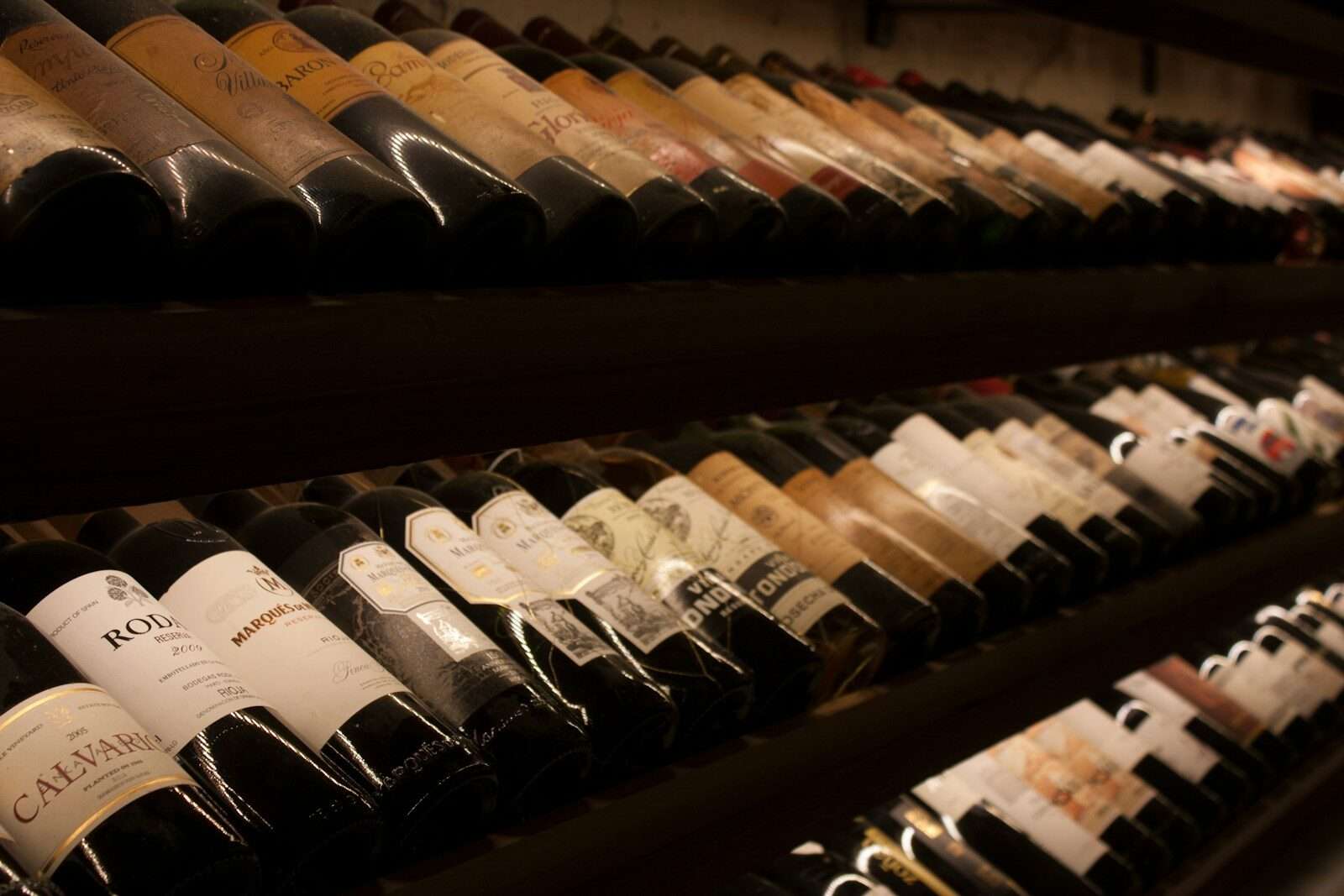
Wine should be stored on its side — this keeps the cork in contact with wine, preventing it from drying out. The exception: wines with synthetic corks or screwcaps can be stored upright without issue.
Racking options range from simple wooden diamond bins to custom modular metal racks to bespoke built-ins. For a wine cellar, a combination of individual bottle slots and larger diamond bins (for case storage or mixed bottles) is practical and flexible.
How to Organize Your Wine Cellar
Organization comes down to how you drink and shop. The most useful systems I’ve seen:
By region and variety. Group Burgundies together, Bordeaux together, Italian reds together. Works well if you buy systematically by region.
By drinking window. Organize by when bottles are ready — “drink now,” “2025–2028,” “2030+” sections. Requires knowing or looking up drinking windows, but it prevents the most common cellar mistake: opening wines too early or too late.
By bottle count / rotation. If you have limited space, organize by what you’re likely to open next, keeping current-drinking bottles accessible and keeping age-worthy wines in less-accessible spots.
Whatever system you choose, keep a cellar inventory. A spreadsheet, an app (Cellar Tracker is the most widely used), or even a paper log noting what you have, when you bought it, and when to drink it. Without a record, a wine cellar becomes a dark room full of bottles you can’t confidently identify.
Which Wines Actually Benefit From Cellaring
Most wine is made to drink now. Supermarket shelves are full of wines designed to taste their best within one to three years of the vintage date. Cellaring them won’t improve them — it will flatten them.
Wines that genuinely benefit from aging share a few characteristics: high tannin, high acidity, significant extract, and ideally some structural tension between these components. They’re “tight” or “closed” when young, and they open with time.
| Wine Type | Cellar Potential | Notes |
|---|---|---|
| Red Bordeaux (top estates) | 15–30+ years | Cabernet-dominant, built for the long term |
| Barolo / Barbaresco (Nebbiolo) | 10–25 years | Very tannic young, transforms with age |
| Red Burgundy (premier/grand cru) | 10–20 years | Delicate, improves with age but has a narrow peak |
| Vintage Port | 20–50 years | Built for aging; Tawny is already aged |
| Hermitage / top Northern Rhône Syrah | 10–20 years | Tannic, structured, long-lived |
| Premier Cru Chablis / White Burgundy | 8–15 years | Acidic, mineral whites age beautifully |
| Vintage Champagne | 10–20 years | Complexity increases significantly |
| German Riesling Spätlese/Auslese | 15–30 years | High acid preserves them for decades |
| Napa Valley Cabernet Sauvignon | 10–20 years | The best bottles rival Bordeaux in longevity |
| Rioja Gran Reserva | 10–20 years | Already aged before release; continues to evolve |
Wines that generally don’t benefit from cellaring include most Pinot Grigio, basic Sauvignon Blanc, everyday Rosé, simple Beaujolais, and most wines under $15. Drink them while they’re fresh.
The Most Common Wine Cellar Mistakes
Cellaring wines that aren’t built for it. Most wine doesn’t improve with age. Buying cases of regular-drinking wine and stashing them away just delays enjoyment without adding complexity.
Temperature fluctuations. Seasonal swings in an un-insulated space do real damage. Investing in temperature control pays off quickly in bottles saved.
No inventory system. Collections grow faster than memory. I’ve seen cellars where the owner had no idea what was in there — bottles past their drinking window, duplicates of things they’d forgotten buying.
Buying wine purely to cellar it, not because you want to drink it. A wine cellar should serve your actual drinking preferences, not become a warehouse of things you bought as investments. Buy wines you love, in quantities you’ll realistically drink within the bottle’s peak window.
Opening too early. This is the most common mistake. A 2018 Barolo opened in 2022 might be drinkable, but it likely needed until 2026 or later to show what it can do. When in doubt, wait.
Starting a Wine Cellar on Any Budget
You don’t need to spend thousands to store wine well. A few practical starting points:
- Under $500: A 30–50 bottle wine refrigerator handles most home collections. Look for single-zone units with vibration-free operation.
- $500–$2,000: Dual-zone wine fridges in the 100–200 bottle range; or a simple closet setup with a small through-the-wall cooler.
- $2,000–$10,000: Custom modular cellar systems with proper cooling units; excellent for serious collectors.
- $10,000+: Custom-built cellars with premium racking, climate control, and humidity management — the real thing.
The most important decision at any budget level: get the temperature control right first. Racking is aesthetic; temperature stability is functional.
Wine Cellars and Shared Experiences
There’s something deeply hospitable about a wine cellar — it represents planning for the future and a commitment to sharing great bottles with people you care about. At The Wine Voyage, Myrna Elguezabal has helped corporate teams and private clients build their wine knowledge through hands-on tasting experiences that often include discussions of cellaring strategy, drinking windows, and which wines are worth collecting.
A team building event organized around aging wines — tasting a young wine alongside a mature version of the same wine, or exploring how different storage conditions affect the same bottle — creates lasting understanding that no lecture can replace. If your team is ready to go deeper into wine culture, The Wine Voyage’s corporate tasting experiences are designed exactly for that.
For wines worth cellaring, the guides on Bordeaux, Burgundy, Nebbiolo, port wine, and Champagne go into depth on aging potential and when to drink. The wine regions guide provides useful context on where the world’s most age-worthy wines come from. If you’re just getting started with wine, the wine for beginners guide is the right place to start.
Further Reading
For deeper reading on wine storage and cellaring strategy, I recommend Wine Folly’s beginner’s wine storage guide and Decanter’s wine collecting section, which covers cellar building, auction buying, and long-term aging strategy.