
Port wine is one of those categories that sounds more complicated than it is. The range of styles can feel overwhelming at first — Ruby, Tawny, LBV, Vintage, Colheita — but once you understand the basic logic behind how port wine is made, everything falls into place.
I’ve poured a lot of port at wine events, and it’s one of the few wines that consistently makes people change their minds. Guests who arrive thinking they don’t like sweet wines often discover they love a well-aged Tawny. People who assumed port was only for old men with cigars walk away planning where to buy a bottle. It earns its reputation.
What Is Port Wine?
Port wine is a fortified wine produced exclusively in the Douro Valley in northern Portugal. “Fortified” means that grape spirits (aguardente, essentially unaged brandy) are added during fermentation — while there’s still residual sugar in the juice. This stops fermentation cold, kills the yeast, and leaves the wine with significant sweetness and elevated alcohol (typically 19–22% ABV).
The result is a wine that’s sweet, complex, warming, and built to last. A bottle of Vintage Port from a great year can age for 50 years or more in a proper cellar. Most Tawny and Ruby styles are made to be approachable now.
Port can only legally be called “Port” (or “Porto”) if it comes from the Douro Valley and is aged in the lodges of Vila Nova de Gaia, across the river from Porto. This is similar to how Champagne must come from Champagne — geographic origin is everything.
How Port Wine Is Made
The Douro Valley is one of the most dramatic wine regions in the world — schist-terraced hillsides, extreme heat in summer, cold winters, and an isolation that shaped a style of winemaking unlike anywhere else.
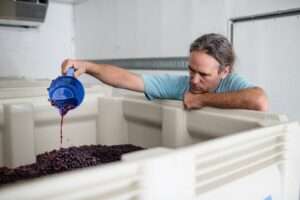
Harvest happens in September. Grapes are either foot-trodden in granite tanks (lagares) — still the most prized method — or mechanically processed. After some fermentation, aguardente is added to arrest it. The wine then goes to lodges in Vila Nova de Gaia to age.
From there, the style of port wine depends on how it’s aged:
- Ruby-style ports age in large tanks or casks with minimal oxygen exposure, preserving fresh red fruit character
- Tawny-style ports age in small barrels with deliberate oxidation, developing nutty, dried-fruit complexity over years or decades
The Main Styles of Port Wine
Ruby Port
The entry-level style. Aged briefly in large tanks, it retains its deep red-ruby color and fresh fruit flavors — blackberry, cherry, raspberry jam. This is the port wine most people encounter first, often in mulled wine or as a dessert wine with chocolate. Inexpensive, crowd-pleasing, meant to be drunk young.
Tawny Port
Aged in small barrels for years or decades, with controlled oxidation transforming the wine’s character. Ruby turns amber-brown (the “tawny” color). Fresh fruit evolves into dried apricot, fig, walnut, caramel, and sometimes coffee. Tawny is labeled by average age: 10 Year, 20 Year, 30 Year, 40 Year. The older the Tawny, the more complex and nutty the wine.
10 Year Tawny: Great everyday port — sweet but not cloying, nutty and approachable. Best value entry point.
20 Year Tawny: A genuinely special wine. Deeper complexity, dried fruit over fresh, elegant long finish. Often given as gifts, always appreciated.
30 and 40 Year Tawny: The height of oxidative elegance. Rancio character (a distinctive aged nut and dried fruit complexity), very concentrated. Serve these in small pours — they’re intense.
Late Bottled Vintage (LBV)
Made from a single vintage (year), aged in large tanks for 4–6 years before bottling. LBV is the bridge between Ruby and Vintage Port — more complexity than Ruby, more approachable than Vintage. Filtered LBVs are ready to drink immediately; unfiltered LBVs (better) may need decanting and will develop further in bottle.
Vintage Port
The pinnacle of port wine. Declared only in exceptional years (roughly 3 times per decade), made from the best grapes across the best quintas. Vintage Port spends just 2 years in large wooden casks before bottling, then ages for decades in bottle. It throws a heavy sediment and must always be decanted.
Great Vintage Port years include 2017, 2016, 2011, 2007, 2003, 1994, 1991, 1970, 1963. A bottle from a top producer in a great year is one of the most extraordinary wines you can open.
Single Quinta Vintage Port
In years that aren’t declared as a full Vintage, leading estates bottle their single-vineyard wines under their own quinta name. These offer similar quality at lower prices — and often represent the best value in serious port wine.
Colheita
A Tawny from a single vintage, aged for at least 7 years in barrel. It combines the single-vintage focus of Vintage Port with the oxidative nutty character of Tawny. Underrated and increasingly worth seeking out.
White Port
Made from white grape varieties in the Douro. Ranges from dry to sweet. Traditionally served as an apéritif over ice with tonic water and a lemon twist — the classic “Port and Tonic” cocktail that’s enormously popular in Portugal. Refreshing and surprising for people who only know the sweet red styles.
Port Wine Styles at a Glance
| Style | Color | Aging | Flavor Profile | When to Open |
|---|---|---|---|---|
| Ruby | Deep red | 2–3 years, large tank | Fresh red fruit, jam | Now |
| LBV | Red | 4–6 years, large tank | Red fruit, more depth | Now or 5+ years |
| Vintage Port | Red | 2 years wood, then bottle | Rich fruit, complex, evolving | 15–50+ years from vintage |
| 10 Year Tawny | Amber | ~10 years, small barrel | Caramel, dried fruit, walnut | Now |
| 20 Year Tawny | Amber | ~20 years, small barrel | Fig, hazelnut, coffee | Now |
| 40 Year Tawny | Golden amber | ~40 years, small barrel | Rancio, intense dried fruit | Now, savored slowly |
| Colheita | Amber | 7+ years from single vintage | Like Tawny with single-year focus | Now |
| White Port | Gold | Variable | Apricot, floral, dry to sweet | Now (as apéritif) |
Food Pairings for Port Wine
Port is most famous as a dessert wine, but the pairing possibilities are wider than most people realize.
Classic pairings:
- Stilton and Vintage Port — the canonical British combination. The salty, crumbly blue cheese and the rich, sweet wine are genuinely made for each other.
- Chocolate and Ruby or LBV — dark chocolate especially. The sweetness of the port stands up to bitterness; milk chocolate needs something lighter.
- Nuts and Tawny — walnuts, almonds, pecans. The oxidative walnut notes in a 20 Year Tawny echo the actual nuts on the table.
- Foie gras and Tawny — classic French combination, the richness of the liver balanced by the wine’s sweetness and acidity.
- Christmas cake, mince pies, fruitcake — Tawny was practically designed for dried fruit baking.
Less expected but excellent:
- Aged cheddar and 10 Year Tawny
- Blue cheese and 20 Year Tawny
- Crème brûlée and White Port
- Salted caramel desserts and LBV
How to Serve Port Wine
Temperature:
- Ruby and LBV: Cellar temperature, around 60°F (15°C). A brief chill doesn’t hurt.
- Tawny: Slightly cooler than room temperature — some people serve 10 Year Tawny lightly chilled, especially in summer.
- Vintage Port: Same as Tawny, around 60–63°F. Decant it first.
- White Port: Cold, over ice, with tonic. Don’t overthink it.
Decanting: Vintage Port throws sediment and must be decanted. Stand the bottle upright for at least a day before opening to let sediment settle. Decant slowly, stopping when you see sediment reach the neck. Use a candle or flashlight behind the bottle to see the sediment clearly.
LBV (unfiltered) benefits from decanting too. Most Tawnys and Rubys don’t need it.
Serving size: Port is richer and higher in alcohol than table wine. A standard pour is 2–3 oz, not 5 oz. Small, deliberate pours are the move — especially with older Tawnys and Vintage Port.
Once opened: This is where port wine has a real advantage over table wine. Thanks to the elevated alcohol, an open bottle of Ruby or Tawny stays good for weeks in the refrigerator. Vintage Port is more delicate — drink it within 2–3 days of opening. White Port: a week in the fridge is fine.
The Best Port Wine Producers
The Douro Valley has dozens of excellent quintas. These names are worth knowing:
- Graham’s — one of the oldest British shippers, excellent across all styles
- Fonseca — known for elegant, aromatic ports, outstanding Vintage Port
- Taylor Fladgate — benchmark Vintage Port, excellent Tawnys (especially 20 Year)
- Quinta do Crasto — single quinta star, consistently great single quinta Vintages
- Ramos Pinto — particularly good Tawnys and Colheitas
- Niepoort — artisan producer, some of the most interesting wines in the region
- Dow’s — classic drier, more savory style of Vintage Port
Most of these produce at multiple price points. Graham’s and Taylor Fladgate make excellent 10 Year Tawnys you can find for under $30 — a great place to start.
Port Wine in Group Settings
When I build wine tasting events around port wine, the “same story, different styles” structure works brilliantly. Tasting a Ruby next to a 20 Year Tawny from the same producer shows how aging transforms a wine — and it’s visual too, the color difference alone generates conversation.
For corporate wine events and team-building experiences, a port flight (3–4 styles) often works better than a full tasting because the portions are small, the flavors are intense and memorable, and there’s a clear story arc: fresh fruit → oxidative complexity → full vintage elegance.
Interested in pairing wine with food or exploring other fortified and sweet wine styles? See our guide to sweet wine varieties and our wine pairing guide for more ideas.
Further Reading
Two resources worth bookmarking for going deeper on port wine: Decanter’s Port and Douro guide covers vintages, producers, and regional detail in depth, while Wine Folly’s Port wine overview gives you a clear visual breakdown of styles and how they differ — a great quick reference when you’re standing in a wine shop trying to remember the difference between LBV and Vintage.