I became wine-certified not because I wanted to be a sommelier, but because I kept embarrassing myself at client dinners. Fifteen years of producing corporate events, and every time a server handed me the wine list, my palate was basically useless. I knew what I liked. I had no idea why.
Studying for my certification changed how I experience wine entirely. Not in a pretentious way — in a genuine way. The vocabulary clicked. The structure of what I was tasting became legible. And for the first time, I could taste a wine and say something specific about it rather than just nodding vaguely and hoping nobody asked follow-up questions.
A sommelier is someone who has formalized that kind of knowledge — and this guide is everything I wish I’d known before I started.
What Is a Sommelier?
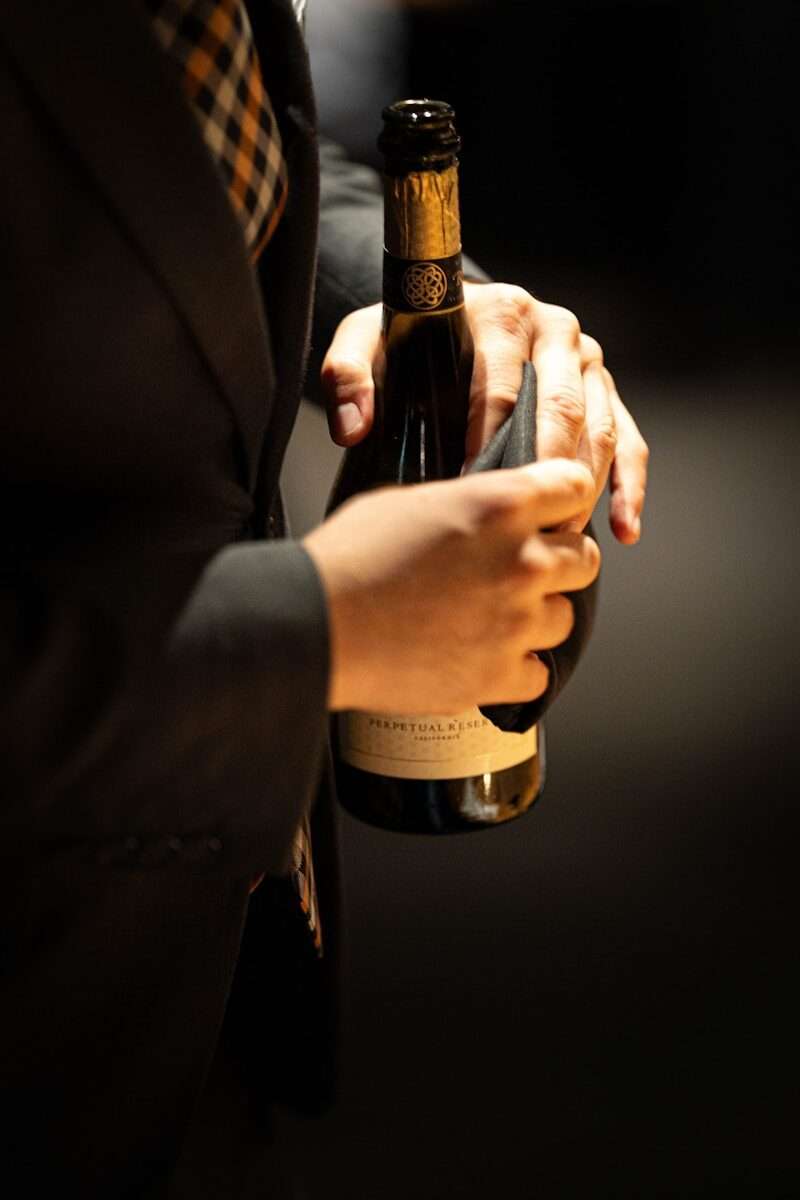
A sommelier (pronounced “suh-mull-YAY”) is a trained wine professional. The word comes from French, and the role originated in European fine dining as a specialist responsible for managing a restaurant’s wine program — selecting, purchasing, cellaring, and serving wine, and guiding guests through pairings.
Today the term is used more broadly. A sommelier might work in a restaurant, a hotel, a wine shop, a distributor, an airline, or a corporate setting. What unites them is a formal body of knowledge: viticulture, winemaking, wine regions, tasting technique, service, and food pairing.
The working definition most professionals use: a sommelier is someone who has both formal training and practical expertise in wine, and who applies that knowledge in service of others — whether guests in a restaurant or buyers in a wine shop.
Types of Sommeliers
The sommelier world has several distinct tracks:
| Title | Context | Key Skills |
|---|---|---|
| Restaurant Sommelier | Fine dining, hotel F&B | Service, wine list curation, pairing |
| Head Sommelier / Wine Director | Leads a wine program | Procurement, staff training, inventory |
| Corporate Sommelier | Private clients, corporations | Education, curation, event facilitation |
| Flying Sommelier | Airline, cruise ship | Selection for altitude, logistics constraints |
| Retail Sommelier | Wine shop | Customer education, buying guidance |
| Consulting Sommelier | Freelance | List design, education programs, events |
Each context demands a slightly different skill set, but the underlying knowledge base is the same.
Major Sommelier Certifications
If you want to become a sommelier, certification is the recognized pathway. There are several globally recognized programs:
Court of Master Sommeliers (CMS)
The most prestigious and demanding path in the United States. Four levels:
- Introductory Sommelier — entry-level written exam
- Certified Sommelier — practical service, blind tasting, theory
- Advanced Sommelier — rigorous multi-day exam, significant fail rate
- Master Sommelier — the pinnacle; fewer than 300 people hold this title worldwide
The blind tasting portion at the Advanced and Master levels is famously difficult. Candidates taste six wines in 25 minutes and must identify grape, region, vintage, and quality level with high accuracy.
Wine & Spirit Education Trust (WSET)
More academic and internationally recognized. Four levels (Award, Foundation, Higher, Diploma), with the Diploma serving as a pathway to the Master of Wine qualification. WSET is commonly chosen by those entering the wine trade or the education sector.
Master of Wine (MW)
The highest qualification in the wine world, administered by the Institute of Masters of Wine. Fewer than 500 MWs exist globally. Requires WSET Diploma, years of industry experience, written theory exams, blind tasting, and a research paper.
Society of Wine Educators (SWE)
US-based certification with a focus on education. The Certified Wine Educator (CWE) designation is well-regarded in hospitality and corporate settings.
| Program | Prestige Level | Global Recognition | Focus |
|---|---|---|---|
| Court of Master Sommeliers | ★★★★★ | High (Americas focus) | Service, tasting, theory |
| WSET Diploma | ★★★★½ | Very high (global) | Academic, theory |
| Master of Wine | ★★★★★ | Highest (global) | Research, theory, tasting |
| SWE CWE | ★★★★ | Strong (US) | Education, service |
What a Sommelier Actually Does
The restaurant sommelier role involves a lot more than recommending a Pinot Noir.
Wine List Curation
A sommelier builds and manages the wine list — selecting producers, determining price points, balancing the depth across regions and styles, and rotating selections seasonally. A great wine list tells a story. It reflects a point of view about how wine should be experienced in that specific restaurant.
Purchasing and Inventory
Sommeliers manage budgets, relationships with distributors and importers, and the physical cellar. They forecast usage, watch allocation lists for sought-after bottles, and manage spoilage and rotation.
Blind Tasting
This is the skill most associated with the sommelier mystique — the ability to taste a wine without seeing the label and identify its origin, grape variety, and vintage. It’s less magic than method. Expert sommeliers apply a systematic deductive framework built on identifying specific structural and aromatic markers:
- Appearance: Color depth, hue, viscosity
- Nose: Primary aromas (fruit, floral), secondary aromas (winemaking), tertiary aromas (aging)
- Palate: Acidity, tannin, alcohol, body, sweetness, finish
- Conclusions: Climate, region, grape, vintage, quality
Training this skill takes years of deliberate practice and enormous sensory memory.
Pairing and Guest Service
At the table, a sommelier reads the guests — what they’re ordering, what they’ve said they like, how much they want to spend, how adventurous they seem — and makes recommendations that serve their experience, not the sommelier’s preferences. This is a hospitality skill as much as a wine skill.
Education and Team Training
Many sommeliers run education programs for restaurant staff. A well-trained front-of-house team can speak intelligently about the wine list without a sommelier at every table.
How Sommeliers Taste Wine
Professional tasters use a systematic deductive approach rather than free-associating impressions. The Court of Master Sommeliers grid is the standard:
Sight: Is the wine pale or deep? Clear or hazy? Is the color at the rim different from the center (age indicator)?
Nose: First impression — fruity, earthy, herbal? Then: specific fruit categories (red, black, tropical, citrus). Floral notes, oak-derived aromas (vanilla, toast, coconut), secondary notes from fermentation (yeast, bread). Tertiary aromas from age (leather, tobacco, mushroom, dried fruit).
Palate: Structural elements — sweetness, acidity (does your mouth water?), tannin (grip and drying sensation), alcohol (warmth), body (weight on the palate), finish (how long does the flavor last?).
Conclusions: From these observations, a trained sommelier can narrow down the likely grape variety, region, climate, and approximate age of a wine with surprising accuracy.
You don’t need to go through this full grid every time you open a bottle. But the framework trains your attention in ways that make wine permanently more interesting.
The Sommelier’s Palate: Can You Develop One?
Yes — and faster than most people expect.
The primary limitation isn’t a natural gift. It’s vocabulary and exposure. Most people taste wine and lack the words to describe what they’re experiencing, so the experience stays vague and undifferentiated.
The fastest ways to develop your palate:
- Taste with a framework. Even a simple one (sweet/dry, light/full, soft/acidic, fruity/earthy) gives your brain a structure to hang observations on.
- Compare side by side. Tasting two wines together accelerates learning exponentially compared to tasting them alone.
- Name things precisely. “Red fruit” is a step up from “nice.” “Tart cherry, dried cranberry, a hint of dried rose” is learning in action.
- Taste a lot, regularly. Sensory memory compounds over time.
This is exactly why blind tasting events — like the ones we run at The Wine Voyage — are such an effective learning environment. You’re engaged, there’s friendly stakes, and you’re forced to articulate what you’re actually tasting.
The Sommelier and Group Wine Experiences
Something interesting happens when a sommelier (or a sommelier-certified facilitator) guides a group tasting: people who’ve always felt intimidated by wine suddenly feel like they’re getting something. The vocabulary unlocks the experience.
At The Wine Voyage, I bring that approach to corporate settings. The goal isn’t to produce experts — it’s to give people a framework for engaging with wine that makes the experience genuinely richer. Our Blind Tasting Competition, Food & Wine Pairing, and Perfect Blend Competition events all use sommelier-developed methodology adapted for group learning and fun.
The most common feedback I hear: “I’ve been drinking wine for years and I never understood what I was tasting until now.” That’s the sommelier’s gift, made accessible.
To explore wine more deeply, read our guides on how to taste wine, wine tasting notes, how to pair wine with food, how to host a blind wine tasting, and our beginner’s entry point at wine for beginners.
Further Reading
For deeper exploration of the sommelier profession and wine education, visit GuildSomm — the professional community for certified sommeliers with extensive study materials — and Wine Folly’s visual guide to the sommelier’s world, which breaks down complex concepts with characteristic clarity.