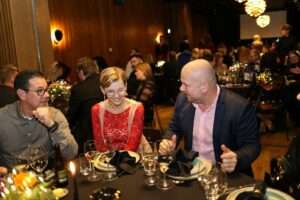
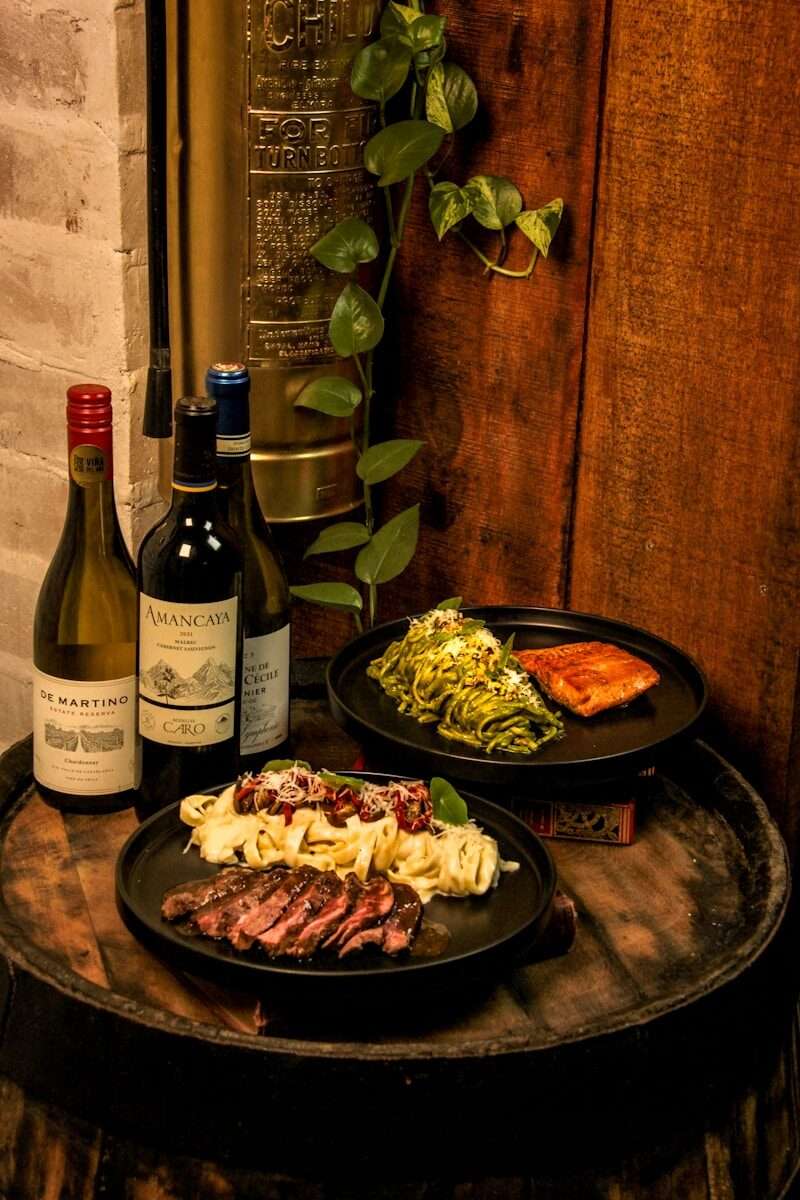
I’ve hosted food and wine pairing dinners in hotel ballrooms, in someone’s backyard in Sonoma, in a downtown loft with forty corporate guests, and once — memorably — in a conference room where I had to improvise a tablecloth situation. The setting matters less than people think. What makes or breaks a food and wine pairing dinner is the logic that holds it together.
When the pairing works, something clicks for guests that doesn’t happen any other way. You take a sip of wine that tastes fine on its own. You take a bite of the dish. You go back to the wine. And suddenly it tastes different — brighter, rounder, longer. That transformation is the whole point of a food and wine pairing dinner, and engineering those moments is the most satisfying part of this work.
This guide covers everything: the principles, the structure, the menu planning, and how to turn a pairing dinner into a genuine shared experience for a group.
Why Food and Wine Pairing Works (and When It Doesn’t)
The chemistry is real. Wine is an acid-forward, often tannin-heavy, sometimes sweet beverage. Food is a complex mix of fat, salt, acid, sweetness, and umami. When you pair thoughtfully, components in the wine and components in the food interact in ways that amplify the best in each.
Fat in food softens tannins. This is why Cabernet Sauvignon and ribeye is such a reliable pairing — the protein and fat in the beef mellow the wine’s grippy tannins, making the whole experience feel more luxurious.
Acid in wine cuts richness. Champagne with fried food isn’t just decadent — it’s smart. The wine’s acidity cleans your palate after each bite, making the next one taste just as fresh.
Sweetness in wine protects against salt and spice. A Riesling next to spicy Thai food doesn’t fight the heat; it soothes it.
Contrast and complement are the two strategies. You can echo a flavor (herbaceous Sauvignon Blanc with an herb-crusted dish) or you can contrast it (sweet Sauternes against salty Roquefort). Both work. Mixing up both approaches across a multi-course dinner keeps guests engaged.
What doesn’t work: fighting acidity with acidity (a very acidic dish with a tart wine can feel harsh), overwhelming tannins with delicate proteins (a big Cab with sole will make the fish taste like nothing), and pairing sweet food with dry wine (the wine tastes sour in contrast).
Planning Your Food and Wine Pairing Dinner Menu
How Many Courses?
For a home dinner party: three to four courses is the sweet spot. Enough variety to taste different pairings without exhausting everyone’s palate and patience.
For a corporate event: four to five courses works if you want a proper showcase. Two to three courses is more practical if the evening has other programming — conversation, presentations, team activities.
For a light tasting experience: a grazing table approach with five or six small plates and three to four wines lets guests explore at their own pace, which creates a more casual energy.
Course Structure That Works
A classic structure for a food and wine pairing dinner builds from light to rich:
- Reception / Amuse-Bouche: Sparkling wine or a light white. Small bites.
- First Course: A delicate white wine. Salad, seafood, or a light soup.
- Second Course: A fuller white or a lighter red. Pasta, risotto, white meat.
- Main Course: A red wine with structure. Red meat, lamb, game.
- Cheese Course (optional): A dessert wine or fortified wine. Cheese selection.
- Dessert: A sweet wine, port, or late-harvest expression.
You don’t have to follow this exactly. Some of the best pairing dinners I’ve hosted broke the rules deliberately — starting with a bold red to subvert expectations, for instance. But the logic of light-to-heavy prevents palate fatigue.
Wine Selection for a Pairing Dinner
One Wine Per Course
For a formal sit-down, each course gets its own wine. Budget accordingly — you need about four to five ounces per pour per guest, so one standard bottle covers five to six guests per pour. A four-course dinner for twelve people means roughly eight to ten bottles total.
Two Wines, Contrasting Approach
For a smaller, more interactive dinner, pour two wines per course — one that’s a classic match, one that’s a deliberate contrast. Let guests decide which they prefer and why. This format turns the dinner into a tasting workshop.
Classic Pairing Combinations
| Course | Wine Match | Why It Works |
|---|---|---|
| Oysters / raw shellfish | Muscadet, Chablis, Champagne | High acidity, mineral notes echo brine |
| Caesar salad | Pinot Grigio, Vermentino | Light body matches delicate dish |
| Smoked salmon | Grüner Veltliner, dry Riesling | Pepper and acid cut through the fat |
| Pasta with cream sauce | Chardonnay (unoaked or lightly oaked) | Richness meets richness |
| Pasta with tomato | Sangiovese, Chianti | Acid-on-acid; Italian wine loves tomato |
| Roast chicken | Burgundy Pinot Noir, Chardonnay | Classic bridge: works with either |
| Grilled lamb | Syrah, Cabernet Franc | Earthy, herbal notes complement lamb |
| Ribeye steak | Cabernet Sauvignon, Malbec | Tannins dissolve against fat and protein |
| Duck breast | Pinot Noir, Grenache | Fruit-forward reds match the richness |
| Blue cheese | Sauternes, Tawny Port | Sweet against salt and funk — transcendent |
| Chocolate dessert | Ruby Port, Banyuls | Sweetness matching prevents sourness |
| Fruit tart | Moscato d’Asti, late-harvest Riesling | Fruit echoes fruit |
The Dinner Experience: How to Introduce Each Pairing
This is where most home hosts drop the ball. They pour the wine and serve the food without any context, and guests drink and eat without understanding what they’re supposed to notice. You don’t need to be a sommelier to add this layer — you need two sentences per course.
Before each course, tell guests:
- What wine it is and where it’s from (15 seconds)
- What to look for in the pairing (15 seconds)
For example: “This is a 2021 Grüner Veltliner from the Wachau. The wine has a signature white pepper note and high acidity — when you taste it with the smoked salmon, notice how the acid cuts through the fat and the pepper plays off the smokiness of the fish.”
That’s it. You’ve given them a listening assignment. They’ll taste with intention instead of just eating.
If you want to go further, add a note card at each place setting with the wine name, vintage, producer, and a one-line pairing note. Guests love these, and they become keepsakes.
Hosting a Food and Wine Pairing Dinner for a Group
Managing the Logistics
For groups of 10–20, the sit-down format works well with a hired sommelier or a guided host leading the explanations. For larger groups (20–100+), a station-based or reception-style format with five or six pairings lets people move through at their own pace.
Consider timing. A proper multi-course pairing dinner for 12 takes about three hours including conversation. For corporate events where guests need to be somewhere afterward, a two-course pairing dinner with an amuse and a main (plus cheese) keeps it under two hours.
Dietary Considerations
One of the logistical realities of a food and wine pairing dinner is that dietary restrictions can complicate set menus. Solve this in advance by offering a clear alternative for vegetarians or those with dietary restrictions — and make sure the wine pairings still work with the alternative.
Gluten-free and dairy-free guests can usually be accommodated without changing the wine selections. Tannin-sensitive guests (often red wine avoiders) should be seated near a white or rosé option they can pour freely.
Budget Guidance
| Format | Per Person Wine Budget | Notes |
|---|---|---|
| Casual 3-course dinner | $20–$35 | Mid-range regional wines |
| Formal 4-course dinner | $40–$65 | Quality step-up; add a premium pour for main |
| Premium 5-course dinner | $75–$120 | Include a Grand Cru or aged selection |
| Corporate showcase | $50–$100 | Branded presentation, sommelier-hosted |
Turning a Pairing Dinner into a Team Experience
A food and wine pairing dinner is inherently social — you’re sharing something sensory, making real-time judgments, and talking about your reactions. For corporate groups, adding a slight competitive element amplifies all of this.
One format we use at The Wine Voyage: give each table a pairing card before each course with three possible wine choices and ask them to vote on which wine is being served and which would make the best pairing. Reveal the answer with each course. The discussion that happens at the table — people defending their votes, arguing about what “earthy” means, comparing what they’re tasting — is exactly the kind of organic interaction that doesn’t happen at a standard dinner.
For teams working through change, launching something new, or simply trying to build connection after a period of remote work, a structured pairing dinner gives people a shared vocabulary and a shared experience that nothing else quite replicates.
The Wine Voyage’s Food & Wine Pairing experience is designed for exactly this format — guided, hosted, with enough structure to make it educational and enough flexibility to make it feel like a real dinner. We’ve run these for teams at the Carter Center, GoFundMe, and Sazerac, adapting the menu and wine selections to the group’s profile and the host organization’s goals.
Common Questions About Food and Wine Pairing Dinners
Do I have to serve expensive wine? No. Some of the most revealing pairings I’ve built used $18 bottles. The pairing is the experience; the wine is a vehicle.
What if guests don’t drink alcohol? Non-alcoholic sparkling wines and dealcoholized options have improved dramatically. A well-chosen sparkling grape juice or non-alcoholic wine can sub in for most pairings without disrupting the experience. Have one poured and ready.
How do I handle a guest who “doesn’t like wine”? They almost always mean they haven’t found a wine that worked for them in context. A food and wine pairing dinner is uniquely good at converting skeptics because the food changes what the wine tastes like. I’ve watched self-described wine haters become enthusiastic about a Riesling once they tasted it with the right dish.
Can I do this virtually? Yes — ship the wine samples to guests ahead of time, prepare a simple recipe guide, and host the dinner on video. The Wine Voyage’s virtual format has worked for teams across multiple cities and time zones.
For more guidance on creating great wine experiences for groups, explore our guides on wine tasting team building, wine blending competition, how to host a blind wine tasting, wine tasting games for groups, and wine pairing guide.
Further Reading
For expert pairing reference and deeper education: Wine Folly’s food pairing primer and Decanter’s food and wine pairing guide.