Unique Wine & Spirits Experiences

Brought To You

How to Pair Wine With Food: The Rules That Actually Work

Pair Wine With Food

Most wine pairing advice makes the same mistake: it gives you a list of matches without explaining why they work. Memorizing that Pinot Noir goes with salmon is useful only if you happen to be eating salmon. Understanding why it works — the structural logic behind it — lets you figure out the right wine for anything on your plate.

There are four principles that cover the vast majority of situations. Once you have them, you don’t need a chart.


The Four Principles of Wine Pairing

1. Match Weight to Weight

The most important rule in wine pairing is body matching: light food with light wine, rich food with rich wine.

A delicate piece of steamed sole with a glass of Barolo? The wine obliterates the fish — all you taste is tannin and dark fruit. The same sole with Muscadet or Vermentino? The wine complements without competing. The food is still the point.

In practice, this means:

  • Light dishes (salads, raw fish, light pasta, vegetable dishes) → light-to-medium white wines or light reds
  • Medium-weight dishes (roast chicken, grilled pork, mushroom risotto, salmon) → medium-bodied whites or lighter reds
  • Rich, heavy dishes (braised short ribs, lamb stew, aged hard cheese) → full-bodied reds with tannin structure

This rule alone handles most situations. When in doubt, think about the heaviness of the dish and match accordingly.


2. Acid Is Your Best Friend

High-acid wines are the most food-friendly wines in the world. Acidity in wine does the same thing that lemon juice does in cooking — it cuts through fat, brightens flavors, and refreshes the palate so you want another bite.

This is why Italian wines work so brilliantly with Italian food. Chianti Classico (high acid, moderate tannin) next to a plate of pasta with meat sauce: the acid slices through the fat of the meat, the tannins bind to the protein, and the wine and food become more than the sum of their parts.

The high-acid wines to know:

  • Whites: Sauvignon Blanc, Riesling, Pinot Grigio, Muscadet, Albariño, Verdicchio
  • Reds: Sangiovese (Chianti), Barbera, Pinot Noir, Gamay (Beaujolais)

High-acid wines are also the right call when your dish has acidity built in — tomato sauce, vinaigrette, citrus-based dishes. The pairing principle: the wine should have at least as much acidity as the food, or the food will make the wine taste flat.


3. Tannin Needs Protein and Fat

Tannins are the gripping, drying compounds in red wine — what you feel on your gums after a sip of Cabernet Sauvignon. On their own, high-tannin wines can feel harsh and dry. Paired with protein and fat, something chemical happens: the tannins bind to the proteins, soften, and the combination becomes silky and satisfying.

This is why a ribeye with Cabernet Sauvignon is one of the great food-wine pairings in existence. The fat in the meat tames the tannins; the tannins structure the richness of the meat. Both taste better than they would alone.

The flip side: pair a tannic red with delicate fish or a light salad and you get a dry, bitter clash. The tannins have nothing to bind to and they dominate unpleasantly.

High-tannin reds need: Red meat, lamb, game, aged hard cheese, duck confit, slow-cooked stews

Avoid pairing tannic reds with: Delicate fish, vegetable dishes, acidic foods (the acid amplifies the drying sensation of tannins)


4. Sweet Wine, Sweeter Food

This is the rule most people get backwards. When pairing wine with dessert, the wine must be at least as sweet as — ideally sweeter than — the food. If the food is sweeter than the wine, the wine tastes thin, sharp, and acidic by comparison.

A dry Champagne with a chocolate mousse: the chocolate makes the wine taste sour. A Sauternes or a late-harvest Riesling with the same chocolate mousse: the wine holds its own, the sweetness levels match, and you get complexity on top of richness.

For dessert and sweet dishes:

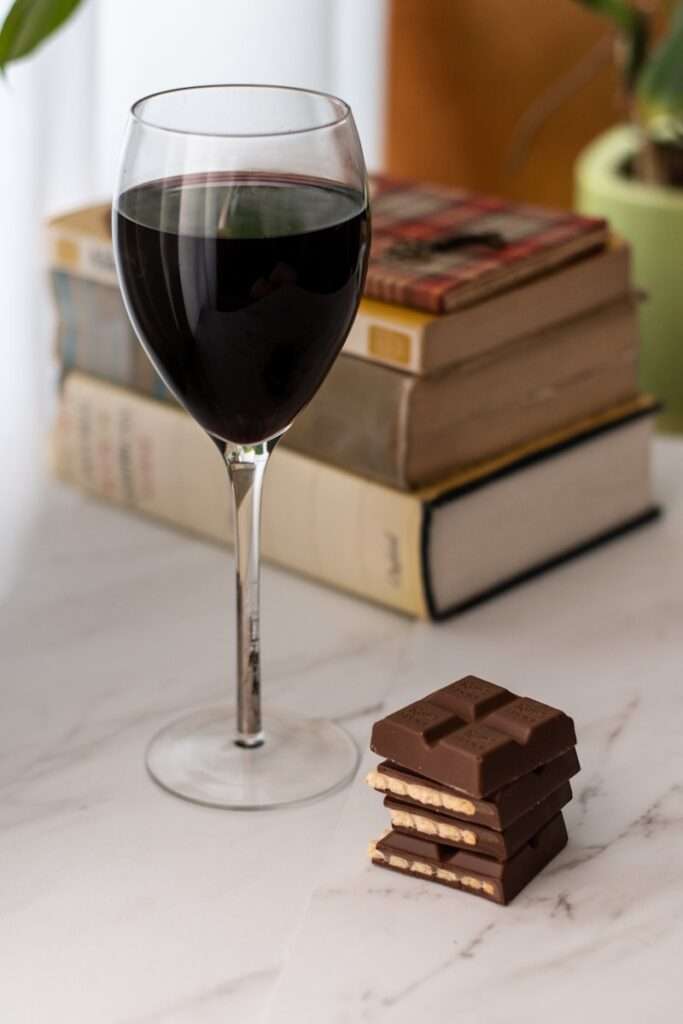
  • Chocolate → Port, sweet Shiraz, Banyuls (a sweet red from southern France)
  • Fruit-based desserts → Moscato d’Asti, late-harvest Riesling, Sauternes
  • Crème brûlée / custard → Sauternes, Vouvray moelleux
  • Cheese course (the end of the meal) → works better with dry wines than sweet ones, unless the cheese is very sweet (like Roquefort with Sauternes)

Wine Pairing for the Foods You Actually Eat

Chicken and Poultry

Chicken is endlessly versatile, which means the wine pairing depends almost entirely on how it’s cooked and what it’s cooked with.

  • Roast chicken (simple, herby): Unoaked or lightly oaked Chardonnay, white Burgundy, Pinot Gris, Côtes du Rhône rouge
  • Grilled chicken with lemon and olive oil: Albariño, Vermentino, Gavi
  • Chicken in cream sauce: Fuller white — oaked Chardonnay, Viognier, white Burgundy
  • Chicken tikka masala (spiced): Off-dry Riesling, Gewürztraminer, Pinot Gris (Alsace)
  • Duck (rich, fatty): Pinot Noir, Grenache-based reds, aged Rioja

Fish and Seafood

The old rule “white wine with fish” is mostly right, but the details matter:

  • Oysters: Muscadet sur lie, dry Champagne, Chablis — something mineral and briny
  • Grilled white fish (sole, sea bass, halibut): Sauvignon Blanc, Pinot Grigio, Albariño, Vermentino
  • Salmon (oily, rich): Pinot Noir (the classic exception to white-with-fish), unoaked Chardonnay, dry Riesling
  • Shrimp and scallops: Sauvignon Blanc, Verdicchio, dry rosé
  • Tuna (meaty, steak-like): Pinot Noir, Provence rosé, lighter reds
  • Lobster with butter: Rich Chardonnay, white Burgundy — the richness of the wine matches the richness of the dish
  • Fish tacos / ceviche: Vinho Verde, Albariño, dry sparkling wine

Red Meat

This is where tannic reds find their purpose:

  • Ribeye / grilled steak: Cabernet Sauvignon, Malbec, Syrah — the classic pairing, and for good reason
  • Lamb: Rioja, Grenache-based reds, Côtes du Rhône — lamb’s sweetness plays well with slightly earthy, fruit-forward reds
  • Burgers: Malbec, Zinfandel, Petite Sirah — bold, generous wines that match the intensity
  • Slow-braised short ribs / beef stew: Barolo, Amarone, aged Bordeaux — the long cooking softens the meat and calls for a wine with similar depth
  • Steak tartare (raw, delicate): Lighter — Pinot Noir, Gamay, Côte de Nuits-Villages — the rawness is more delicate than grilled

Pasta

The sauce determines the wine, not the pasta shape:

  • Tomato-based (marinara, arrabbiata, amatriciana): Chianti, Sangiovese, Montepulciano — the acidity matches the tomato
  • Cream-based (carbonara, Alfredo): Unoaked Chardonnay, Pinot Grigio, Soave — the wine’s freshness cuts the richness
  • Olive oil and garlic (aglio e olio): Vermentino, Verdicchio, Albariño
  • Pesto: Vermentino, Gavi, lighter whites — herbs in the pesto echo herbal notes in the wine
  • Bolognese (slow-cooked meat sauce): Sangiovese, Barbera, Montepulciano d’Abruzzo — high-acid reds that handle both fat and tomato

Cheese

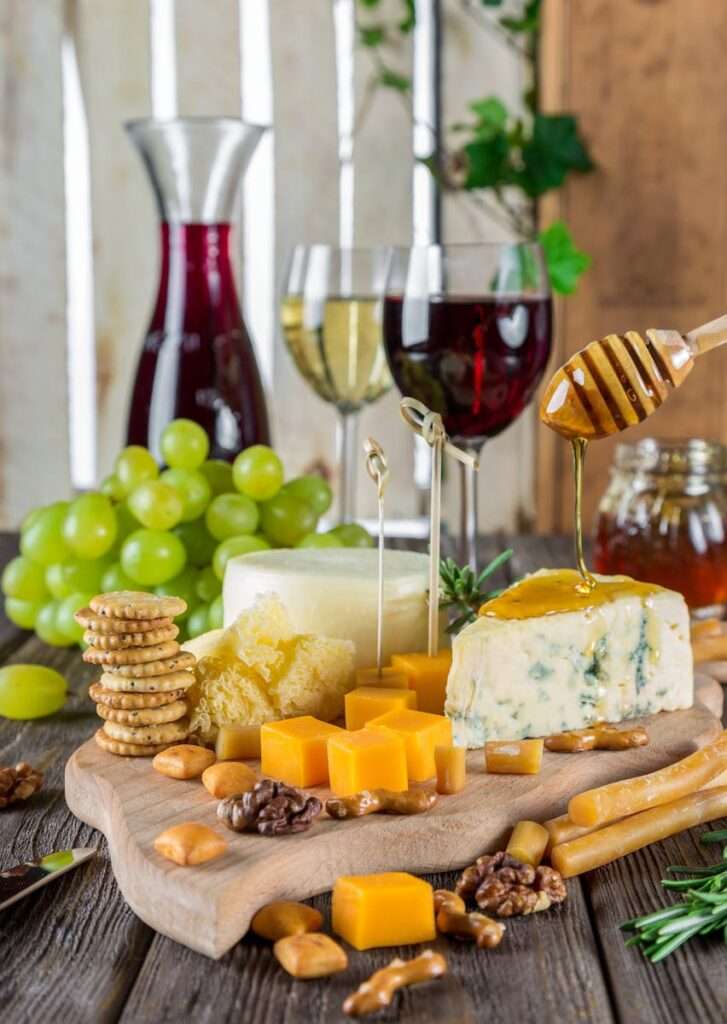
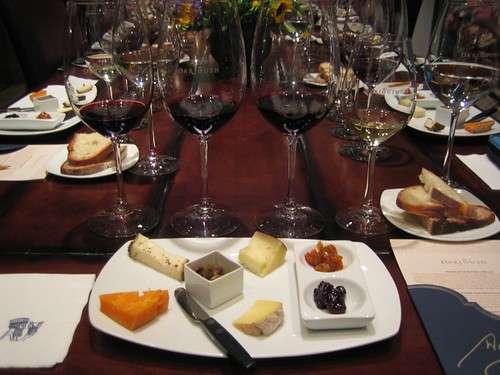
Wine and cheese is more nuanced than most people think — the combination doesn’t automatically work just because both are present.

The useful pairings:

  • Fresh cheese (mozzarella, burrata, chèvre): Light, crisp whites — Sauvignon Blanc, Pinot Grigio, Vinho Verde
  • Soft, creamy (Brie, Camembert): Champagne or sparkling wine (the bubbles and acid cut the fat), or light Chardonnay
  • Semi-hard (Gruyère, Comté, Manchego): Medium whites or lighter reds — white Burgundy, Pinot Noir, Rioja
  • Hard, aged (Parmigiano, aged Cheddar, Pecorino): Structured reds with tannin — Barolo, Cabernet, Rioja Reserva
  • Blue cheese (Roquefort, Gorgonzola, Stilton): Sauternes, Port, late-harvest Riesling — the salt of blue cheese craves sweetness

Spicy Food

Spice amplifies the perception of alcohol and tannins — which is why a tannic, high-alcohol red with a Thai curry can feel like drinking fire. The right answer for spicy food is almost always lower alcohol, residual sweetness, and high acidity:

  • Thai, Vietnamese, Sichuan: Off-dry Riesling, Gewürztraminer, Pinot Gris (Alsace)
  • Indian (curry-based): Off-dry Riesling, Viognier, dry rosé — never big tannic reds
  • Mexican (tacos, salsas): Albariño, Vinho Verde, dry rosé, unoaked Garnacha
  • Sushi and Japanese: Dry sake (obviously), but also Pinot Gris, Chablis, dry Riesling

The underlying logic: residual sweetness cools the heat; high acid refreshes; low tannins avoid the amplification problem.


Vegetables and Plant-Based Dishes

Vegetables were once considered the enemy of wine pairing. That reputation is outdated — the variety and intensity of vegetable-based cooking today covers an enormous range:

  • Grilled/roasted vegetables (asparagus, artichokes, Brussels sprouts): Sauvignon Blanc or Grüner Veltliner — the herbal, peppery quality handles the bitterness of these vegetables
  • Mushroom dishes: Pinot Noir, Burgundy, earthy reds — mushrooms have umami that echoes the savory character of earth-forward reds
  • Tomato-based (gazpacho, caprese): Sauvignon Blanc, dry rosé, Sangiovese
  • Rich vegetarian (butternut squash, root vegetables): Viognier, Pinot Gris, fuller whites
  • Lentils and legumes: Medium reds — Côtes du Rhône, Grenache, Barbera

The Regional Pairing Shortcut

One of the most reliable pairing shortcuts that exists: pair the wine with the cuisine from the same region. This works because wine and food from the same region have co-evolved over centuries to work together.

  • Italian wine → Italian food (almost always works)
  • Alsatian wine → Alsatian food (choucroute, tarte flambée)
  • Provence rosé → Provençal food (ratatouille, fish, salad Niçoise)
  • Spanish wine → Spanish food (Rioja with lamb, Albariño with seafood)
  • German Riesling → German food (pork, sauerkraut, charcuterie)

This doesn’t mean you’re stuck — it means you have a reliable anchor when you’re unsure.


Five Rules for When You’re Unsure

When you’re at a restaurant, choosing for a table, or just staring at two bottles and don’t know which to open:

  1. When in doubt, drink sparkling. Champagne and good sparkling wine pair with almost everything — the bubbles and acidity are endlessly flexible.
  2. Rosé is never wrong for a mixed table — especially Provence rosé, which is dry, food-friendly, and works across fish, chicken, vegetable dishes, and charcuterie.
  3. A wine that’s too light for the food is better than one that’s too heavy. You can always pour another glass of something light. A wine that’s too bold for the dish kills the food.
  4. If the dish has lemon or vinegar, make sure the wine has at least as much acidity. No flat wine with acidic food.
  5. Drink what you like. The pairing principles are real and worth knowing, but the best wine with any meal is a wine you enjoy. This isn’t chemistry class.

The Wine Pairing Cheat Sheet

Food First choice Also works
Oysters Muscadet, Chablis Dry Champagne
Grilled white fish Albariño, Sauvignon Blanc Vermentino, Pinot Grigio
Salmon Pinot Noir, unoaked Chardonnay Dry rosé
Roast chicken Chardonnay, Pinot Gris Côtes du Rhône
Steak / lamb Cabernet Sauvignon, Malbec Syrah, Rioja
Pasta (tomato) Chianti, Sangiovese Barbera, Montepulciano
Pasta (cream) Chardonnay, Pinot Grigio Soave, Verdicchio
Soft cheese Champagne, Chardonnay Light Pinot Noir
Blue cheese Sauternes, Port Late-harvest Riesling
Chocolate dessert Port, Banyuls Sweet Shiraz
Spicy food Off-dry Riesling Gewürztraminer, dry rosé
Sushi Chablis, Pinot Gris Dry Riesling, dry sake

Ready to go deeper? Read our guides on wine body — light, medium, and bold reds explained and how to host a wine tasting. For pairing practice with a group, see how wine tasting works as team building.


Explore Further

For the gold standard visual reference on wine pairing, Wine Folly’s pairing guide is the clearest chart available. For pairing research by specific grape or region, Wine Enthusiast’s pairing section covers hundreds of specific combinations with editor recommendations.

Share

Quiz-time

You might also enjoy

How to Pair Wine With Food: The Rules That Actually Work

You might also enjoy

Champagne vs Prosecco
Champagne Guide: Styles, Houses & How to Drink It

Champagne is the most famous wine in the world — and also one of the most misunderstood. People reach for it on New Year’s Eve without knowing what they’re drinking, slap the word “Champagne” on any fizzy wine, and assume it’s all the same bubbly stuff in a flute. It isn’t.

wine cellar
Wine Cellar Guide: Storage, Organization & Aging Tips

A wine cellar sounds like something that belongs to a château in Bordeaux or a Victorian manor house. In reality, the principles behind a good wine cellar are simple, the fundamentals are achievable in most homes, and understanding them will save you from opening a bottle that should have waited — o

Bordeaux, France, Must-Visit Wineries
Bordeaux Wine Guide: Regions, Grapes & Best Bottles

Bordeaux wine is one of those subjects that can feel intimidating at first. There’s the classification system, the châteaux names, the Left Bank versus Right Bank debate — and a price range that stretches from $12 grocery-store finds to bottles that cost more than a car. But once you understand the

Wine 101 The Fascinating Burgundy
Burgundy Wine Guide: Grapes, Regions & Best Bottles

If you want to understand why wine people obsess over terroir — the idea that a specific patch of earth produces something unrepeatable — look at Burgundy. Burgundy wine is the purest expression of that philosophy anywhere in the world. Two adjacent vineyards, separated by nothing but a stone wall,

Biodynamic Wine
Biodynamic Wine Guide: What It Is & Why It Matters

Biodynamic wine comes from vineyards farmed according to a philosophy that treats the entire farm as a single living organism — soil, vines, animals, insects, and even the cosmos — all working together. It goes further than organic farming. Much further.

Wine Regions
Wine Regions Guide: The World’s Best Explained

Wine doesn’t come from nowhere. It comes from specific places — specific soils, specific climates, specific grape varieties that humans have matched to those places over centuries. Understanding wine regions is the fastest way to make sense of wine because place is the organizing principle behind al

Best Wines Under $20
Best Wines Under $20: Great Bottles for Every Taste

There’s a persistent myth that good wine has to be expensive. I’ve tasted $200 bottles that disappointed and $12 bottles that stopped the conversation. The truth is that the best wines under 20 dollars have never been more accessible — and knowing where to look makes all the difference.

Organic Wine
Organic Wine Guide: What It Means & Best Bottles

The term “organic wine” gets used loosely, and that looseness creates genuine confusion. I’ve had customers at tastings ask whether organic wine means no additives, no sulfites, no pesticides, or all three. The honest answer involves a distinction most wine labels obscure.

Red Wine for Beginners
Red Wine for Beginners: The Complete Starter Guide

Red wine can feel intimidating at first — there are hundreds of grape varieties, dozens of regions, and an entire vocabulary that seems designed to exclude newcomers. But the truth is that getting into red wine is simpler than the wine world makes it look. You don’t need to know everything. You just

White Wine for Beginners
White Wine for Beginners: The Complete Starter Guide

White wine is often where people start their wine journey — and for good reason. White wines are generally lighter, more immediately approachable, and easier to pair with everyday food than most reds. But the white wine world spans an enormous range, from bone-dry mineral Chablis to rich tropical Vi

How to Taste Wine
How to Taste Wine: A Step-by-Step Beginner’s Guide

Most people drink wine. Fewer people actually taste it. That’s not a criticism — it’s just a distinction. Drinking wine means enjoying it. Tasting wine means engaging with it: noticing what’s in the glass, building vocabulary for what you’re experiencing, and using that information to make better ch

Prosecco
Prosecco Guide: Regions, Styles & How to Enjoy It

If you’ve ever ordered a spritz, toasted at a wedding, or grabbed a bottle for a Friday night aperitivo, there’s a good chance Prosecco was in your glass. It’s Italy’s most exported sparkling wine — and one of the best-selling bottles in the world. But Prosecco is a lot more interesting than its par

Wine 101 The Fascinating Gewürztraminer
Gewürztraminer Guide: Flavor, Pairings & Best Bottles

Gewürztraminer is the wine that makes people stop mid-sentence. The name is a mouthful — guh-VERTS-truh-MEE-ner — and the wine itself is equally unforgettable. Rich, perfumed, and unmistakably exotic, Gewürztraminer smells like a rose shop crossed with a lychee stand, with a dusting of ginger and ci

Wine Event Ideas, HOAs, Building Communities, Corporate Boardrooms, Corporate Event Ideas
18 Corporate Event Ideas Your Team Will Love

Somewhere between the catered lunch people eat at their desks and the three-day offsite nobody wanted, there’s a sweet spot where corporate events actually work. I’ve been producing them for 15 years, and I can tell you: the difference between a corporate event people remember and one they endure co

Get in touch