There’s a moment in every wine drinker’s journey when Argentine wine stops being “oh, that’s good Malbec” and becomes something you actively seek out. It happened for me when I first tasted a high-altitude Malbec from Luján de Cuyo — the kind of wine that has dark fruit intensity but an elegance I didn’t expect from South America. Since then, Argentine wine has consistently overdelivered.
Argentina is the fifth-largest wine producer in the world and, by any measure, the most dynamic. It’s a country that took a borrowed grape (Malbec from France’s Cahors), moved it to the Andes, and produced something entirely its own. And it didn’t stop there.
Why Argentine Wine Is Different
Two factors define Argentine wine more than any other: altitude and sunshine.
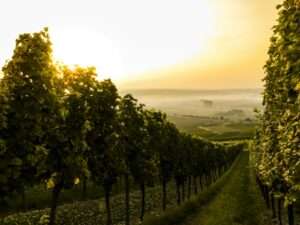
The Andean mountain range creates a natural barrier against Pacific moisture, leaving the wine regions in a rain shadow. Vineyards are irrigated by meltwater from the Andes, not rainfall — which means winemakers control the water supply almost entirely. Combined with over 300 days of sunshine per year, this produces grapes with exceptional sugar ripeness and intense color.
But altitude is the great moderator. Argentina’s major wine regions sit between 2,000 and 10,000 feet above sea level. At high altitude, nights cool dramatically even in summer, preserving the natural acidity that would otherwise be cooked out of the grapes. The result: wines with ripe fruit AND freshness. Big flavor AND finesse.
The UV intensity at altitude also thickens grape skins, producing wines with deep color and firm tannins that age well.
The Major Argentine Wine Regions
Mendoza: The Heart of Argentine Wine
Mendoza produces about 75% of all Argentine wine. It’s the benchmark, the reference point, the powerhouse. Nested below the Andes at 2,300 feet elevation, Mendoza is subdivided into several zones with distinct characters:
Luján de Cuyo is the traditional home of quality Malbec. The gravelly alluvial soils and old-vine plantings (some 80+ years) produce concentrated, structured wines that age beautifully. This is premium Malbec territory.
Maipú sits just south of Mendoza city and is warmer and more productive — reliable, honest Malbec and Cabernet Sauvignon at accessible prices.
Valle de Uco is the fastest-rising zone. At 3,000–5,000 feet elevation, with volcanic and limestone soils, the wines here have a freshness and mineral tension you don’t always find lower down. Tupungato, Tunuyán, and San Carlos are the key sub-districts. Achaval Ferrer, Zuccardi, and Clos de los Siete all have serious presences here.
Salta: High-Altitude Extreme
If Mendoza is dramatic, Salta is otherworldly. The Calchaquí Valleys in Salta province sit at 5,000–10,000 feet — some of the highest vineyards on earth. The Torrontés grape thrives here, producing highly aromatic whites with extraordinary freshness despite the searing sun. Cafayate is the main hub.
Malbec at these altitudes takes on a completely different character: more floral, lighter in body, more elegant than its Mendoza counterpart.
Patagonia: The Emerging Frontier
Río Negro and Neuquén provinces in northern Patagonia are drawing increasing attention. The climate here is cooler and windier — more continental than the north — producing Pinot Noir and Malbec with notable freshness and aromatic complexity. Chardonnay also performs well.
This is the place to watch for Argentine wine’s next chapter. Producers like Humberto Canale and Familia Schroeder are demonstrating that Patagonia can produce genuinely world-class wine.
Argentine Wine Regions Compared
| Region | Elevation | Key Grapes | Typical Style |
|---|---|---|---|
| Luján de Cuyo, Mendoza | 2,300–4,000 ft | Malbec, Cabernet Sauvignon | Rich, structured, age-worthy |
| Valle de Uco, Mendoza | 3,000–5,000 ft | Malbec, Cabernet Franc, Chardonnay | Fresh, mineral, elegant |
| Cafayate, Salta | 5,000–10,000 ft | Torrontés, Malbec | Aromatic whites, floral Malbec |
| Maipú, Mendoza | 2,200–2,800 ft | Malbec, Syrah, Bonarda | Reliable, fruit-forward |
| Río Negro, Patagonia | 800–1,200 ft | Pinot Noir, Malbec, Chardonnay | Elegant, cool-climate freshness |
The Grape Varieties of Argentine Wine
Malbec: The National Treasure
Malbec arrived in Argentina with French immigrants in the mid-19th century. In Cahors (its French homeland), it produces dark, tannic, sometimes austere wines. In Argentina, it found its calling. The Andean conditions produce a Malbec that’s richly fruited, softly tannic, and deeply colored — but with enough freshness to stay balanced.
The evolution of Argentine Malbec has been remarkable. What started as a simple, affordable red wine category has developed into something with genuine terroir expression. A single-vineyard Malbec from Luján de Cuyo tastes measurably different from one grown 60 miles away in the Valle de Uco — and both taste different from a Salta Malbec. This is what terroir looks like in action.
For a deep dive, our dedicated Malbec guide covers the variety’s full range.
Torrontés: Argentina’s White Treasure
Torrontés is the most distinctive white grape in Argentina — nowhere else in the world makes anything quite like it. It’s highly aromatic, bursting with rose petal, peach, and apricot aromas, with a dry, crisp finish. The contrast between the floral nose and the dry palate is initially surprising but completely addictive.
Cafayate in Salta is the prime growing zone. These wines are best consumed young, with food — they make a wonderful aperitif or partner for spicy dishes.
Cabernet Sauvignon
Often overshadowed by Malbec, Argentine Cabernet Sauvignon from Mendoza is seriously underrated. At lower altitudes it produces plush, approachable wines. At higher altitude in the Valle de Uco, it takes on cassis fruit, graphite minerality, and tannin structure that rivals good Napa examples at a fraction of the price.
Bonarda
The second-most-planted red grape in Argentina after Malbec, Bonarda (also known as Douce Noire in France) produces abundantly fruity, medium-bodied reds. It’s rarely exported in volume, but on the domestic market it’s a reliable everyday wine. When yields are controlled, it can be surprisingly interesting.
Cabernet Franc, Chardonnay, Pinot Noir
These varieties are gaining serious traction, especially in the Valle de Uco and Patagonia. Cool-climate Chardonnay from Valle de Uco is showing genuine mineral complexity. Valle de Uco Cabernet Franc has the herbal, lifted aromatics of the Loire but with more body. Patagonian Pinot Noir is delicate and increasingly precise.
Pairing Argentine Wine with Food
Argentine wine and Argentine food are an obvious match — so obvious that it’s almost worth stating the inverse: take the cues from the cuisine when pairing.
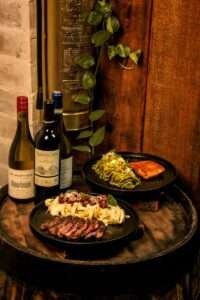
Malbec with beef: This is the quintessential pairing. Argentina’s grass-fed, low-fat beef has a clean, mineral quality that calls for Malbec’s soft tannins and dark fruit. A thick-cut ribeye and a Luján de Cuyo Malbec is one of those combinations that justifies the concept of wine pairing.
Torrontés with empanadas and spiced dishes: The aromatic, dry Torrontés loves the savory spice of empanadas, especially chicken or corn varieties. It also pairs beautifully with mild curries and Asian-influenced dishes.
Cabernet Sauvignon with lamb: Argentinian lamb from Patagonia is world-class. A structured Argentine Cabernet with a rack of lamb is dinner in the Mendoza valley.
Bonarda with pizza and pasta: The everyday wine for an everyday occasion. Bonarda’s soft fruit and medium tannins work with anything tomato-based.
Buying Argentine Wine: What You Need to Know
One of the great advantages of Argentine wine is value. The peso’s weakness against international currencies has made exports affordably priced for buyers in North America and Europe — you can find serious quality at $15–30 that would cost double from Napa or Burgundy.
Budget ($10–18): Alamos, Trapiche “Broquel,” El Esteco, Zuccardi Valle de Uco entry-level — all reliable, honest wine.
Mid-range ($18–40): Achaval Ferrer, Catena Zapata “Adrianna Vineyard” entry wines, Clos de los Siete, Zuccardi “Valle de Uco” — this is where the real quality jump happens.
Premium ($40–100+): Catena Zapata “Adrianna Vineyard” single-parcel wines, Achaval Ferrer “Finca Bella Vista,” Susana Balbo “Nosotros” — benchmark Argentine wine by any world standard.
Argentine Wine in Corporate Events
Argentine wine is a consistently popular choice for team tasting events because it tells a compelling story — immigration, altitude, transformation. Myrna Elguezabal and The Wine Voyage regularly build Argentine wine flights for corporate teams, typically contrasting a Mendoza Malbec with a Valle de Uco expression and a Torrontés, showing how dramatically terroir and altitude shape the final wine. It’s a genuinely educational tasting that also happens to feature some of the most crowd-pleasing wines in the world — a rare combination for a corporate event.
For a deep dive into Argentina’s signature grape, our Malbec guide is essential. Argentine Cabernet Sauvignon pairs well conceptually with our Cabernet Sauvignon guide. And for a broader view of how the New World approaches wine differently from Europe, our New World vs Old World wine guide is worth reading.
Further Reading
To go deeper into Argentine wine, I recommend two excellent resources: Wine Folly’s comprehensive Argentina guide — a visual, accessible overview of the regions and grapes — and Decanter’s Argentina wine region guide, which gives producer-level detail for serious exploration.