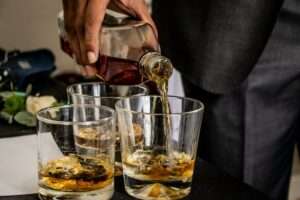
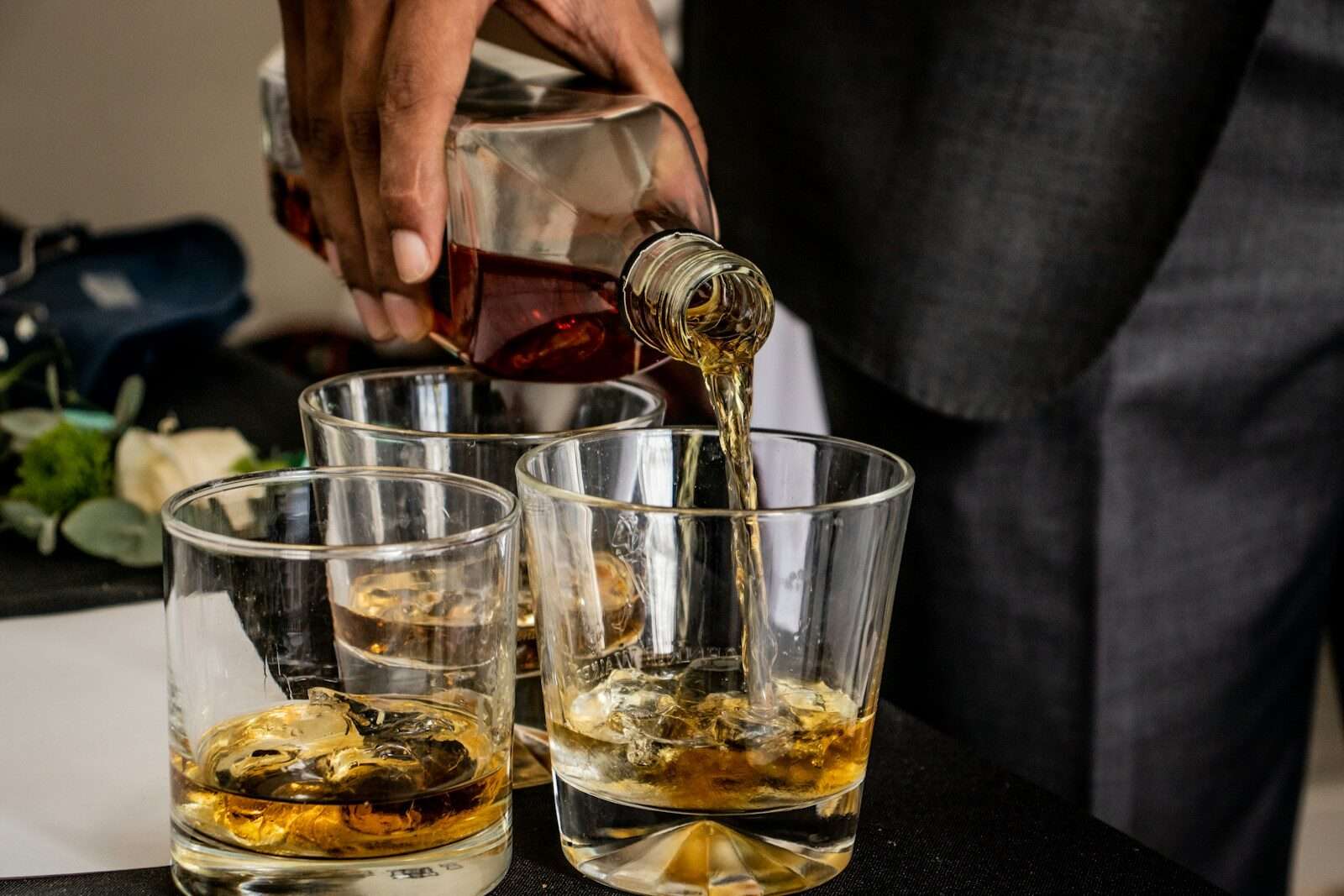
I hosted my first whiskey tasting party accidentally. A client wanted something beyond wine for their holiday event, we had an Islay Scotch and three bourbons in the cabinet, and by the end of the evening fifteen people were arguing passionately about peat levels and whether rye or corn matters more. That was my introduction to how engaging a well-run whiskey tasting party can be.
The good news: it’s not complicated. A whiskey tasting party requires thoughtful bottle selection, the right glassware, a simple structure, and enough context to get people curious. Here’s exactly how to run one.
What Makes a Whiskey Tasting Party Work
The core dynamic of any whiskey tasting party is the same as any tasting event: shared uncertainty creates connection. When everyone in the room is trying to figure out the same thing — is this Scotch or bourbon? Irish or Japanese? — the hierarchy flattens and conversation becomes real.
A whiskey tasting party works best when it’s slightly competitive. Not intensely so, but enough that people are actually paying attention to what’s in the glass rather than just drinking it. A simple scoring sheet and a blind reveal at the end gives the evening a structure that keeps energy up from the first pour to the last.
Choosing Your Whiskey Flight
How Many Bottles?
For a whiskey tasting party of 8–20 people, four to six bottles is the right range. Fewer than four doesn’t give enough comparison. More than six becomes fatiguing — your palate (and your guests’) starts to blur distinctions after the fifth pour.
Standard pour size is 15–20ml per whiskey. A 750ml bottle gives approximately 37–50 pours at that size, so two to three bottles cover most group sizes comfortably.
Flight Options by Format
| Flight Type | Bottles | What It Teaches | Difficulty Level |
|---|---|---|---|
| Bourbon vs. Scotch | 2+2 | Style differences across traditions | Easy |
| American styles: bourbon vs. rye | 3–4 | How grain bill shapes flavor | Easy |
| Single malt regions | 4–5 | How terroir affects whiskey | Intermediate |
| Age comparison (same distillery) | 3–4 | How oak time transforms spirit | Intermediate |
| World whiskey blind tasting | 4–5 | Global expression comparison | Advanced |
| Producer vertical | 3–4 | Single distillery evolution | Advanced |
For most whiskey tasting parties, the Bourbon vs. Scotch format is the most accessible starting point. It plays on assumptions — most guests have a preference before tasting — and delivers consistent surprises. Scotch drinkers often score the bourbon higher than expected, and vice versa. That gap between expectation and result is what makes the reveal engaging.
What to Buy
A solid bourbon/Scotch flight for a whiskey tasting party:
Bourbons:
- Buffalo Trace — accessible benchmark, caramel-forward, vanilla-rich, widely available
- Four Roses Single Barrel — floral, complex, a consistent surprise for guests who assume all bourbon tastes the same
- Wild Turkey 101 — high-rye mash bill, spicy and assertive, shows the full range of what bourbon can be
Scotches:
- Glenfiddich 12 — Speyside benchmark, gentle fruit and vanilla, the most approachable entry
- Oban 14 — coastal, slight smoke without full peat, bridges the gap between styles
- Laphroaig 10 — full Islay peat and brine, the divisive bottle that generates the most conversation
Don’t reach for the most expensive bottle you can find. Interesting beats expensive at a whiskey tasting party — a $35 bottle that surprises people creates better memories than a $150 bottle that confirms what they already believed.
Setting Up Your Whiskey Tasting Party
Glassware
The correct glass for a whiskey tasting party is a Glencairn — the tulip-shaped glass designed to concentrate aromas toward the nose. You can find 8-packs for under $40. In a pinch, a small white wine glass works. Shot glasses don’t.
Fill each glass to 15–20ml — just enough to nose and sip three times. More than that and guests start drinking rather than tasting, and the scoring becomes less reliable.
Noses Before Sips
At the start of the tasting, walk guests through the nosing step. Lower the glass to chin height, not directly under the nose. Take a few short sniffs. What do you notice? Vanilla? Oak? Dried fruit? Smoke?
This step matters for the whiskey tasting party dynamic because it gives guests something to do before they sip and something to compare afterward. “You said vanilla on the nose — did the sip confirm that?” is the kind of exchange that keeps a tasting moving and people engaged throughout.
Water and Palate Cleansers
Have still water and neutral crackers at every station. Water serves two purposes: palate cleansing between pours, and diluting whiskey by a few drops to open the aromatics (controversial among purists, but useful for tasting purposes in a group setting).
Avoid strong flavors on the table. Cheese, citrus, or heavily seasoned food will distort whiskey notes and make scoring less useful.
Running the Blind Tasting
Label bottles A through F and pour into correspondingly numbered glasses before guests arrive, keeping the identities covered or hidden. Have each guest score each whiskey:
- Nose: What aromas do you notice?
- Taste: What flavors come through on the palate?
- Finish: How long does the flavor last, and how does it evolve?
- Overall: Score 1–10
After all pours are scored, do the reveal. The gap between what people expected and what they actually preferred is usually the best moment of the evening — and the starting point for thirty minutes of the most engaged conversation in any room.
Talking Points for Each Style
Guests appreciate a little context for each style. Brief notes work better than lectures:
Bourbon: Made in the US, primarily corn mash, new charred American oak required by law. Look for vanilla, caramel, stone fruit, oak spice. The charred new-barrel rule is why bourbon tastes the way it does.
Scotch: Made in Scotland, primarily malted barley, aged in used barrels. Regional character matters significantly: Highlands (heather, honey), Speyside (fruit, vanilla), Islay (peat, smoke, brine). The flavor range is wider than most bourbon drinkers expect.
Japanese whisky: Influenced by Scotch tradition but more restrained and precise. Floral notes, delicate smoke in some expressions, exceptional balance. Typically the surprise of any whiskey tasting party because guests expect it to be similar to Scotch and find something distinctly different.
Irish whiskey: Triple-distilled, lighter body, smooth and accessible. Often the most approachable expression in any flight — and the one that converts non-whiskey drinkers most reliably.
Common Mistakes to Avoid
Pouring too much. Generous pours undermine the tasting format and lead to impaired scoring by the third glass. 15–20ml per whiskey is the professional standard.
Skipping the nosing step. Most flavor detection happens through retronasal smell, not taste. Guests who skip the nose score less accurately and get less from the reveal.
Too many bottles. Six is the maximum for a productive whiskey tasting party. Beyond that, palate fatigue sets in and scores flatten toward the middle.
Choosing from a single style. A flight of six bourbons teaches less than a flight of four styles. Contrast is what creates learning.
No reveal. Always end with the blind reveal. The evening builds toward this moment. Skipping it is like watching a mystery film without the ending.
Scaling Up: Whiskey Tasting Parties for Corporate Groups
A whiskey tasting party format translates directly into corporate team building. The competitive blind tasting structure — flights, scoring, reveal — scales from 10 guests to 200, and whiskey carries a different energy than wine: it tends to attract guests who consider themselves spirits-agnostic and converts them into engaged participants by the second pour.
The format works particularly well for:
- Post-meeting client entertainment
- Holiday parties where wine feels predictable
- Sales team events where competitive structure is welcome
- Onboarding experiences for new team members
- Cross-department mixers where conversation needs a catalyst
The Wine Voyage runs structured spirits tasting experiences — including tequila, mezcal, and custom whiskey evenings — for corporate groups of all sizes. If you want a whiskey tasting party that scales beyond 15 guests without requiring you to source, measure, and lead the tasting yourself, that’s what we do.
Building a Simple Scoring Sheet
A well-designed scoring sheet makes the whiskey tasting party run itself. One page, structured simply:
- Glass number (A, B, C…)
- Nose: three blank lines for notes
- Taste: three blank lines
- Finish: short or long, clean or complex
- Score: circle 1–10
- Guess: what do you think this is?
The “guess” column is what drives the reveal. When someone is confident it’s a bourbon and it turns out to be an Irish whiskey, that’s the moment the room gets loud.
Related reading: /whiskey-tasting-guide/, /spirits-tasting-for-beginners/, /how-to-host-blind-wine-tasting/, /wine-tasting-games-for-groups/, /cocktail-party-ideas/, /wine-tasting-team-building/
Further Reading
For more on running great tasting events: Decanter’s spirits coverage offers authoritative tasting notes and style guides for whiskey styles across regions, and Eventbrite’s guide to hosting tasting events covers the logistics side of running group tasting experiences from the event planning perspective.