If you’ve ever taken a sip of red wine and felt a drying, gripping sensation — like the wine was sucking moisture from your cheeks and gums — you’ve experienced wine tannins. Most people notice the effect before they have a word for it. Understanding what wine tannins are, where they come from, and how they shape a wine’s character is one of the most useful things you can learn as a wine drinker.
What Are Wine Tannins?
Wine tannins are polyphenolic compounds — naturally occurring molecules found in grape skins, seeds, and stems, as well as in the oak barrels used to age wine. When you drink a tannic wine, these compounds bind to proteins in your saliva, reducing lubrication in your mouth and creating that characteristic drying, gripping, sometimes slightly bitter sensation.
Chemically, tannins are the same family of compounds found in black tea, dark chocolate, and the skin of unripe fruit. If you’ve ever bitten into an unripe banana or sipped oversteeped Earl Grey, you’ve felt tannins in action.
In wine, tannins serve several important functions:
- They act as natural preservatives, allowing wines to age for decades
- They provide structure and backbone, giving wines their “skeleton”
- They balance richness and fat in food pairings
- They contribute to the overall texture and mouthfeel of the wine
Where Do Tannins Come From?
Tannins in wine come from four main sources, each contributing different qualities:
Grape Skins
The primary source. Red wines have significantly more tannins than whites because red winemaking involves extended skin contact — the skins macerate with the juice during and after fermentation, leaching tannins into the wine. White wines are pressed away from their skins quickly, so they have almost no tannins.
The thickness of the grape skin matters enormously. Thick-skinned varieties like Cabernet Sauvignon, Nebbiolo, and Tannat produce highly tannic wines. Thin-skinned varieties like Pinot Noir and Gamay produce wines with much softer tannins.
Grape Seeds
Seeds also contain tannins — and these tend to be the harshest, most astringent type. Winemakers pay close attention to pressing technique to minimize seed tannin extraction, since crushed seeds release bitter compounds. When seeds are ripe (brown rather than green), their tannins are more integrated and less aggressive.
Grape Stems
Stems can be included in fermentation (whole-cluster fermentation) and contribute a distinctive grippy, sometimes woody tannin character. This technique, common in Burgundy and parts of the Rhône, adds structure and complexity — but only when done with fully ripe stems, or the result is harsh and green.
Oak Barrels
Wine aged in new oak barrels absorbs tannins from the wood. These are called “exogenous” tannins — coming from outside the grape — and they tend to be softer and more vanilla-tinged than grape tannins. American oak contributes sweeter, more coconut-like tannins; French oak adds drier, spicier ones.
How Tannins Change with Winemaking
Winemakers have many tools to shape the tannin profile of a wine:
| Technique | Effect on Tannins |
|---|---|
| Extended maceration | More extraction — higher tannins |
| Short maceration | Less extraction — softer tannins |
| Whole-cluster fermentation | Adds stemmy, structured tannins |
| Pumping over / punch down | Increases tannin extraction |
| Micro-oxygenation | Polymerizes tannins — softens texture |
| New oak aging | Adds wood tannins |
| Used oak or neutral barrels | Minimal tannin addition |
| Fining (egg whites, bentonite) | Removes some tannins, softens wine |
The goal is usually wine tannins that are “ripe” and “integrated” — present but smooth, providing structure without harshness. Unripe tannins from underripe grapes or aggressive extraction can feel green, rough, and drying in an unpleasant way.
Tannins and Wine Aging
Wine tannins are the main reason certain red wines can age for decades. Over time, tannin molecules polymerize — they chain together into larger compounds that precipitate out of the wine as sediment. As this happens, the wine’s texture softens and becomes silkier. What was a grippy, structured young wine gradually becomes something supple and complex.
This is why a young Barolo or Bordeaux can feel harsh and astringent right after release but transforms into something remarkable after 10–15 years in the bottle. The tannins aren’t disappearing — they’re evolving into forms your palate experiences as gentler.
Wines with high tannins and good acidity have the most aging potential because both act as preservatives. Low-tannin wines — like Pinot Noir or Beaujolais — age differently, relying more on acidity for longevity.
High Tannin vs. Low Tannin Wines
Knowing where a wine falls on the tannin spectrum helps you pair it with food and understand what you’re tasting.
| Tannin Level | Red Wine Examples | Characteristics |
|---|---|---|
| Very High | Barolo, Barossa Shiraz, Tannat, Sagrantino | Gripping, drying, built for aging or rich food |
| High | Cabernet Sauvignon, Aglianico, Nebbiolo, Malbec | Structured, firm, age-worthy |
| Medium | Merlot, Sangiovese, Grenache, Tempranillo | Balanced, food-friendly |
| Low | Pinot Noir, Gamay, Barbera, Dolcetto | Silky, easy-drinking, versatile |
| Minimal | Rosé, most whites | Virtually none (from skin contact limitation) |
I often tell people: if you don’t like the grip of tannins, start with Pinot Noir, Gamay (Beaujolais), or a light Grenache. These are red wines with real character that won’t assault your palate. Then graduate to Merlot and Tempranillo before venturing into Cabernet Sauvignon and eventually Barolo.
How Food Affects Tannins
One of the most useful things to understand about wine tannins is how dramatically food can change your perception of them. This is why tannic wines and certain foods are made for each other.
Fat and protein make tannins feel softer. When you eat a fatty, protein-rich food like steak, the proteins bind to the tannins before they can bind to your salivary proteins. The result: the wine seems smoother, less grippy. This is exactly why Cabernet Sauvignon and ribeye is such a classic combination — the fat in the meat “tames” the tannins.
Salt also softens tannins. Salty foods make tannic wines taste rounder and more fruit-forward. Aged hard cheeses — themselves salty and protein-rich — are excellent with tannic reds for exactly this reason.
High-acid or bitter foods can amplify tannins. Avoid pairing very tannic wines with salad dressed in vinaigrette, or with very bitter vegetables like Brussels sprouts or artichokes. The interaction can make the tannins feel harsh and metallic.
Spicy food is tricky. Tannins can intensify the perception of heat in spicy dishes. High-tannin wine + very spicy food = an unpleasant combination. Low-tannin, slightly sweet wines work better with heat.
Recognizing Tannins in the Glass
When you’re tasting wine, tannins show up as:
- Astringency: That puckering, drying sensation across your gums and cheeks
- Grip: A sense of texture gripping your palate
- Bitterness: A slight bitterness on the finish, especially in young or overly extracted wines
- Length: Often tannic wines have a longer finish because the compounds linger
The quality of tannins matters as much as the quantity. “Fine-grained” or “velvety” tannins — often described in top Pomerol Merlot or aged Burgundy — feel smooth even when present in quantity. “Coarse” or “harsh” tannins feel rough and drying. The difference comes from grape ripeness, winemaking skill, and time.
Tannins in White Wine and Rosé
White wines almost always have negligible tannins because the grape juice is separated from the skins early. There are exceptions: orange wines (white wines made with extended skin contact) can have significant tannins — sometimes as much as a light red. If you’ve tried an amber or orange wine and noticed an unexpected gripping texture, that’s the tannins.
Rosé wines sit between white and red — brief skin contact extracts a little color and sometimes a small amount of tannin, but rosé is generally low-tannin compared to red wines.
Wine Tannins and Your Health
Tannins, as polyphenols, are the compounds often cited in discussions of red wine and cardiovascular health. The research is complex and often overstated in popular media, but tannins do have antioxidant properties in the laboratory sense. Resveratrol — another polyphenol in grape skins — gets most of the health press, but the broader polyphenol picture includes tannins.
This isn’t a reason to drink more wine. But it’s worth knowing that the grip you feel in a tannic red comes from compounds that have genuine biological activity, not just from “harsh” winemaking.
Using Tannin Knowledge in Wine Tastings
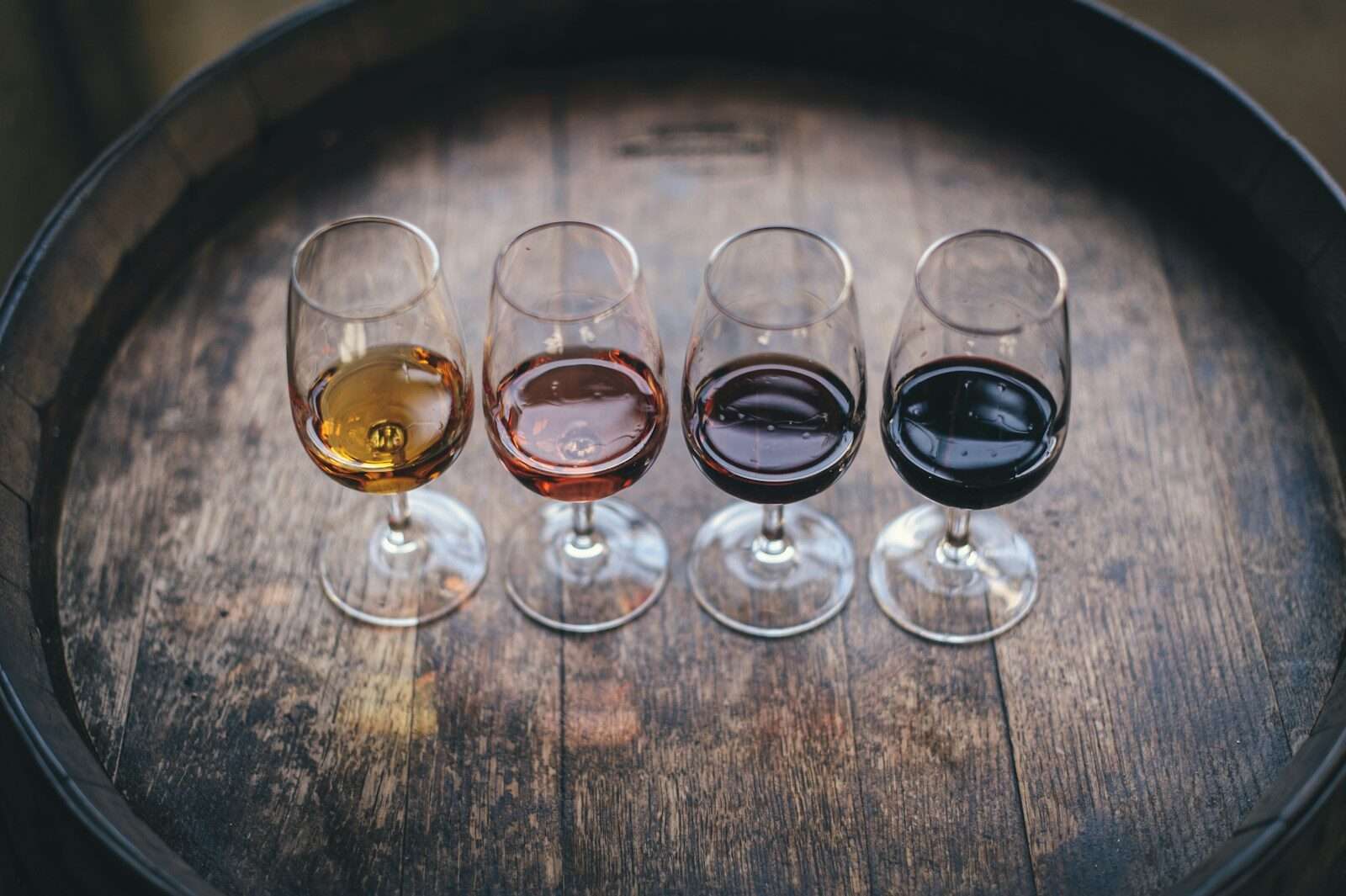
At The Wine Voyage’s team tasting events, understanding wine tannins is one of the most immediately useful concepts we teach. Myrna Elguezabal often structures a “texture flight” — comparing a Pinot Noir, a Merlot, and a Cabernet Sauvignon side by side — specifically to let participants feel the difference in tannin levels without needing to identify flavors. It’s one of the exercises that gets the most “aha” responses because the physical sensation is unmistakable once you know what to look for.
Tannins also make for excellent food-and-wine pairing demonstrations. Watching someone try a highly tannic wine with cheese, then with nothing, then with a piece of lean fish, makes the protein-tannin interaction visceral and memorable.
To put tannin knowledge to work, explore our guides to the highest-tannin wines: the Nebbiolo guide (Barolo and Barbaresco), the Cabernet Sauvignon guide, and Syrah/Shiraz guide. For contrast, see how tannins play differently in Pinot Noir and Grenache. Our how to taste wine guide covers the full sensory framework, and our medium-bodied red wine guide is a good next step for building your palate.
Further Reading
For a visual and accessible deep-dive into wine tannins and structure, Wine Folly’s tannin explainer is excellent for beginners. For a more technical treatment covering polyphenol chemistry and sensory science, Guild of Sommeliers’ tannin article goes deeper for those who want the science behind the sensation.