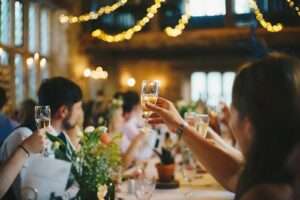
The first corporate wine tasting event I ever facilitated was for a financial services firm in downtown San Diego. Forty-five people, a mix of ages and backgrounds, most of them skeptical that a wine tasting was really going to be their thing. By the time we got to the reveal on the third blind flight, the CFO had confidently misidentified a Pinot Noir as a Burgundy (it was), and two analysts were passionately defending their palate assessments to a VP who outranked both of them.
That moment — wine cutting across hierarchy and unlocking real conversation — is why I believe a corporate wine tasting event is one of the most underutilized tools in the corporate event planner’s arsenal.
Here’s everything you need to know to plan one that actually works.
Why a Corporate Wine Tasting Event Works
Most corporate events put people in proximity to each other. A well-designed corporate wine tasting event does something more: it gives people a shared challenge that’s approachable, slightly unpredictable, and inherently conversational.
You don’t need wine expertise to participate. You need a nose, a palate, and an opinion — which everyone has. The blind tasting format specifically equalizes the room. Credentials don’t help you when the label is hidden. That leveling effect creates space for surprising conversations.
There’s also a learning component that people genuinely value. Wine is a topic with infinite depth, and a good facilitator can make even an introductory tasting feel substantive. People leave with vocabulary, knowledge, and a few opinions they didn’t have before.
For client entertainment specifically, a corporate wine tasting event communicates refinement and thoughtfulness in a way that a dinner alone doesn’t. You’re not just hosting people — you’re giving them an experience.
Formats for a Corporate Wine Tasting Event
Not all corporate wine tasting events are the same. Here are the main formats, each suited to different goals and group dynamics.
Blind Tasting Competition
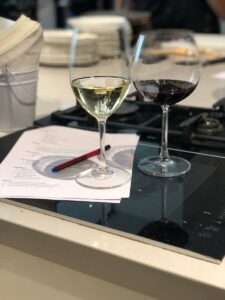
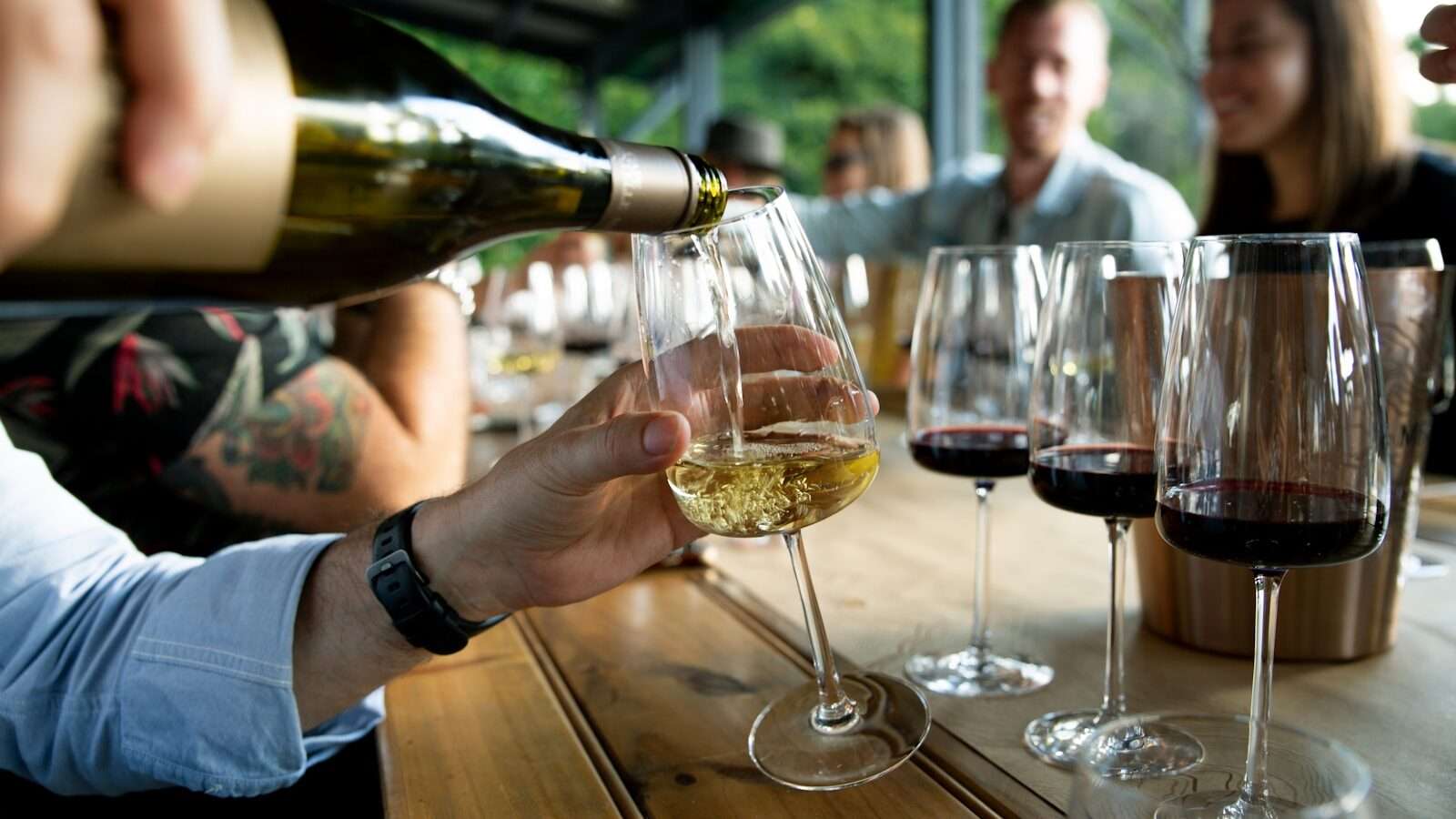
Teams evaluate 4–6 wines without seeing the labels. They taste, discuss, and record their assessments — what grape, region, vintage, price point? Then comes the reveal. The gap between confidence and accuracy is almost always hilarious and always bonding.
This is the format I recommend most often for team-building focused corporate wine tasting events. The competitive element keeps people engaged, the reveal creates a shared moment, and no prior wine knowledge is required.
Wine Blending Competition
Teams are given components — different varietals or lots of the same grape — and blend them into their ideal wine. They name it, present it, and defend their choices to a panel or to the group. The creativity and earnestness that teams bring to this is remarkable.
Works especially well for teams that like creative challenges. Also great for groups who’ve already done blind tastings and want something new.
Food and Wine Pairing Dinner
A structured meal where each course is accompanied by a matched wine, with a host explaining the pairing logic. More educational in tone than competitive, and very well suited to client events or celebrations where the goal is warmth and sophistication rather than structured competition.
Guided Varietal Flight
A facilitated tasting of 4–6 wines organized by theme — a single grape across different regions, old world vs. new world, cool climate vs. warm climate. Educational and exploratory. Works well as a standalone activity or as a reception component at a larger event.
Wine and Spirits Hybrid
For groups where not everyone drinks wine, a hybrid event that includes a spirits component — a bourbon flight, a tequila comparison, a mezcal introduction — widens the appeal without diluting the structure. We’ve designed events where teams rotate through a wine station and a spirits station, then compare notes at the end.
Choosing the Right Format for Your Group
| Group Goal | Best Format | Why It Works |
|---|---|---|
| Team bonding | Blind Tasting Competition | Equalizes the room; creates shared moments |
| Client entertainment | Food & Wine Pairing Dinner | Warm, sophisticated, memorable |
| Creative engagement | Wine Blending Competition | Hands-on; surfaces personality and humor |
| Education-focused | Guided Varietal Flight | Substantive; builds wine knowledge |
| Mixed wine/spirits crowd | Hybrid Tasting | Inclusive; covers more preferences |
| Large group (80+) | Multi-station experience | Keeps energy up; accommodates headcount |
Planning a Corporate Wine Tasting Event Step by Step
Define Your Objective
Start with why. Team bonding? Client appreciation? A holiday event? A conference activity? The objective shapes everything else — format, venue, budget, logistics.
A corporate wine tasting event for 20 teammates at a team offsite should feel different from one for 60 clients at a company milestone dinner.
Set Your Budget
A realistic budget for a quality facilitated corporate wine tasting event typically ranges from $65 to $150 per person, depending on format, wine quality, food involvement, and whether you’re working with a specialist provider or building it yourself.
Per-person cost breakdown for a typical facilitated event:
- Wine and materials: $25–60/person
- Facilitation and hosting: $15–30/person
- Venue (if external): $10–30/person
- Food and non-alcoholic options: $10–20/person
- Equipment and setup: $5–15/person
If you’re working with a specialist like The Wine Voyage, the facilitation, materials, and structure are typically bundled into a single per-person rate that’s easier to budget than sourcing each component separately.
Choose Your Format and Headcount
Some formats scale better than others. A blind tasting competition works for 10 or 100. A wine blending experience works best under 60. A guided flight works at any size but requires good sight lines and acoustics at scale.
Confirm your headcount before committing to a format, and build in a 10–15% buffer for late additions.
Find the Right Venue
For a corporate wine tasting event, you want:
- A room that can accommodate tables or rounds (not theater-style)
- Good lighting (people need to see the wine)
- Manageable acoustics (a facilitator needs to be heard)
- Enough surface area for glassware, bottles, and scorecards
Private dining rooms, event spaces, offices with large conference rooms, and wine bars with private event areas all work well. Some providers — including The Wine Voyage — can bring the experience to your office or preferred venue.
Hire a Specialist Facilitator
This is where I’ll be direct: a corporate wine tasting event lives or dies by its facilitation. A great host manages the room, keeps energy up, reads the crowd, and makes the reveal feel earned. A mediocre host reads from a script and loses half the room before the third wine.
If you’re investing in a corporate wine tasting event, invest in the person running it. Ask for references, confirm they’ve worked with corporate groups specifically, and clarify what their facilitation includes.
Plan the Non-Drinking Components
This matters more than people realize. At every corporate wine tasting event, there will be guests who don’t drink alcohol — whether by choice, for health reasons, or for personal reasons. Having high-quality non-alcoholic options (premium sparkling water, non-alcoholic wines, mocktail alternatives) isn’t just considerate — it’s essential for an inclusive event.
Brief your facilitator on this in advance so they can naturally integrate non-drinking guests into the experience.
Confirm Logistics
Two weeks before: confirm headcount, send calendar invites with venue details, share any preparation context with attendees (“no need for wine knowledge — just bring your senses”).
Day before: confirm with venue, confirm with facilitator, check that materials are ready.
Day of: arrive early, set up sight lines, brief your facilitator on anything relevant about the group.
What The Wine Voyage Offers
We’ve designed our corporate wine tasting event portfolio specifically for work groups. Our experiences include:
- Blind Tasting Competition — teams compete to identify unlabeled wines, compete by category, and reveal in a hosted ceremony
- Perfect Blend Competition — teams blend wine components and present their creation
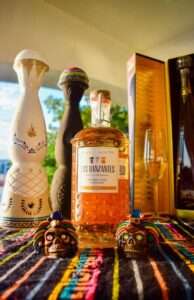
- Tequila & Mezcal Experience — same structure as blind tasting but focused on agave spirits
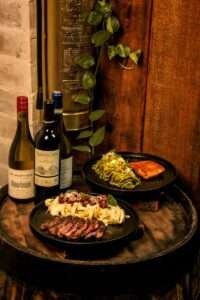
- Food & Wine Pairing — curated pairing dinner with hosted tasting components
All experiences include a host, structured materials, competitive elements, and formats refined across hundreds of corporate events. We’ve worked with teams from GoFundMe and the Carter Center to Sazerac and regional firms. We come to your venue or host you in our space.
If you’re planning a corporate wine tasting event and want to talk through what would work for your group, I’d love to hear more about what you’re building toward.
Common Mistakes to Avoid
Skipping the structure. “Wine available at a table” is a bar, not a corporate wine tasting event. Structure is what creates the experience.
Choosing wine based on personal preference. The wines for a tasting event should be chosen for contrast, interest, and teaching value — not because the organizer likes them. If you’re working with a specialist, let them curate.
Under-investing in facilitation. The format can be world-class; a bad host will still sink it. See above.
Forgetting that not everyone drinks. Non-drinking colleagues should be able to participate fully — build this in from the start.
Over-cramming the schedule. A 4-wine blind tasting with a reveal, some education, and a debrief takes 90–120 minutes. Don’t try to fit it into 45. Give the experience room to breathe.
For more on making your next group event memorable, explore our guides on wine tasting team building, how to host a blind wine tasting, wine tasting games for groups, wine blending competition, and food and wine pairing dinner.
Further Reading
For wine education that goes deeper on what makes a great tasting experience, Wine Folly’s guide to hosting wine tastings is a great visual resource. For research on what makes corporate events effective, Harvard Business Review’s coverage of team collaboration provides evidence-based context.