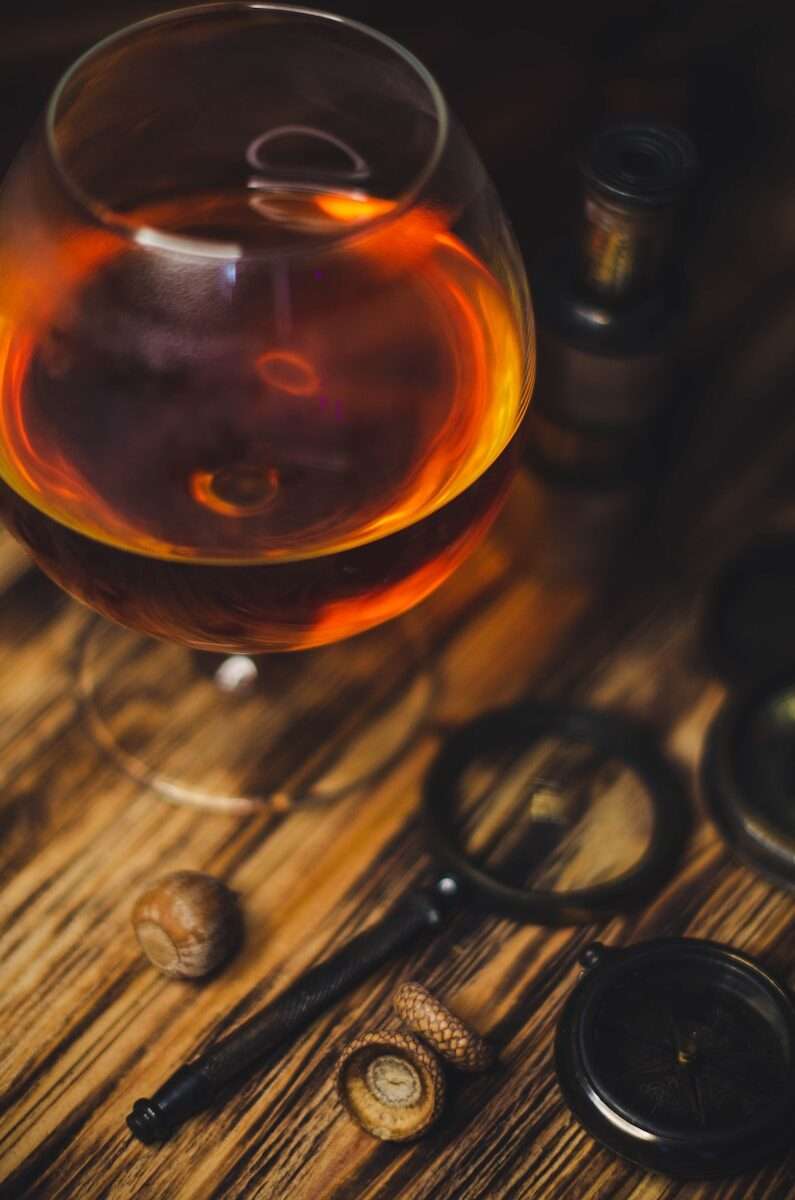
Cognac is one of those spirits that people feel like they should know more about than they do. It appears at the end of a fine dinner, sits on the bar menu with a serious price tag, and gets ordered by people who look like they know something you don’t. Most people quietly sip it without really understanding what makes it special — or why one bottle costs twice as much as another.
I’ve been teaching wine and spirits education for over a decade, and cognac comes up more often than you’d think — usually from someone who received a beautiful bottle as a gift and genuinely doesn’t know where to start. This guide is for them.
What Is Cognac?
Cognac is a brandy — a spirit distilled from wine — produced exclusively in the Cognac region of southwest France, near Bordeaux. Like Champagne, it carries a protected designation of origin: if it wasn’t made in the Cognac appellation using approved methods, it legally cannot be called cognac.
The primary grape used is Ugni Blanc, an acidic, high-yield variety that makes a thin, unremarkable table wine and an extraordinary base for distillation. The wine is distilled twice in traditional copper pot stills, then aged for a minimum of two years in French oak barrels — and typically much longer. What emerges from that process is one of the world’s most complex and nuanced spirits.
The Six Cognac Growing Areas
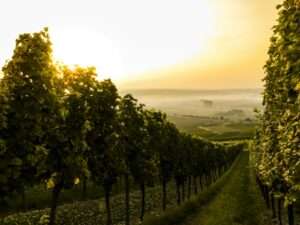
The Cognac appellation is divided into six crus — growing areas arranged in concentric rings around the town of Cognac itself:
| Cru | Soil Type | Known For |
|---|---|---|
| Grande Champagne | Deep chalky limestone | Most prestigious; exceptional aging potential; floral, delicate |
| Petite Champagne | Chalk with more clay | Similar to Grande; slightly lighter and faster to mature |
| Borderies | Rare clay-limestone | Violet and nut notes; rounder, approachable at younger ages |
| Fins Bois | Mixed soils | Good quality; largest productive zone; accessible style |
| Bons Bois | Sandier soils | Lighter, more straightforward; less complex |
| Bois Ordinaires | Coastal sandy soils | Rarely bottled solo; mostly blending stock |
Grande and Petite Champagne together form the “Fine Champagne” designation — a label you’ll see on many premium bottles, signifying a blend of both top zones with at least 50% from Grande Champagne.
(A note on the naming: “Champagne” here has nothing to do with sparkling wine. The word comes from the Latin campania, meaning open country or plains — a reference to the rolling chalk landscape, not bubbles.)
Cognac Grades Explained
The cognac grading system is based on minimum aging requirements for the youngest spirit in the blend. Here’s what each grade means:
| Grade | Minimum Aging | Character |
|---|---|---|
| VS (Very Special) | 2 years in oak | Fruitier, simpler, lighter; good for cocktails |
| VSOP (Very Superior Old Pale) | 4 years in oak | More developed; excellent for sipping and mixing |
| XO (Extra Old) | 10 years in oak | Rich, layered, long finish; a sipping spirit |
| XXO (Extra Extra Old) | 14 years in oak | Rare; exceptional depth |
| Hors d’âge | No legal minimum | Producer’s top expression; often 20–50+ years average age |
These grades define a floor, not a ceiling. A house might blend their VS with spirits aged six or seven years. Their XO might average 25 years in oak. The grade tells you the minimum; the producer’s reputation and style tell you the rest.
For first-time cognac tastings with groups, I always recommend starting with a VSOP and an XO side by side. The contrast in complexity is immediately obvious — even for people who’ve never thought about brandy before.
The Major Cognac Houses
A small number of large houses dominate global cognac production:
Hennessy accounts for roughly 40% of all cognac sold worldwide. They’re the reference point most people know, which makes their VS and VSOP useful benchmarks for comparison tastings.
Rémy Martin produces exclusively Fine Champagne cognac — sourced entirely from Grande and Petite Champagne — and is particularly respected for VSOP and XO expressions.
Martell, founded in 1715, is one of the oldest cognac houses. Known for rounder, more accessible styles, particularly from the Borderies cru.
Courvoisier is associated (probably apocryphally) with Napoleon, and produces classic, well-structured cognacs across their range.
Beyond the major four, a growing number of artisan producers — Hine, Pierre Ferrand, Frapin, Delamain — are increasingly sought out by enthusiasts who want more distinctive, terroir-driven expressions of cognac.
How Cognac Is Made
Understanding the process helps you understand what’s in the glass.
Harvest — Ugni Blanc grapes are picked in October, pressed immediately, and fermented into a thin, highly acidic wine of around 7–9% ABV. The wine is essentially undrinkable — it’s engineered for distillation, not pleasure.
Double distillation — The wine is distilled twice in traditional Charentais alembic copper pot stills. The first pass (premier chauffe) produces a liquid around 28–32% ABV. The second (bonne chauffe) brings it to 68–72% ABV. The distiller makes precise cuts throughout this process to isolate the most desirable fraction of the spirit.
Aging — The clear spirit goes into French oak barrels — typically Limousin or Tronçais oak — where it spends years or decades. During aging, it takes on color and character from the wood, loses water to evaporation (the famous “angel’s share,” running about 2–3% of barrel volume per year), and develops the vanilla, spice, dried fruit, and floral complexity that defines fine cognac.
Blending — The cellar master blends spirits of different ages, crus, and sometimes vintages to create a consistent house style across expressions, year after year. This blending expertise is what the major houses have built their reputations on for generations.
Dilution — The final blend is reduced with distilled water to bottling strength, typically 40% ABV.
How to Taste Cognac
Most people think tasting cognac means pouring and sipping. There’s considerably more to getting the most out of a fine bottle.
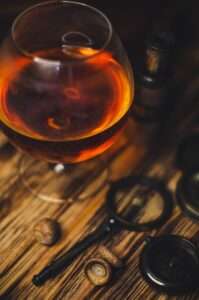
Glassware — Use a tulip-shaped wine glass rather than the traditional wide-balloon snifter. A snifter concentrates alcohol vapor directly at nose level, which numbs your senses to the more subtle aromas. A narrower tulip lets the floral and fruit notes arrive first, with the alcohol volatiles dissipating slightly before they reach you.
Temperature — Room temperature is ideal. Gentle warming from your palm is fine. Skip the dramatic hand-warming techniques you’ve seen in movies — excessive heat pushes the alcohol forward and flattens the aromatic complexity.
Approach the glass slowly — Hold it at chest level and let your nose move toward the glass rather than plunging in. Cognac’s high alcohol content can overwhelm your olfactory receptors if you nose too aggressively. Let the volatiles settle.
What to look for aromatically:
- VS and VSOP: Fresh fruit (grape, pear, apricot), light vanilla, a hint of oak, sometimes a floral note
- XO and older: Dried fruit (fig, prune, raisin), dark chocolate, leather, tobacco, beeswax, candied orange peel, roasted nuts, spice
Tasting — Take a small sip, let it coat your entire palate, and swallow slowly. Notice where you feel warmth: younger cognacs tend to warm the front of the palate quickly; older, more integrated expressions warm throughout and linger. The finish — how long the flavor persists after swallowing — is one of the most telling quality indicators in cognac. A fine XO finish can last two minutes or more.
Serving Cognac
Neat — The correct choice for any VSOP or older expression. No ice, no mixer, no addition of anything. Just the spirit in a good glass.
With a single large ice cube — Opens up different aromatic layers as the spirit chills slightly. Worth exploring with a VSOP.
With sparkling water — A growing trend in France, particularly among younger drinkers. The dilution makes the spirit lighter and more refreshing, which can be a genuine revelation with a VS. In the cognac region, cognac with tonic water has become almost fashionable.
In cocktails — VS and VSOP are excellent in cocktails and were historically designed for exactly this purpose. The Sidecar (cognac, triple sec, lemon juice) is the classic. A Cognac Old Fashioned showcases the spirit’s complexity beautifully. Please don’t mix an XO into a cocktail — that’s not the spirit being difficult; it’s math.
Cognac vs. Other Brandies
Cognac is one member of a broader family of grape brandies, each with its own character:
| Spirit | Base | Region | Defining Difference |
|---|---|---|---|
| Cognac | Wine (Ugni Blanc) | Cognac, France | Protected AOC; double pot still; minimum aging required |
| Armagnac | Wine (mixed varietals) | Armagnac, France | Continuous distillation; more rustic and direct; vintage-dated |
| Calvados | Apple or pear cider | Normandy, France | Fruit-based; apple and pear at the center |
| American Brandy | Wine | California primarily | Different standards; wide style range; less regulated |
| Pisco | Wine (specific grapes) | Peru and Chile | Unaged; pure grape character |
Armagnac is worth singling out: it’s cognac’s less-famous neighbor, often more individual and terroir-expressive, and significantly more affordable at equivalent quality levels. If you love cognac and want to explore, start there.
Cognac for Corporate Groups
Cognac is an underutilized option for group tasting experiences — probably because it feels more unfamiliar and more intimidating than wine. In my experience running corporate tastings, that unfamiliarity is actually an asset. People arrive with no preconceptions and genuine curiosity, rather than trying to perform expertise they may or may not have.
A structured tasting that moves from VS to VSOP to XO tells the aging story beautifully and intuitively. The difference between each grade is dramatic enough that no prior knowledge is required — the contrast speaks for itself. Pair with dark chocolate, dried figs, walnuts, and a sharp aged cheese, and you have an experience that’s both educational and genuinely indulgent.
At The Wine Voyage, we design spirits experiences that make cognac as accessible as any wine tasting — for corporate groups, client entertainment evenings, and private celebrations. The guided format removes the intimidation and lets people simply enjoy what’s in the glass.
For more on spirits education and group tasting experiences, see our guides to whiskey tasting, spirits tasting for beginners, mezcal vs. tequila, tequila tasting, and gin tasting.
Further Reading
For deeper exploration of cognac’s regions, producers, and vintage releases, Decanter’s cognac education hub is an excellent resource, and Wine Folly offers clear visual guides to understanding the appellation and grades.